We can't find the internet
Attempting to reconnect
Something went wrong
Hang in there while we get back on track

£126.81
About as cheap as it gets — within 5% of the all-time low it hit 1 month ago.
£127 today · all-time low £125 (Sep 2026) · usually £126
Springer Level Crossing Methods in Stochastic Models: 250 (International Series in Operations Research & Management Science, 250)
Price data last checked 29 day(s) ago - will refresh soon
We'll watch every seller, every day. One email when your price arrives.
Price History & Forecast
Grey patches = out of stock. Cheaper = lower on the chart. Hover for exact prices.
Last 62 days · 62 data points (no recent data)
Price data last checked 29 day(s) ago - will refresh soon
NEW HERE?
Amazon shows you one price. We show you all of them.
Tosheroon watches Amazon prices so you don't have to. Every product on Amazon has a price history — we make it visible. Set the price you'd actually pay, and we'll email you the second it gets there. No app, no account, one email.
WHAT'S ON THIS PAGE
when this has been cheap or pricey
where the price is heading next
all-time high & low, recent range
name your number, we'll email you
Price Distribution
Price distribution over 62 days • 3 price levels
Price Analysis
Most common price: £127 (36 days, 58.1%)
Price range: £125 - £128
Price levels: 3 different prices over 62 days
Description
Product Specifications
- Brand
- Springer
- Format
- paperback
- ASIN
- 3319843753
- Domain
- Amazon UK
- Release Date
- 28 July 2018
- Listed Since
- 27 July 2018
Barcode
No barcode data available
Similar Products You Might Like

Fundamentals of Probability and Statistics for Engineers
Wiley
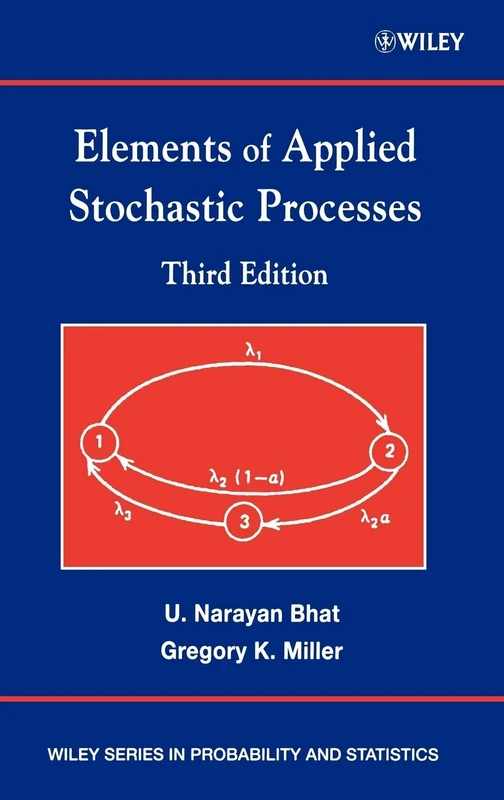
Elements of Applied Stochastic Processes: 378 (Wiley Series in Probability and Statistics)
Wiley

Discrete q-Distributions
Wiley

Oxford University Press Probability and Random Processes 4th Ed
Oxford University Press

Oxford University Press Probability and Random Processes 4th Ed
Oxford University Press
Probability with R: An Introduction with Computer Science Applications
Wiley
An Introduction to Probability and Statistical Inference
Elsevier

Stochastic Analysis and Related Topics: In Honour of Ali Süleyman Üstünel, Paris, June 2010: 22 (Springer Proceedings in Mathematics & Statistics, 22)
Springer
Statistical Signal Processing: Frequency Estimation
Springer

Markov Chains: Theory and Applications (Iste)
Wiley
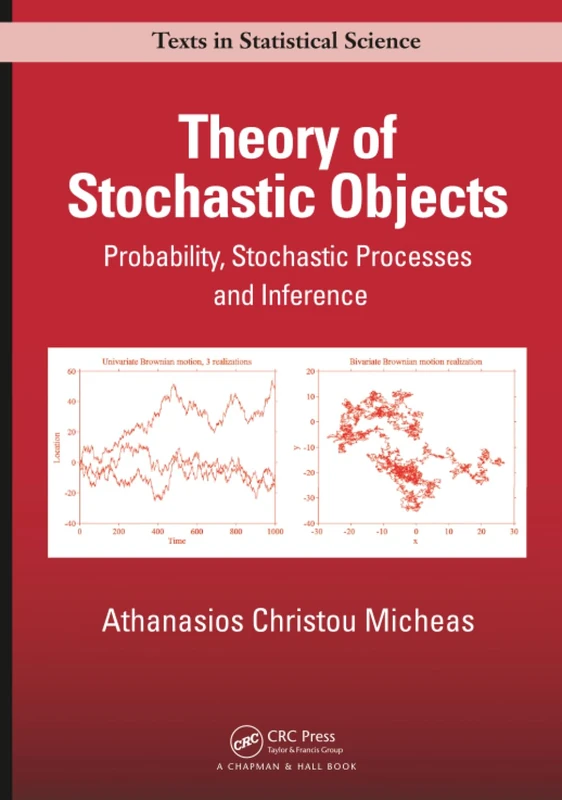
Theory of Stochastic Objects: Probability, Stochastic Processes and Inference (Chapman & Hall/CRC Texts in Statistical Science)
CRC Press

Probabilistic Inequalities: 7 (SERIES ON CONCRETE AND APPLICABLE MATHEMATICS)
World Scientific Publishing Company

Prokhorov and Contemporary Probability Theory: In Honor of Yuri V. Prokhorov: 33 (Springer Proceedings in Mathematics & Statistics, 33)
Springer
Level-Crossing Problems and Inverse Gaussian Distributions: Closed-Form Results and Approximations (Chapman & Hall/CRC Monographs and Research Notes in Mathematics)
CRC Press
An Introduction to Measure-theoretic Probability
Elsevier
Introduction to Probabilistic and Statistical Methods with Examples in R: 176 (Intelligent Systems Reference Library, 176)
Springer

Queueing Systems, Volume 2: Computer Applications
Wiley
Probability-2: 95 (Graduate Texts in Mathematics, 95)
Springer
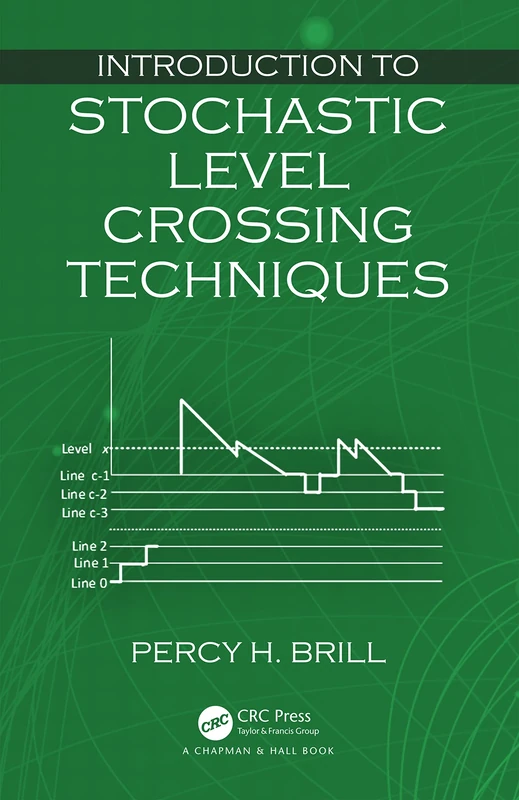
Introduction to Stochastic Level Crossing Techniques
Chapman and Hall/CRC

Random Summation: Limit Theorems and Applications
CRC Press

Math In Economics (Second Edition): 2nd Edition
World Scientific Publishing Company

Foundations of Data Science with Python (Chapman & Hall/CRC The Python Series)
Chapman and Hall/CRC