£92.81

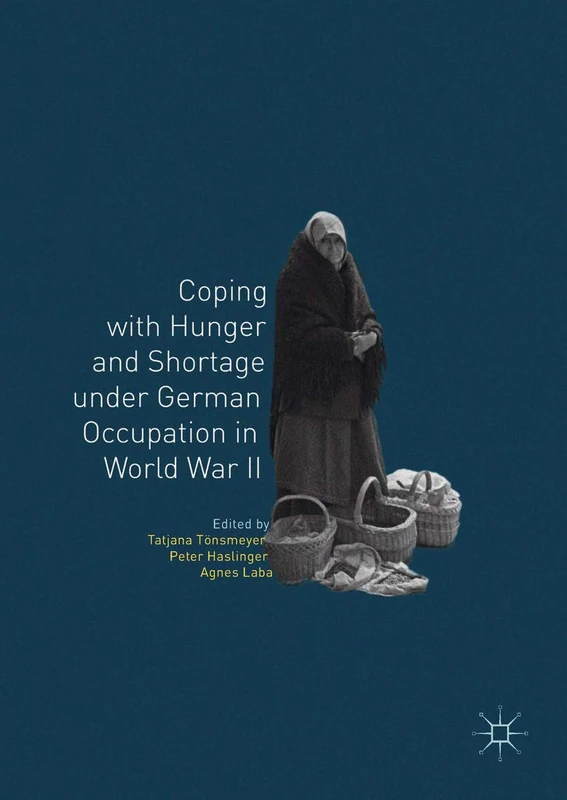
Springer Coping with Hunger and Shortage under German Occupation in World War II

Price data last checked 9 day(s) ago - will refresh soon

View at Amazon

We'll watch every seller, every day. One email when your price arrives.

This is the most expensive it has ever been. Walk away.

£93 today · previous high £93 · all-time low £92

NEW HERE?

Amazon shows you one price. We show you all of them.

Tosheroon watches Amazon prices so you don't have to. Every product on Amazon has a price history — we make it visible. Set the price you'd actually pay, and we'll email you the second it gets there. No app, no account, one email.

WHAT'S ON THIS PAGE

↓ Price chart
when this has been cheap or pricey
↓ Forecast
where the price is heading next
↓ Statistics
all-time high & low, recent range
↑ Price alert
name your number, we'll email you

Price History & Forecast

Grey patches = out of stock. Cheaper = lower on the chart. Hover for exact prices.

Last 82 days · 82 data points (no recent data)

Historical
Generating forecast…
£92.81 £92.38 £92.47 £92.57 £92.66 £92.76 £92.85 26 April 2026 16 May 2026 05 June 2026 25 June 2026 16 July 2026

Price Distribution

Price distribution over 82 days • 1 price levels

Days at Price
82 days 0 21 41 62 82 £93 Days at Price

Price Analysis

Most common price: £93 (82 days, 100.0%)

Price range: £93 - £93

Price levels: 1 different prices over 82 days

Description

This volume demonstrates how German expansion in the Second World War II led to shortages, of food and other necessities including medicine, for the occupied populations, causing many to die from severe hunger or starvation. While the various chapters look at a range of topics, the main focus is on the experiences of ordinary people under occupation; their everyday life, and how this quickly became dominated by the search for supplies and different strategies to fight scarcity. The book discusses various such strategies for surviving increasingly catastrophic circumstances, ranging from how people dealt with rationing systems, to the use of substitute products and recycling, barter, black-marketeering and smuggling, and even survival prostitution. In addressing examples from Norway to Greece and from France to Russia, this volume offers the first pan-European perspective on the history of shortage, malnutrition and hunger resulting from the war, occupation, and aggressive German exploitation policies.  From the Back Cover This volume demonstrates how German expansion in the Second World War II led to shortages, of food and other necessities including medicine, for the occupied populations, causing many to die from severe hunger or starvation. While the various chapters look at a range of topics, the main focus is on the experiences of ordinary people under occupation; their everyday life, and how this quickly became dominated by the search for supplies and different strategies to fight scarcity. The book discusses various such strategies for surviving increasingly catastrophic circumstances, ranging from how people dealt with rationing systems, to the use of substitute products and recycling, barter, black-marketeering and smuggling, and even survival prostitution. In addressing examples from Norway to Greece and from France to Russia, this volume offers the first pan-European perspective on the history of shortage, malnutrition and hunger resulting from the war, occupation, and aggressive German exploitation policies.  About the Author Tatjana Tönsmeyer is Chair of Modern History at the University of Wuppertal, Germany. From 2012-2016 she was Head of the 'Europe' Research Area at the Institute for Advanced Study in the Humanities. She co-edits the international research and editorial project 'Societies under German Occupation: Experiences and Everyday Life in World War II'. Peter Haslinger is Director of the Herder Institute for Historical Research on East Central Europe in Marburg, Germany. He is Chair in East Central European History at Justus-Liebig-University Giessen and the Giessen Centre for Eastern European Studies. He is also co-editor of 'Societies under German Occupation: Experiences and Everyday Life in World War II'.  Agnes Laba is Post-Doctoral Researcher at the Department of Modern History of the University of Wuppertal. She received her PhD in contemporary history at the University of Giessen for her research on the discourse about the Eastern border of the Weimar Republic.

Product Specifications

Format
hardcover
Domain
Amazon UK
Release Date
11 July 2018
Listed Since
07 February 2018

Barcode

No barcode data available