£91.82

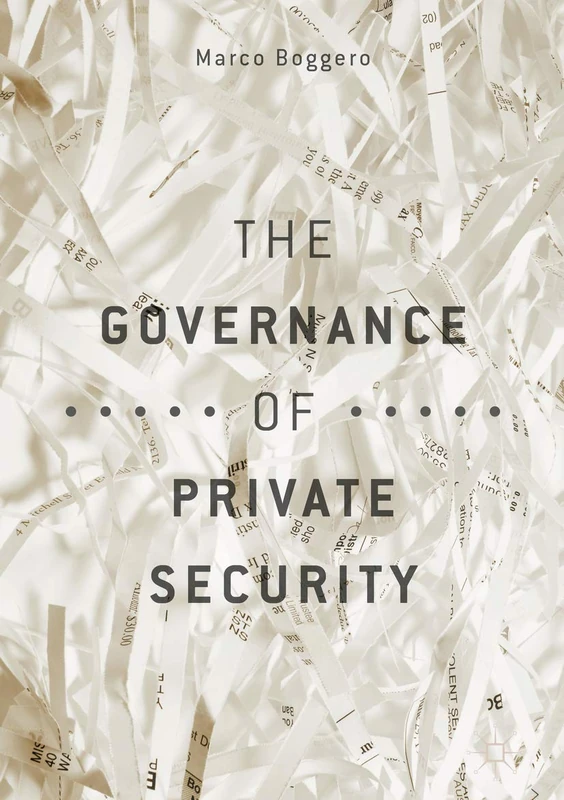
Springer The Governance of Private Security

Price data last checked 50 day(s) ago - refreshing...

View at Amazon

We'll watch every seller, every day. One email when your price arrives.

This is the most expensive it has ever been. Walk away.

£92 today · previous high £92 · all-time low £91

NEW HERE?

Amazon shows you one price. We show you all of them.

Tosheroon watches Amazon prices so you don't have to. Every product on Amazon has a price history — we make it visible. Set the price you'd actually pay, and we'll email you the second it gets there. No app, no account, one email.

WHAT'S ON THIS PAGE

↓ Price chart
when this has been cheap or pricey
↓ Forecast
where the price is heading next
↓ Statistics
all-time high & low, recent range
↑ Price alert
name your number, we'll email you

Price History & Forecast

Grey patches = out of stock. Cheaper = lower on the chart. Hover for exact prices.

Last 41 days • 41 data points (No recent data available)

Historical
Generating forecast...
£91.82 £90.61 £90.87 £91.14 £91.40 £91.67 £91.93 11 March 2026 21 March 2026 31 March 2026 10 April 2026 20 April 2026

Price Distribution

Price distribution over 41 days • 2 price levels

Days at Price
Current Price
40 days 1 day · current 0 10 20 30 40 £91 £92 Days at Price

Price Analysis

Most common price: £91 (40 days, 97.6%)

Price range: £91 - £92

Price levels: 2 different prices over 41 days

Description

This book offers new insights and original empirical research on private military and security companies (PMSCs), including China’s negotiation approach to governance, an account of Nigeria’s first engagement with regulatory cooperation under the threat of Boko Haram, and a study of PMSCs in Ebola-hit Western Africa. The author engages with concepts and theories from IR, Political Economy, and African studies―like regime, forum shopping, and extraversion―to describe what shapes state choices in national and international fora. The volume clarifies and spells out the needed questions and definitions and proposes a synthesis of how regime formation is shaped by ideas, interests, and institutions, starting from the proposition that regulatory cooperation consists in facilitating the acceptance and use of a single identifier for private military and security companies. Review “Private security companies are becoming an ever-greater part of how states wage war and manage internal security threats. Yet, they remain largely unregulated, posing legal and political challenges that impact international affairs. In this incisive book, Marco Boggero relies on theoretical insights of international relations and evidence from important cases to provide a rich analysis of the problem of regulating private security within the bounds of international law. This timely book is an excellent starting point for policy makers and academics alike in grappling within a critical challenge.” (Vali Nasr, Dean, School of Advanced International Studies, Johns Hopkins University, USA) “The book makes an important contribution to our understanding the evolving and contested norm regarding reliance and governance of PMSCs. Inclusion of critical understudied cases in Africa is particularly important due to the tensions they illustrate between the historical sensitivity to mercenaries and current security challenges confronting weak states.” (Renée de Nevers, Maxwell School of Citizenship and Public Affairs, Syracuse University, USA) From the Back Cover This book offers new insights and original empirical research on private military and security companies (PMSCs), including China’s negotiation approach to governance, an account of Nigeria’s first engagement with regulatory cooperation under the threat of Boko Haram, and a study of PMSCs in Ebola-hit Western Africa. The author engages with concepts and theories from IR, Political Economy, and African studies―like regime, forum shopping, and extraversion―to describe what shapes state choices in national and international fora. The volume clarifies and spells out the needed questions and definitions and proposes a synthesis of how regime formation is shaped by ideas, interests, and institutions, starting from the proposition that regulatory cooperation consists in facilitating the acceptance and use of a single identifier for private military and security companies. Marco Boggero teaches global policy at the School of Advanced International Studies, Johns Hopkins University, USA. About the Author Marco Boggero teaches global policy at the School of Advanced International Studies, Johns Hopkins University, USA.

Product Specifications

Format
hardcover
Domain
Amazon UK
Release Date
23 February 2018
Listed Since
20 September 2017

Barcode

No barcode data available