£76.44

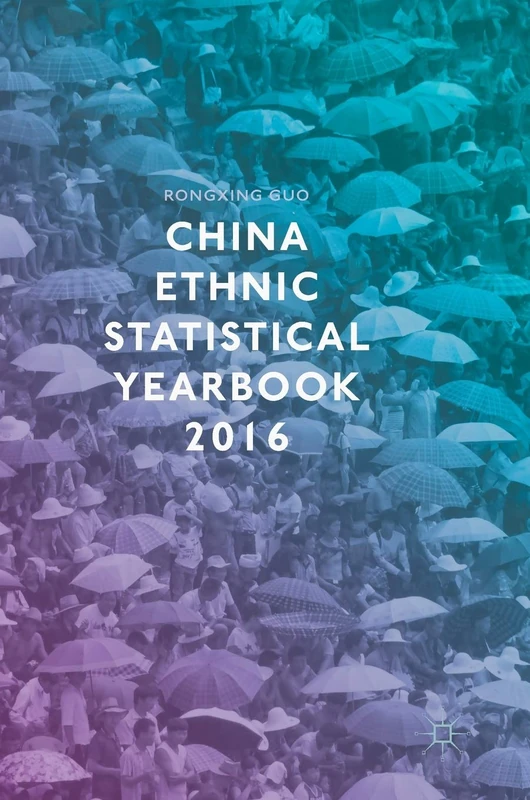
MACMILLAN China Ethnic Statistical Yearbook 2016

Price data last checked 10 day(s) ago - will refresh soon

View at Amazon

We'll watch every seller, every day. One email when your price arrives.

It has never been this cheap. We have no record of a lower price.

£76 today · cheaper than every other day in the last 3 months

NEW HERE?

Amazon shows you one price. We show you all of them.

Tosheroon watches Amazon prices so you don't have to. Every product on Amazon has a price history — we make it visible. Set the price you'd actually pay, and we'll email you the second it gets there. No app, no account, one email.

WHAT'S ON THIS PAGE

↓ Price chart
when this has been cheap or pricey
↓ Forecast
where the price is heading next
↓ Statistics
all-time high & low, recent range
↑ Price alert
name your number, we'll email you

Price History & Forecast

Grey patches = out of stock. Cheaper = lower on the chart. Hover for exact prices.

Last 81 days · 81 data points (no recent data)

Historical
Generating forecast…
£76.44 £72.62 £74.15 £75.68 £77.20 £78.73 £80.26 26 April 2026 16 May 2026 05 June 2026 25 June 2026 15 July 2026

Price Distribution

Price distribution over 81 days • 1 price levels

Days at Price
81 days 0 20 41 61 81 £76 Days at Price

Price Analysis

Most common price: £76 (81 days, 100.0%)

Price range: £76 - £76

Price levels: 1 different prices over 81 days

Description

This book, comprised of entirely original research, collects data on the socioeconomic situation of China’s 56 ethnic groups. Although the majority of China’s population is of the Han nationality (which accounts for more than 90% of China’s population), the non-Han ethnic groups have a population of more than 100 million. China has officially identified, except for other unknown ethnic groups and foreigners with Chinese citizenship, 55 ethnic minorities. In addition, ethnic minorities vary greatly in size. With a population of more than 15 million, the Zhuang are the largest ethnic minority, and the Lhoba, with a population of only about three thousand, the smallest.  China’s ethnic diversity has resulted in a special socioeconomic landscape for China itself. However, till presently, a complete socioeconomic picture of China’s ethnic groups – especially of its smallest ethnic minorities – still remained unclear. How different have China’s ethnic groups been in every sphere of daily life and economic development during China’s fast transition period? In order to answer these questions, we have created a detailed and comparable set of data for each of China’s ethnic groups. This book presents, in an easy-to-use format, a broad collection of social and economic indicators on China’s 56 ethnic groups. This useful resource profiles the general social and economic situations for each of these ethnic groups. These indicators are compiled and estimated based on the regional and local data gathered from a variety of sources up to 2012. Review “The statistics on China’s minorities is comprehensive and presented in an appealing way. Areas covered include everything from electrical output to Gross Domestic Output to public health statistics. Anyone interested in the increasingly important status of minorities of China, slightly more than 100 million people, will find this book an invaluable research tool. Public health professionals, economists, and specialists on minorities will profit from this work.” (Morris Rossabi, Columbia University, USA and Editor, Governing China’s Multiethnic Frontiers) From the Back Cover This book, comprised of entirely original research, collects data on the socioeconomic situation of China’s 56 ethnic groups. Although the majority of China’s population is of the Han nationality (which accounts for more than 90% of China’s population), the non-Han ethnic groups have a population of more than 100 million. China has officially identified, except for other unknown ethnic groups and foreigners with Chinese citizenship, 55 ethnic minorities. In addition, ethnic minorities vary greatly in size. With a population of more than 15 million, the Zhuang are the largest ethnic minority, and the Lhoba, with a population of only about three thousand, the smallest.  China’s ethnic diversity has resulted in a special socioeconomic landscape for China itself. However, till presently, a complete socioeconomic picture of China’s ethnic groups – especially of its smallest ethnic minorities – still remained unclear. How different have China’s ethnic groups been in every sphere of daily life and economic development during China’s fast transition period? In order to answer these questions, we have created a detailed and comparable set of data for each of China’s ethnic groups. This book presents, in an easy-to-use format, a broad collection of social and economic indicators on China’s 56 ethnic groups. This useful resource profiles the general social and economic situations for each of these ethnic groups. These indicators are compiled and estimated based on the regional and local data gathered from a variety of sources up to 2012. About the Author Rongxing Guo is a professor at the Regional Science Association of China at Peking University, China. He has published widely on topics such as global and regional issues (with an emphasis on cross-border issues) and Chines

Product Specifications

Format
hardcover
Domain
Amazon UK
Release Date
05 May 2017
Listed Since
06 October 2016

Barcode

No barcode data available