We can't find the internet
Attempting to reconnect
Something went wrong!
Hang in there while we get back on track
Price loading...
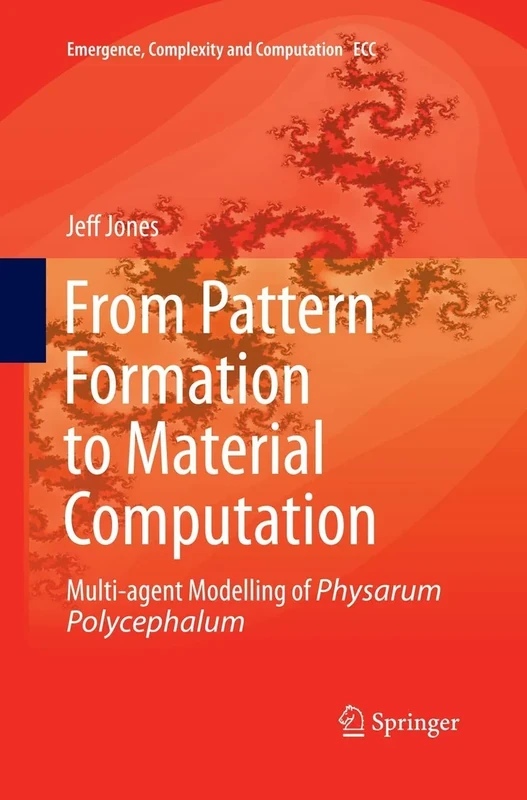
Springer From Pattern Formation to Material Computation: Multi-agent Modelling of Physarum Polycephalum: 15 (Emergence, Complexity and Computation, 15)
Price data last checked 108 day(s) ago - refreshing...
Price History & Forecast
No Price Data Available
Price history will appear here once data is collected from Amazon.
Price Distribution
No price data available for histogram
Description
Product Description This book addresses topics of mobile multi-agent systems, pattern formation, biological modelling, artificial life, unconventional computation, and robotics. The behaviour of a simple organism which is capable of remarkable biological and computational feats that seem to transcend its simple component parts is examined and modelled. In this book the following question is asked: How can something as simple as Physarum polycephalum - a giant amoeboid single-celled organism which does not possess any neural tissue, fixed skeleton or organised musculature - can approximate complex computational behaviour during its foraging, growth and adaptation of its amorphous body plan, and with such limited resources? To answer this question the same apparent limitations as faced by the organism are applied: using only simple components with local interactions. A synthesis approach is adopted and a mobile multi-agent system with very simple individual behaviours is employed. It is shown their interactions yield emergent behaviour showing complex self-organised pattern formation with material-like evolution. The presented model reproduces the biological behaviour of Physarum; the formation, growth and minimisation of transport networks. In its conclusion the book moves beyond Physarum and provides results of scoping experiments approximating other complex systems using the multi-agent approach. The results of this book demonstrate the power and range of harnessing emergent phenomena arising in simple multi-agent systems for biological modelling, computation and soft-robotics applications. It methodically describes the necessary components and their interactions, showing how deceptively simple components can create powerful mechanisms, aided by abundant illustrations, supplementary recordings and interactive models. It will be of interest to those in biological sciences, physics, computer science and robotics who wish to understand how simple components can result in complex and useful behaviours and who wish explore the potential of guided pattern formation themselves. Review “The book presents a full account of research and will be extremely useful for young and early career researchers exploring the topic of both multiagent modeling and the slime mold. … I found the book a useful tool for teaching students how agent-based modeling works, its complexities, and how it can be used to extend our knowledge of complex models to build better and reliable structures inspired by nature.” (Mariam Kiran, Computing Reviews, November, 2015) From the Back Cover This book addresses topics of mobile multi-agent systems, pattern formation, biological modelling, artificial life, unconventional computation, and robotics. The behaviour of a simple organism which is capable of remarkable biological and computational feats that seem to transcend its simple component parts is examined and modelled. In this book the following question is asked: How can something as simple as Physarum polycephalum - a giant amoeboid single-celled organism which does not possess any neural tissue, fixed skeleton or organised musculature - can approximate complex computational behaviour during its foraging, growth and adaptation of its amorphous body plan, and with such limited resources? To answer this question the same apparent limitations as faced by the organism are applied: using only simple components with local interactions. A synthesis approach is adopted and a mobile multi-agent system with very simple individual behaviours is employed. It is shown their interactions yield emergent behaviour showing complex self-organised pattern formation with material-like evolution. The presented model reproduces the biological behaviour of Physarum; the formation, growth and minimisation of transport networks. In its conclusion the book moves beyond Physarum and provides results of scoping experiments approximating other complex systems
Product Specifications
- Brand
- Springer
- Format
- paperback
- ASIN
- 3319386514
- Domain
- Amazon UK
- Release Date
- 19 October 2016
- Listed Since
- 07 October 2016
Barcode
No barcode data available
Similar Products You Might Like
99% match
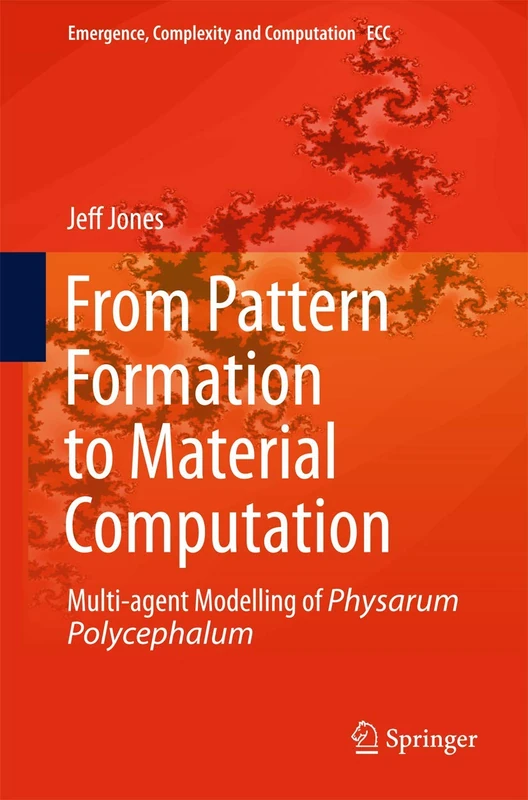
From Pattern Formation to Material Computation: Multi-agent Modelling of Physarum Polycephalum: 15 (Emergence, Complexity and Computation, 15)
Springer
£99.23
06 Mar 2026
95% match
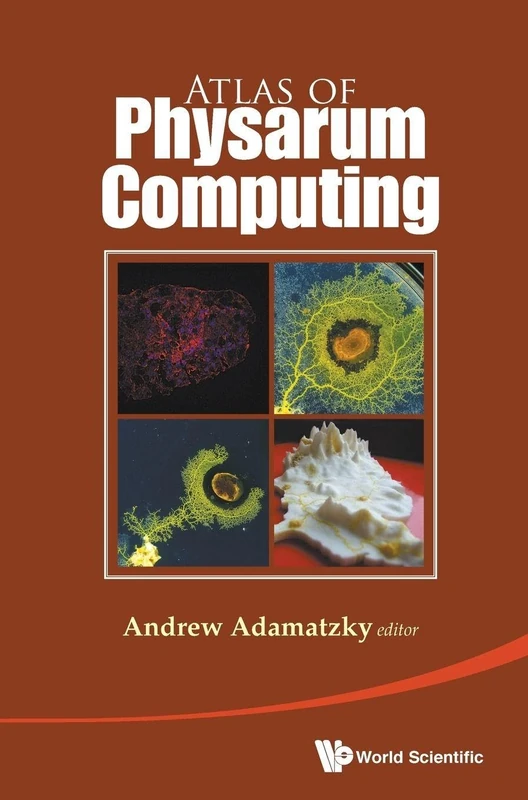
Atlas Of Physarum Computing
World Scientific Publishing Company
£61.03
08 Mar 2026
94% match
The Handbook of Agent Based Modelling
£45.00
16 Feb 2026
94% match
Springer Reaction-Diffusion Automata - Complexity and Computation
Springer
£107.61
19 Apr 2026
94% match
Self-organizing Coalitions for Managing Complexity: Agent-based Simulation of Evolutionary Game Theory Models using Dynamic Social Networks for ... (Emergence, Complexity and Computation, 29)
Springer
£122.82
13 Jan 2026
93% match
Advances in Unconventional Computing: Volume 1: Theory: 22 (Emergence, Complexity and Computation, 22)
Springer
£142.76
10 Mar 2026
93% match
Social Self-Organization: Agent-Based Simulations and Experiments to Study Emergent Social Behavior (Understanding Complex Systems)
Springer
£110.73
11 Jan 2026
93% match
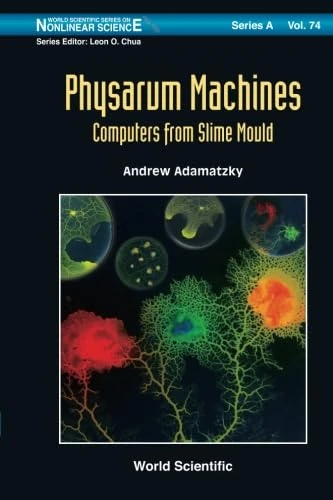
Physarum Machines: Computers From Slime Mould
World Scientific Publishing Company

£69.00
11 Mar 2026
93% match
Computational Modelling of the Brain: Modelling Approaches to Cells, Circuits and Networks: 1359 (Advances in Experimental Medicine and Biology, 1359)
Springer
£104.80
09 Feb 2026
93% match
Modeling Biological Systems:: Principles and Applications
Springer
£87.42
08 Jan 2026
93% match
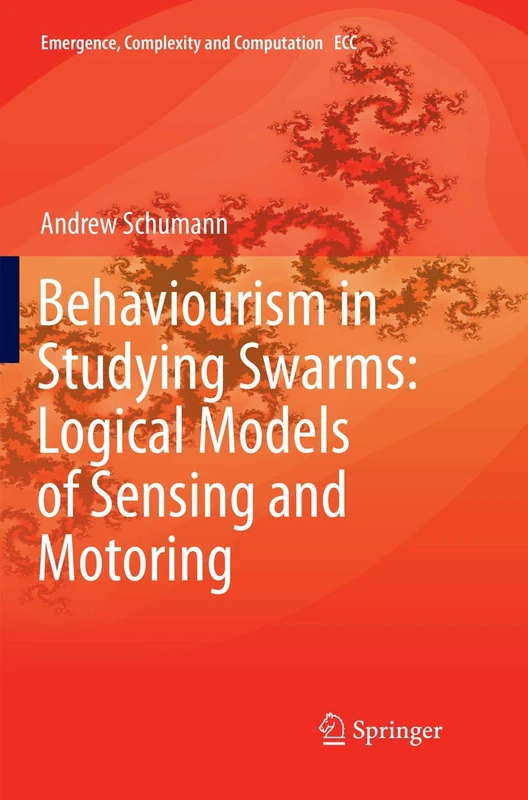
Slime Mould in Arts and Architecture (River Publishers Series in Biomedical Engineering)
Taylor & Francis
£70.09
18 Feb 2026
93% match
Slime Mould and Philosophy (Elements in the Philosophy of Biology)
Cambridge University Press
£43.95
10 Mar 2026
93% match
CRC Press X-Machines for Agent-Based Modeling FLAME Book
CRC Press
£97.00
25 Feb 2026
93% match
Springer Probabilistic Cellular Automata - Complexity & Theory
Springer
£107.27
04 Mar 2026
93% match
Self-organising Multi-agent Systems: Algorithmic Foundations Of Cyber-anarcho-socialism
World Scientific Publishing Company
£112.17
06 Feb 2026
93% match
Geometrical Dynamics of Complex Systems: A Unified Modelling Approach to Physics, Control, Biomechanics, Neurodynamics and Psycho-Socio-Economical ... and Automation: Science and Engineering, 31)
Springer
£211.87
10 Jan 2026
93% match
Computational Methods in Systems Biology: First International Workshop, Cmsb 2003, Roverto, Italy, February 24-26, 2003 (Lecture Notes In Computer Science) (V. 2602)
Springer
£75.01
08 Mar 2026
93% match
Springer Quantitative Elements of General Biology Monograph
Springer
£109.82
20 Apr 2026
93% match
Emergence and Modularity in Life Sciences
Springer
£107.27
03 Feb 2026
93% match
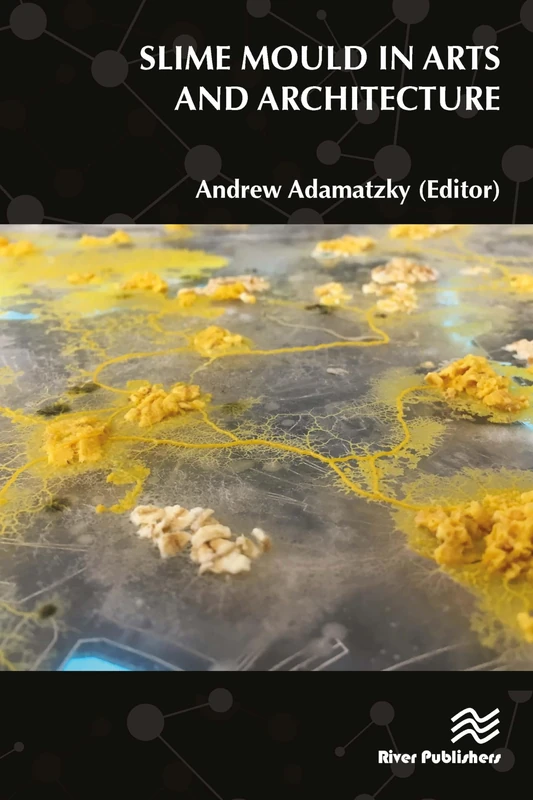
Behaviourism in Studying Swarms: Logical Models of Sensing and Motoring: 33 (Emergence, Complexity and Computation, 33)
Springer
£77.19
11 Mar 2026
93% match
Self-organising Software: From Natural to Artificial Adaptation (Natural Computing Series)
Springer
£81.19
21 Feb 2026
93% match
Spatial Dynamics and Pattern Formation in Biological Populations
CRC Press
£141.96
06 Apr 2026
93% match
Computational Evolution of Neural and Morphological Development: Towards Evolutionary Developmental Artificial Intelligence (Natural Computing Series)
£128.99
08 Jan 2026
93% match
Algorithmic Bioprocesses (Natural Computing Series)
Springer
£112.31
29 Jan 2026