£108.92

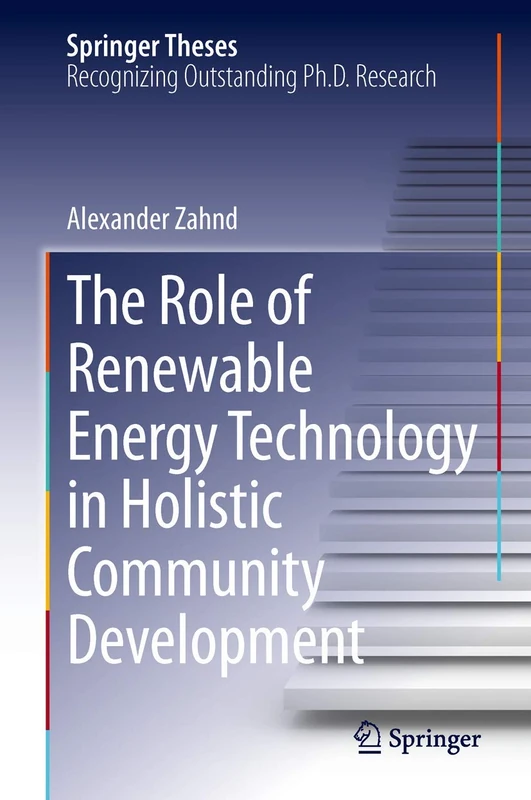
Springer The Role of Renewable Energy Technology in Holistic Community Development (Springer Theses)

Price data updated today

View at Amazon

We'll watch every seller, every day. One email when your price arrives.

It has never been this cheap. We have no record of a lower price.

£109 today · cheaper than every other day in the last 3 months

NEW HERE?

Amazon shows you one price. We show you all of them.

Tosheroon watches Amazon prices so you don't have to. Every product on Amazon has a price history — we make it visible. Set the price you'd actually pay, and we'll email you the second it gets there. No app, no account, one email.

WHAT'S ON THIS PAGE

↓ Price chart
when this has been cheap or pricey
↓ Forecast
where the price is heading next
↓ Statistics
all-time high & low, recent range
↑ Price alert
name your number, we'll email you

Price History & Forecast

Grey patches = out of stock. Cheaper = lower on the chart. Hover for exact prices.

Last 91 days • 91 data points

Historical
Generating forecast...
£114.71 £108.34 £109.73 £111.12 £112.51 £113.90 £115.29 24 March 2026 15 April 2026 08 May 2026 30 May 2026 22 June 2026

Price Distribution

Price distribution over 91 days • 3 price levels

Days at Price
Current Price
28 days · current 62 days 1 day 0 16 31 47 62 £109 £112 £115 Days at Price

Price Analysis

Most common price: £112 (62 days, 68.1%)

Price range: £109 - £115

Price levels: 3 different prices over 91 days

Description

This thesis documents almost twenty years of the author’s work on the development and implementation of a new approach to holistic community development in remote and disadvantaged villages in Nepal. It describes the theoretical basis of the work, the main research activities, and the practical outcomes of the implemented programs. One of the fundamental cornerstones of holistic community development is the provision of appropriate and sustainable solutions for the long-term development of local communities. This requires that people’s own identified needs be recognized and addressed in partnership with them in holistic ways. The author explains the many synergies that result from this holistic approach to community development. Another cornerstone of his approach is to utilise the communities’ locally available renewable resources for long-term sustainable development. One of the key findings of the thesis is that improved access to energy services, such as cooking with a smokeless metal stove in a clean indoor environment, basic indoor lighting, and increased food production and safe food storage (through a greenhouse and a solar drier respectively), need to be at the very heart of any long-term holistic community development project. The thesis demonstrates that tapping into locally available renewable energy resources and converting them, through contextualized and locally manufactured renewable energy technologies, has a central role in long-term holistic community development programs. Such programs are successful because they provide both appropriate technologies and life-changing experiences for the local users involved. From the Back Cover This thesis documents almost twenty years of the author’s work on the development and implementation of a new approach to holistic community development in remote and disadvantaged villages in Nepal. It describes the theoretical basis of the work, the main research activities, and the practical outcomes of the implemented programs. One of the fundamental cornerstones of holistic community development is the provision of appropriate and sustainable solutions for the long-term development of local communities. This requires that people’s own identified needs be recognized and addressed in partnership with them in holistic ways. The author explains the many synergies that result from this holistic approach to community development. Another cornerstone of his approach is to utilise the communities’ locally available renewable resources for long-term sustainable development. One of the key findings of the thesis is that improved access to energy services, such as cooking with a smokeless metal stove in a clean indoor environment, basic indoor lighting, and increased food production and safe food storage (through a greenhouse and a solar drier respectively), need to be at the very heart of any long-term holistic community development project. The thesis demonstrates that tapping into locally available renewable energy resources and converting them, through contextualized and locally manufactured renewable energy technologies, has a central role in long-term holistic community development programs. Such programs are successful because they provide both appropriate technologies and life-changing experiences for the local users involved. About the Author Alexander Zahnd is currently international project director at RIDS-Switzerland (www.rids-switzerland.org) and international project supervisor at RIDS-Nepal (www.rids-nepal.org). He received his PhD in Renewable Energy from Murdoch University, Perth, Western Australia, in 2012. In 1996 he started to develop and apply the new concepts of holistic community development (HCD)  as a way to improve the overall quality of life of the most remote and poorest mountain communities in the Himalayas. He co-founded the not-for-profit NGO RIDS-Nepal (www.rids-nepal.org) in 2002 and the NGO RIDS-Switzerla

Product Specifications

Format
hardcover
Domain
Amazon UK
Release Date
05 February 2014
Listed Since
28 November 2013

Barcode

No barcode data available