£118.02

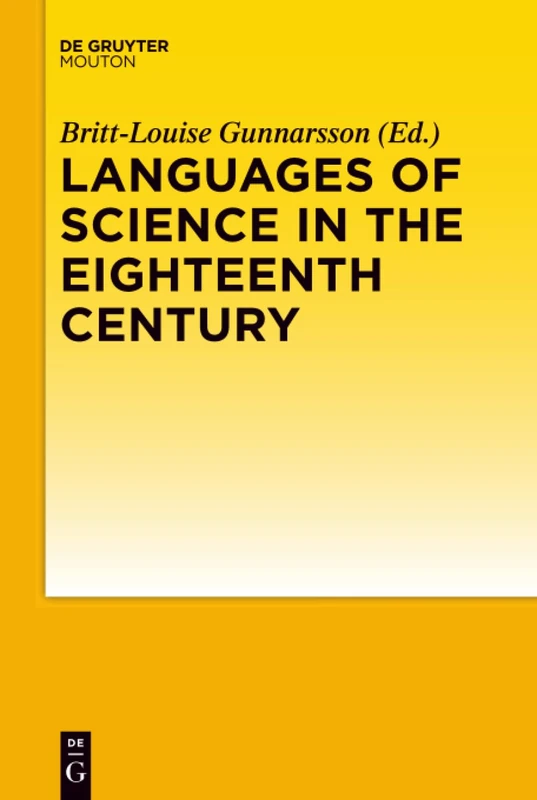
De Gruyter Mouton Languages of Science in the Eighteenth Century

Price data last checked 95 day(s) ago - refreshing...

View at Amazon

We'll watch every seller, every day. One email when your price arrives.

This is the usual price. Wait for it to drop, or tell us your number.

£118 today · usual range £0–£0 · best ever £94

NEW HERE?

Amazon shows you one price. We show you all of them.

Tosheroon watches Amazon prices so you don't have to. Every product on Amazon has a price history — we make it visible. Set the price you'd actually pay, and we'll email you the second it gets there. No app, no account, one email.

WHAT'S ON THIS PAGE

↓ Price chart
when this has been cheap or pricey
↓ Forecast
where the price is heading next
↓ Statistics
all-time high & low, recent range
↑ Price alert
name your number, we'll email you

Price History & Forecast

Grey patches = out of stock. Cheaper = lower on the chart. Hover for exact prices.

Last 636 days • 636 data points (No recent data available)

Historical
Generating forecast...
£120.54 £91.68 £97.97 £104.27 £110.57 £116.87 £123.16 12 June 2024 17 November 2024 25 April 2025 01 October 2025 09 March 2026

Price Distribution

Price distribution over 636 days • 9 price levels

Days at Price
Current Price
334 days 27 days 21 days 10 days 132 days 21 days 58 days · current 18 days 15 days 0 84 167 251 334 £94 £96 £99 £114 £115 £117 £118 £119 £121 Days at Price

Price Analysis

Most common price: £94 (334 days, 52.5%)

Price range: £94 - £121

Price levels: 9 different prices over 636 days

Description

The eighteenth century is an important period both in the history of science and in the history of languages. Interest in science, and especially in the useful sciences, exploded and a new, modern approach to scientific discovery and the accumulation of knowledge emerged. It was during this century, too, that ideas on language and language practice began to change. Latin had been more or less the only written language used for scientific purposes, but gradually the vernaculars became established as fully acceptable alternatives for scientific writing. The period is of interest, moreover, from a genre-historical point of view. Encyclopedias, dictionaries and also correspondence played a key role in the spread of scientific ideas. At the time, writing on scientific matters was not as distinct from fiction, poetry or religious texts as it is today, a fact which also gave a creative liberty to individual writers. In this volume, seventeen authors explore, from a variety of angles, the construction of a scientific language and discourse. The chapters are thematically organized into four sections, each contributing to our understanding of this dynamic period in the history of science: their themes are the forming of scientific communities, the emergence of new languages of science, the spread of scientific ideas, and the development of scientific writing. A particular focus is placed on the Swedish botanist Carl Linnaeus (1707-1778). From the point of view of the natural sciences, Linnaeus is renowned for his principles for defining genera and species of organisms and his creation of a uniform system for naming them. From the standpoint of this volume, however, he is also of interest as an example of a European scientist of the eighteenth century. This volu Review "This volume is remarkable in its broad linguistic approach, both promising and offering new insights." Rolf Kemmler in: Linguist List 23.2358 About the Author Britt-Louise Gunnarsson, Uppsala University, Sweden.

Product Specifications

Format
hardcover
Domain
Amazon UK
Release Date
17 October 2011
Listed Since
26 August 2011

Barcode

No barcode data available