£90.25

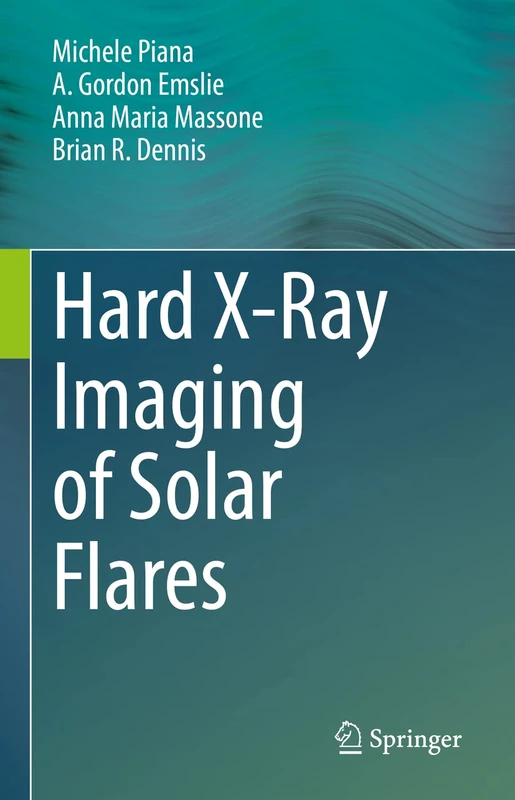
Springer Hard X-Ray Imaging of Solar Flares

Price data last checked 79 day(s) ago - refreshing...

View at Amazon

We'll watch every seller, every day. One email when your price arrives.

It has never been this cheap. We have no record of a lower price.

£90 today · cheaper than every other day in the last 3 months

NEW HERE?

Amazon shows you one price. We show you all of them.

Tosheroon watches Amazon prices so you don't have to. Every product on Amazon has a price history — we make it visible. Set the price you'd actually pay, and we'll email you the second it gets there. No app, no account, one email.

WHAT'S ON THIS PAGE

↓ Price chart
when this has been cheap or pricey
↓ Forecast
where the price is heading next
↓ Statistics
all-time high & low, recent range
↑ Price alert
name your number, we'll email you

Price History & Forecast

Grey patches = out of stock. Cheaper = lower on the chart. Hover for exact prices.

Last 12 days • 12 data points (No recent data available)

Historical
Generating forecast...
£90.25 £85.74 £87.54 £89.35 £91.15 £92.96 £94.76 08 April 2026 10 April 2026 13 April 2026 16 April 2026 19 April 2026

Price Distribution

Price distribution over 12 days • 1 price levels

Days at Price
12 days 0 3 6 9 12 £90 Days at Price

Price Analysis

Most common price: £90 (12 days, 100.0%)

Price range: £90 - £90

Price levels: 1 different prices over 12 days

Description

The idea for this text emerged over several years as the authors participated in research projects related to analysis of data from NASA's RHESSI Small Explorer mission. The data produced over the operational lifetime of this mission inspired many investigations related to a specific science question: the when, where, and how of electron acceleration during solar flares in the stressed magnetic environment of the active Sun. A vital key to unlocking this science problem is the ability to produce high-quality images of hard X-rays produced by bremsstrahlung radiation from electrons accelerated during a solar flare. The only practical way to do this within the technological and budgetary limitations of the RHESSI era was to opt for indirect modalities in which imaging information is encoded as a set of two-dimensional spatial Fourier components.  Radio astronomers had employed Fourier imaging for many years. However, differently than for radio astronomy, X-ray images produced by RHESSI had to be constructed from a very limited number of sparsely distributed and very noisy Fourier components. Further, Fourier imaging is hardly intuitive, and extensive validation of the methods was necessary to ensure that they produced images with sufficient accuracy and fidelity for scientific applications. This book summarizes the results of this development of imaging techniques specifically designed for this form of data. It covers a set of published works that span over two decades, during which various imaging methods were introduced, validated, and applied to observations. Also considering that a new Fourier-based telescope, STIX, is now entering its nominal phase on-board the ESA Solar Orbiter, it became more and more apparent to the authors that it would be a good idea to put together a compendium of these imaging methods and their applications. Hence the book you are now reading.  From the Back Cover The idea for this text emerged over several years as the authors participated in research projects related to analysis of data from NASA's RHESSI Small Explorer mission. The data produced over the operational lifetime of this mission inspired many investigations related to a specific science question: the when, where, and how of electron acceleration during solar flares in the stressed magnetic environment of the active Sun. A vital key to unlocking this science problem is the ability to produce high-quality images of hard X-rays produced by bremsstrahlung radiation from electrons accelerated during a solar flare. The only practical way to do this within the technological and budgetary limitations of the RHESSI era was to opt for indirect modalities in which imaging information is encoded as a set of two-dimensional spatial Fourier components.  Radio astronomers had employed Fourier imaging for many years. However, differently than for radio astronomy, X-ray images produced by RHESSI had to be constructed from a very limited number of sparsely distributed and very noisy Fourier components. Further, Fourier imaging is hardly intuitive, and extensive validation of the methods was necessary to ensure that they produced images with sufficient accuracy and fidelity for scientific applications. This book summarizes the results of this development of imaging techniques specifically designed for this form of data. It covers a set of published works that span over two decades, during which various imaging methods were introduced, validated, and applied to observations. Also considering that a new Fourier-based telescope, STIX, is now entering its nominal phase on-board the ESA Solar Orbiter, it became more and more apparent to the authors that it would be a good idea to put together a compendium of these imaging methods and their applications. Hence the book you are now reading. About the Author Michele Piana is full professor of Numerical Analysis at the Dipartimento di

Product Specifications

Format
hardcover
Domain
Amazon UK
Release Date
22 December 2021
Listed Since
12 August 2021

Barcode

No barcode data available