We can't find the internet
Attempting to reconnect
Something went wrong
Hang in there while we get back on track

£62.80
Springer Molecular Physical Chemistry for Engineering Applications
Price data checked 5 days ago
We'll watch every seller, every day. One email when your price arrives.
It has never been this cheap. We have no record of a lower price.
£63 today · cheaper than every other day in the last 3 months
NEW HERE?
Amazon shows you one price. We show you all of them.
Tosheroon watches Amazon prices so you don't have to. Every product on Amazon has a price history — we make it visible. Set the price you'd actually pay, and we'll email you the second it gets there. No app, no account, one email.
WHAT'S ON THIS PAGE
when this has been cheap or pricey
where the price is heading next
all-time high & low, recent range
name your number, we'll email you
Price History & Forecast
Grey patches = out of stock. Cheaper = lower on the chart. Hover for exact prices.
Last 86 days · 86 data points (no recent data)
Price Distribution
Price distribution over 86 days • 1 price levels
Price Analysis
Most common price: £63 (86 days, 100.0%)
Price range: £63 - £63
Price levels: 1 different prices over 86 days
Description
Product Specifications
- Brand
- Springer
- Format
- hardcover
- ASIN
- 3030638952
- Domain
- Amazon UK
- Release Date
- 07 July 2021
- Listed Since
- 15 October 2020
Barcode
No barcode data available
Similar Products You Might Like

Variational Methods in Molecular Modeling (Molecular Modeling and Simulation)
Springer

Electrostatics of Soft and Disordered Matter
Taylor & Francis

Molecular Physical Chemistry for Engineering Applications
Springer

Intra- and Intermolecular Interactions between Non-covalently Bonded Species (Developments in Physical & Theoretical Chemistry)
Elsevier

Colloids and Interface Science Series, 6 Volume Set
Wiley
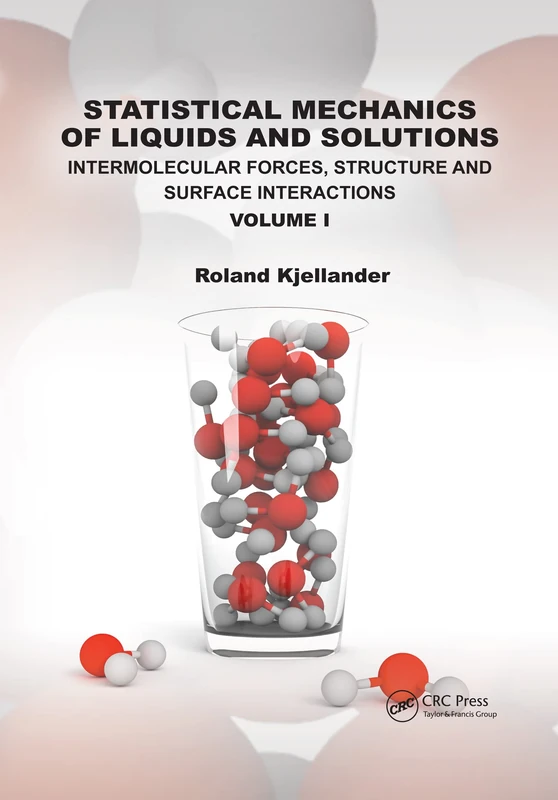
Statistical Mechanics of Liquids and Solutions: Intermolecular Forces, Structure and Surface Interactions Volume I: 1
CRC Press

Nanosensors for Smart Agriculture (Micro and Nano Technologies)
Elsevier

Physical Chemistry: A Modern Introduction, Second Edition
CRC Press

Polymer Hybrid Materials and Nanocomposites: Fundamentals and Applications (Plastics Design Library)
William Andrew
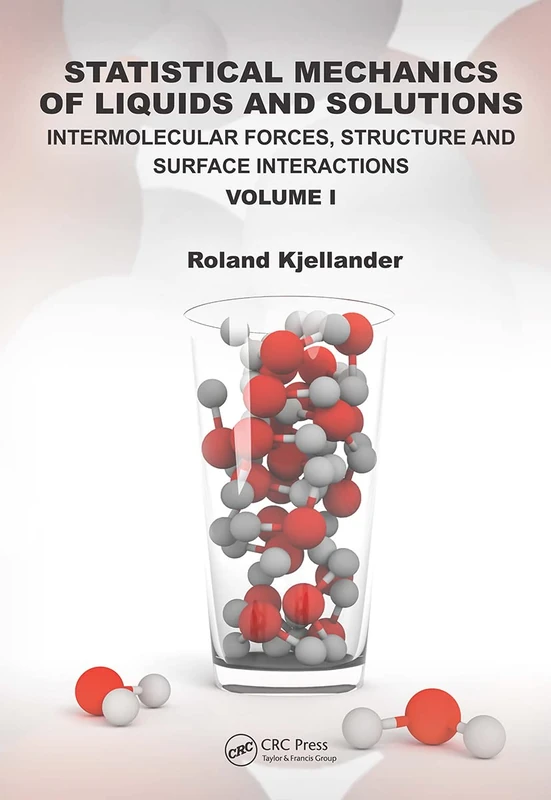
Statistical Mechanics of Liquids and Solutions: Intermolecular Forces, Structure and Surface Interactions Volume I: 1
CRC Press
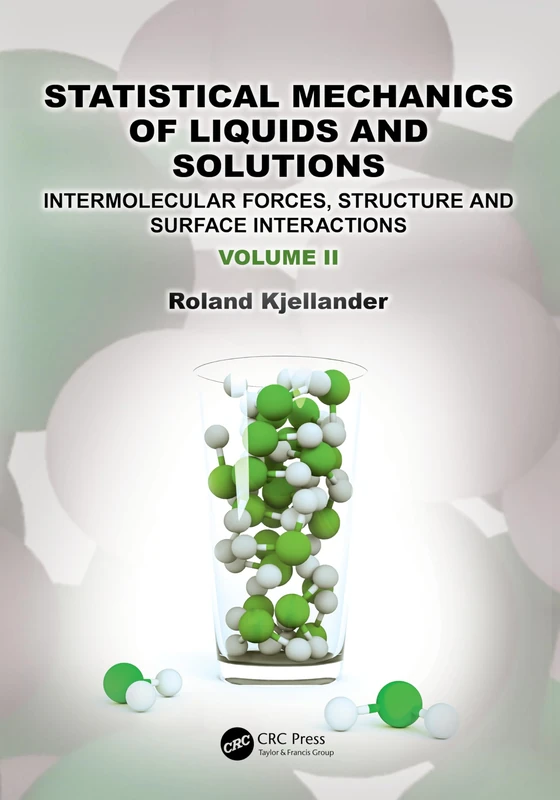
Statistical Mechanics of Liquids and Solutions: Intermolecular Forces, Structure and Surface Interactions: 2
CRC Press

Transient Dynamics of Concentrated Particulate Suspensions Under Shear (Springer Theses)
Springer

Success and Creativity in Scientific Research: Amaze Your Friends and Surprise Yourself
CRC Press

Polymer Thermodynamics: Liquid Polymer-Containing Mixtures: 238 (Advances in Polymer Science, 238)
Springer

Nanoscience: Colloidal and Interfacial Aspects: 147 (Surfactant Science)
CRC Press

Statistical Mechanics of Liquids and Solutions: Intermolecular Forces, Structure and Surface Interactions
CRC Press

Generation of Polymers and Nanomaterials at Liquid-Liquid Interfaces: Application to Crystalline, Light Emitting and Energy Materials
Elsevier

Helical Wormlike Chains in Polymer Solutions
Springer

Biosynthesized Nanomaterials (Volume 94) (Comprehensive Analytical Chemistry, Volume 94)
Elsevier

CRC Press Basic Molecular Quantum Mechanics Textbook
CRC Press

Engineered Nanomaterials and Phytonanotechnology: Challenges for Plant Sustainability: Volume 87 (Comprehensive Analytical Chemistry, Volume 87)
Elsevier

Surface Properties: 107 (Advances in Chemical Physics)
Wiley

Kinetic Theory of Nucleation
CRC Press

Hybrid Nanofluids: Preparation, Characterization and Applications (Micro and Nano Technologies)
Elsevier