£100.10

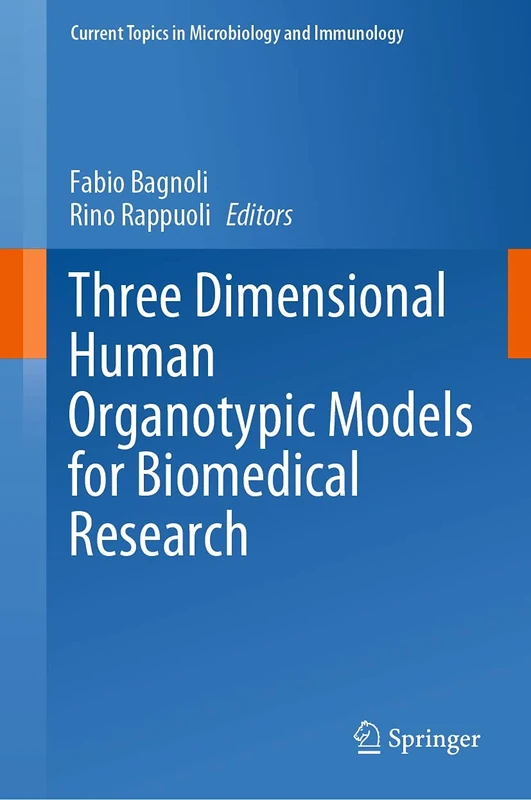
Springer Three Dimensional Human Organotypic Models for Biomedical Research: 430 (Current Topics in Microbiology and Immunology, 430)

Price data last checked 12 day(s) ago - will refresh soon

View at Amazon

We'll watch every seller, every day. One email when your price arrives.

It has never been this cheap. We have no record of a lower price.

£100 today · cheaper than every other day in the last 3 months

NEW HERE?

Amazon shows you one price. We show you all of them.

Tosheroon watches Amazon prices so you don't have to. Every product on Amazon has a price history — we make it visible. Set the price you'd actually pay, and we'll email you the second it gets there. No app, no account, one email.

WHAT'S ON THIS PAGE

↓ Price chart
when this has been cheap or pricey
↓ Forecast
where the price is heading next
↓ Statistics
all-time high & low, recent range
↑ Price alert
name your number, we'll email you

Price History & Forecast

Grey patches = out of stock. Cheaper = lower on the chart. Hover for exact prices.

Last 79 days · 79 data points (no recent data)

Historical
Generating forecast…
£105.68 £99.54 £100.88 £102.22 £103.56 £104.90 £106.24 26 April 2026 15 May 2026 04 June 2026 23 June 2026 13 July 2026

Price Distribution

Price distribution over 79 days • 2 price levels

Days at Price
Current Price
1 day · current 78 days 0 20 39 59 78 £100 £106 Days at Price

Price Analysis

Most common price: £106 (78 days, 98.7%)

Price range: £100 - £106

Price levels: 2 different prices over 79 days

Description

This edited volume discusses the application of very diverse human organotypic models in major areas of biomedical research. The authors lay a main focus on infectious diseases, cancer, allergies, as well as drug/vaccine discovery and toxicology studies. Representing a valid alternative to laboratory animals, these models are relevant for most areas of translational research. As the contemporary research shows, many human tissues can today be cultivated in vitro and used for several research objectives. This book provides an unprecedented overview of recent developments in an exciting field of research methodology. It is a reference guide for scientists in both academia and industry. Readers can update their knowledge and get hands-on recommendations on how to set up an organotypic model in their lab. Chapters 'Progress on Reconstructed Human Skin Models for Allergy Research and Identifying Contact Sensitizers' and 'Human Organotypic Models for Anti-infective Research' of this book are available open access under a CC BY 4.0 license at link.springer.com. From the Back Cover This edited volume discusses the application of very diverse human organotypic models in major areas of biomedical research. The authors lay a main focus on infectious diseases, cancer, allergies, as well as drug/vaccine discovery and toxicology studies. Representing a valid alternative to laboratory animals, these models are relevant for most areas of translational research. As the contemporary research shows, many human tissues can today be cultivated in vitro and used for several research objectives.This book provides an unprecedented overview of recent developments in an exciting field of research methodology. It is a reference guide for scientists in both academia and industry. Readers can update their knowledge and get hands-on recommendations on how to set up an organotypic model in their lab. Chapters 'Progress on Reconstructed Human Skin Models for Allergy Research and Identifying Contact Sensitizers' and 'Human Organotypic Models for Anti-infective Research' of this book are available open access under a CC BY 4.0 license at link.springer.com. About the Author Fabio Bagnoli is discovery project leader of research & development programs at GSK. Research conducted by Fabio led to the filing of several patents as well as publications on various human pathogens published in important peer-reviewed journals. He has served as editor of several publications and is the coordinator of an industrial-academic effort on human organotypic models. He holds a PhD in Molecular and Cellular Microbiology from the University of Padova and conducted post-doctoral studies at Stanford University under the guidance of Dr. Stanley Falkow and Dr. Manuel Amieva. Rino Rappuoli is Chief Scientist and Head External R&D at GSK Vaccines, based in Siena, Italy and Professor of Vaccinology at Imperial College, London. Prior positions: head of Vaccine R&D at Novartis, CSO of Chiron Corporation, head for R&D at Sclavo. He earned his PhD in Biological Sciences at the University of Siena, Italy, and was visiting scientist at Rockefeller University and Harvard Medical School. He is elected member of US National Academy of Sciences (NAS), the European Molecular Biology Organization (EMBO), and the Royal Society of London. Awards received: Gold Medal by the Italian President, Albert B Sabin Gold Medal, Canada Gairdner International Award, European Inventor Award for Lifetime Achievement, and Robert Koch Award. He was nominated third most influential person worldwide in the field of vaccines (Terrapin).   He has published more than 700 works in peer-reviewed journals. He introduced novel scientific concepts: genetic detoxification; cellular microbiology; reverse vaccinology; pangenome. Developed licensed vaccines: acellular pertussis containing a non-toxic mutant of pertussis toxin; first conjugate vaccine against meningoco

Product Specifications

Format
hardcover
Domain
Amazon UK
Release Date
21 May 2021
Listed Since
23 September 2020

Barcode

No barcode data available