We can't find the internet
Attempting to reconnect
Something went wrong
Hang in there while we get back on track

£108.01
This is the most expensive it has ever been. Walk away.
£108 today · previous high £108 · all-time low £107
Springer Analysis and Implementation of Isogeometric Boundary Elements for Electromagnetism (Springer Theses)
We'll watch every seller, every day. One email when your price arrives.
Price History & Forecast
Grey patches = out of stock. Cheaper = lower on the chart. Hover for exact prices.
Last 18 days · 18 data points (no recent data)
NEW HERE?
Amazon shows you one price. We show you all of them.
Tosheroon watches Amazon prices so you don't have to. Every product on Amazon has a price history — we make it visible. Set the price you'd actually pay, and we'll email you the second it gets there. No app, no account, one email.
WHAT'S ON THIS PAGE
when this has been cheap or pricey
where the price is heading next
all-time high & low, recent range
name your number, we'll email you
Price Distribution
Price distribution over 18 days • 2 price levels
Price Analysis
Most common price: £107 (16 days, 88.9%)
Price range: £107 - £108
Price levels: 2 different prices over 18 days
Description
Product Specifications
- Brand
- Springer
- Format
- paperback
- ASIN
- 3030619419
- Domain
- Amazon UK
- Release Date
- 02 December 2021
- Listed Since
- 05 November 2021
Barcode
No barcode data available
Similar Products You Might Like

Electromagnetic Applications: 6 (Topics in Boundary Element Research, 6)
Springer
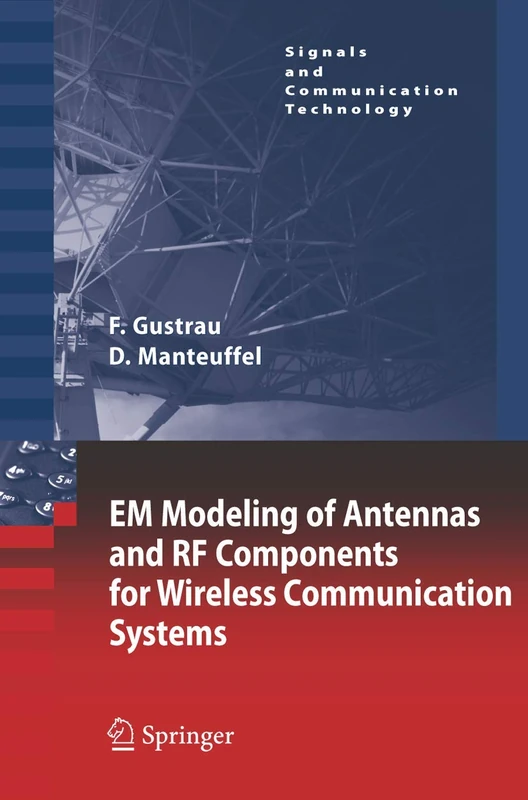
EM Modeling of Antennas and RF Components for Wireless Communication Systems (Signals and Communication Technology)
Springer

Modelling, Simulation and Software Concepts for Scientific-Technological Problems: 57 (Lecture Notes in Applied and Computational Mechanics, 57)
Springer

Electrical Engineering Applications: 7 (Topics in Boundary Element Research, 7)
Springer

Computational Methods for Electromagnetic Phenomena: Electrostatics in Solvation, Scattering, and Electron Transport
Cambridge University Press

Mathematical Foundations of Computational Electromagnetism: 198 (Applied Mathematical Sciences, 198)
Springer
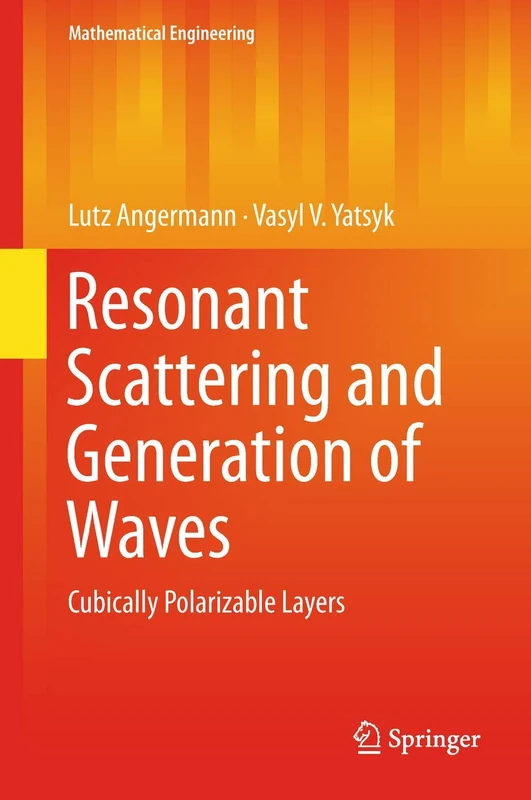
Resonant Scattering and Generation of Waves: Cubically Polarizable Layers (Mathematical Engineering)
Springer

Design Sensitivity Analysis and Optimization of Electromagnetic Systems (Mathematical and Analytical Techniques with Applications to Engineering)
Springer
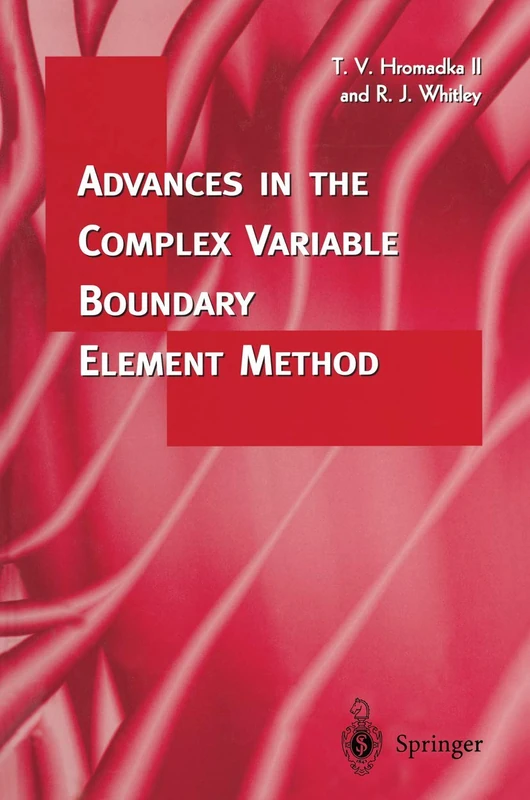
Advances in the Complex Variable Boundary Element Method
Springer
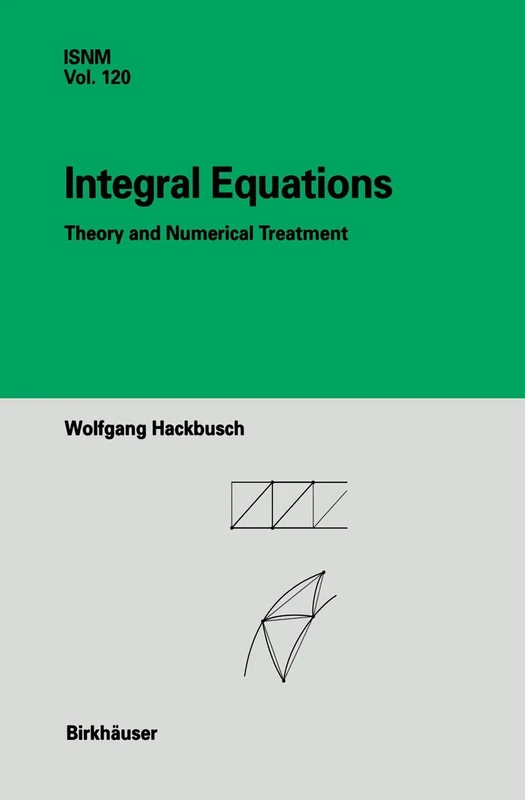
Integral Equations: Theory and Numerical Treatment: 120 (International Series of Numerical Mathematics, 120)
Birkhauser
The Boundary Element Method with Programming: For Engineers and Scientists
Springer

Boundary Element Analysis: Mathematical Aspects and Applications: 29 (Lecture Notes in Applied and Computational Mechanics, 29)
Springer

Perfectly Matched Layer (PML) for Computational Electromagnetics (Synthesis Lectures on Computational Electromagnetics)
Springer

Computational Electromagnetics―Retrospective and Outlook: In Honor of Wolfgang J.R. Hoefer
Springer
Computational Magnetics
Springer

Finite Element Analysis of Beam-to-Beam Contact: 53 (Lecture Notes in Applied and Computational Mechanics, 53)
Springer

Field Models in Electricity and Magnetism
Springer

Basic Principles and Applications: 1 (Topics in Boundary Element Research, 1)
Springer

Electromagnetic Scattering
Springer

Advances in Boundary Element Techniques (Springer Series in Computational Mechanics)
Springer

Numerical Models in Groundwater Pollution
Springer

Eddy Current Approximation of Maxwell Equations: Theory, Algorithms and Applications: 4 (MS&A, 4)
Springer

Boundary element methods for solving inverse problems: The modelling of contaminated fluid flows
LAP Lambert Academic Publishing
Electromagnetics through the Finite Element Method: A Simplified Approach Using Maxwell's Equations
CRC Press