We can't find the internet
Attempting to reconnect
Something went wrong
Hang in there while we get back on track
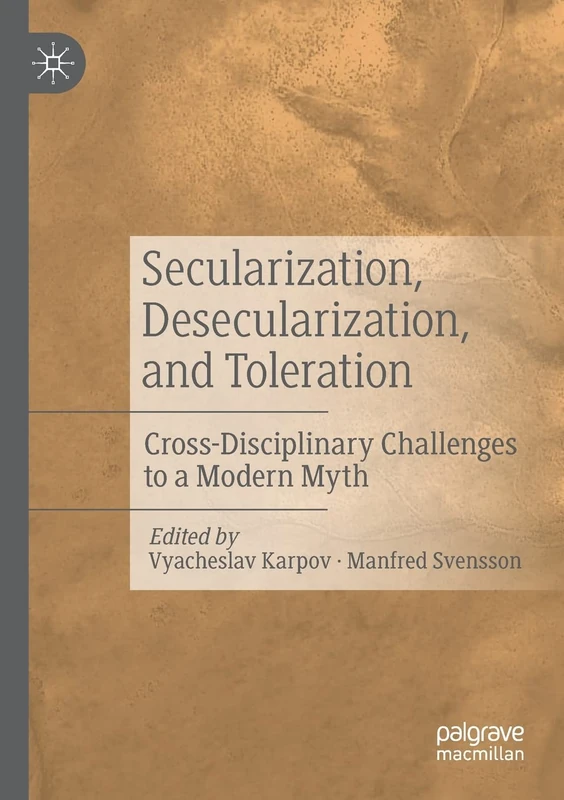
£100.11
This is the most expensive it has ever been. Walk away.
£100 today · previous high £100 · all-time low £100
MACMILLAN Secularization, Desecularization, and Toleration: Cross-Disciplinary Challenges to a Modern Myth
We'll watch every seller, every day. One email when your price arrives.
Price History & Forecast
Grey patches = out of stock. Cheaper = lower on the chart. Hover for exact prices.
Last 17 days · 17 data points (no recent data)
NEW HERE?
Amazon shows you one price. We show you all of them.
Tosheroon watches Amazon prices so you don't have to. Every product on Amazon has a price history — we make it visible. Set the price you'd actually pay, and we'll email you the second it gets there. No app, no account, one email.
WHAT'S ON THIS PAGE
when this has been cheap or pricey
where the price is heading next
all-time high & low, recent range
name your number, we'll email you
Price Distribution
Price distribution over 17 days • 1 price levels
Price Analysis
Most common price: £100 (17 days, 100.0%)
Price range: £100 - £100
Price levels: 1 different prices over 17 days
Description
Product Specifications
- Brand
- MACMILLAN
- Format
- paperback
- ASIN
- 3030540480
- Domain
- Amazon UK
- Release Date
- 24 October 2021
- Listed Since
- 26 September 2021
Barcode
No barcode data available
Similar Products You Might Like
Secularization: An Essay in Normative Metaphysics
Springer

The Secular in South, East, and Southeast Asia (Global Diversities)
MACMILLAN

Comparative Secularisms in a Global Age
MACMILLAN
Secularisations and Their Debates: Perspectives on the Return of Religion in the Contemporary West: 5 (Sophia Studies in Cross-cultural Philosophy of Traditions and Cultures, 5)
Springer

The Secular Sacred: Emotions of Belonging and the Perils of Nation and Religion (Palgrave Politics of Identity and Citizenship Series)
MACMILLAN

Muslim Societies and the Challenge of Secularization: An Interdisciplinary Approach: 1 (Muslims in Global Societies Series, 1)
Springer

Secularism, Decolonisation, and the Cold War in South and Southeast Asia (Routledge Studies in the Modern History of Asia)
Routledge

Secular Religions: The Key Concepts (Routledge Key Guides)
Routledge
Conservative Religion and Mainstream Culture: Opposition, Negotiation, and Adaptation (Palgrave Studies in Lived Religion and Societal Challenges)
MACMILLAN

Lived Religion and the Politics of (In)Tolerance (Palgrave Studies in Lived Religion and Societal Challenges)
MACMILLAN
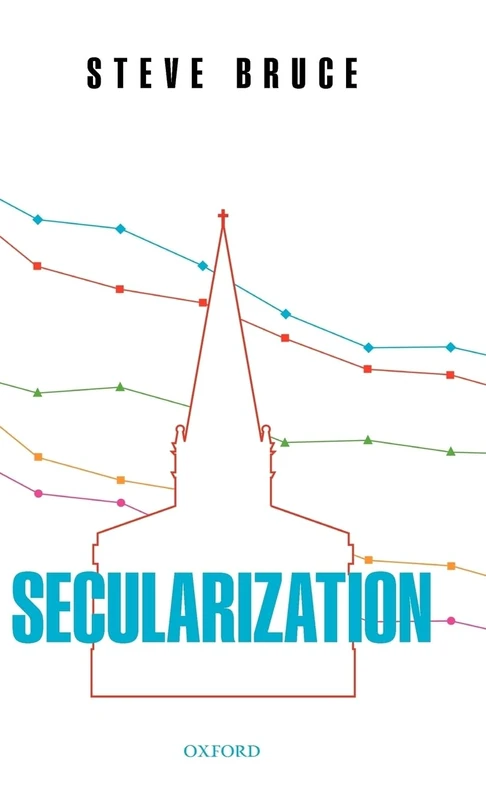
Secularization: In Defence of an Unfashionable Theory
Oxford University Press
Negotiating Religion: Cross-disciplinary perspectives
Routledge
Religion and Sexuality: Diversity and the Limits of Tolerance (Sexuality Studies)
University of British Columbia Press

Beyond Church and State: Democracy, Secularism, and Conversion
Cambridge University Press

Post-Christian Interreligious Liberation Theology
MACMILLAN

Law, Religion and Love: Seeking Ecumenical Justice for the Other (Law and Religion)
Routledge

Religion and Civil Society in Europe
Springer

Muslim Societies and the Challenge of Secularization: An Interdisciplinary Approach: 1 (Muslims in Global Societies Series, 1)
Springer

The Cultivation of Conformity: Towards a General Theory of Internal Secularisation
Routledge

Religion in International Relations: The Return from Exile (Culture and Religion in International Relations)
MACMILLAN

Christian Orthodox Migrants in Western Europe: Secularization and Modernity through the Lens of the Gift Paradigm (Routledge Studies in Religion)
Routledge

Law, Religion and Tradition: 1 (Law and Religion in a Global Context, 1)
Springer

Science and Catholicism in Argentina (1750–1960): A Study on Scientific Culture, Religion, and Secularisation in Latin America: 89 (Religion and Society, 89)
De Gruyter
The Crisis of Muslim Religious Discourse: The Necessary Shift from Plato to Kant (Routledge Studies in Islamic Philosophy)
Routledge