£72.63

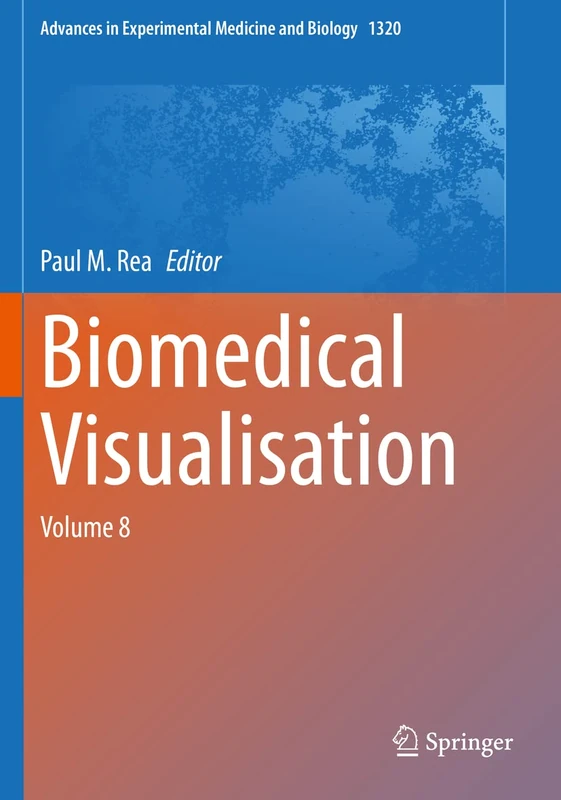
Springer Biomedical Visualisation: Volume 8: 1320 (Advances in Experimental Medicine and Biology, 1320)

Price data last checked 48 day(s) ago - refreshing...

View at Amazon

Price History & Forecast

Last 43 days • 43 data points (No recent data available)

Historical
Generating forecast...
£72.63 £69.00 £70.45 £71.90 £73.36 £74.81 £76.26 25 January 2026 04 February 2026 15 February 2026 25 February 2026 08 March 2026

Price Distribution

Price distribution over 43 days • 1 price levels

Days at Price
43 days 0 11 22 32 43 £73 Days at Price

Price Analysis

Most common price: £73 (43 days, 100.0%)

Price range: £73 - £73

Price levels: 1 different prices over 43 days

Description

Product Description This edited book explores the use of technology to enable us to visualise the life sciences in a more meaningful and engaging way. It will enable those interested in visualisation techniques to gain a better understanding of the applications that can be used in visualisation, imaging and analysis, education, engagement and training. The reader will be able to explore the utilisation of technologies from a number of fields to enable an engaging and meaningful visual representation of the biomedical sciences, with a focus in this volume related to anatomy, and clinically applied scenarios. The first six chapters in this volume show the wide variety of tools and methodologies that digital technologies and visualisation techniques can be utilised and adopted in the educational setting. This ranges from body painting, clinical neuroanatomy, histology and veterinary anatomy through to real time visualisations and the uses of digital and social media for anatomical education. The last four chapters represent the diversity that technology has to be able to use differing realities and 3D capture in medical visualisation, and how remote visualisation techniques have developed. Finally, it concludes with an analysis of image overlays and augmented reality and what the wider literature says about this rapidly evolving field. From the Back Cover This edited book explores the use of technology to enable us to visualise the life sciences in a more meaningful and engaging way. It will enable those interested in visualisation techniques to gain a better understanding of the applications that can be used in visualisation, imaging and analysis, education, engagement and training. The reader will be able to explore the utilisation of technologies from a number of fields to enable an engaging and meaningful visual representation of the biomedical sciences, with a focus in this volume related to anatomy, and clinically applied scenarios. The first six chapters in this volume show the wide variety of tools and methodologies that digital technologies and visualisation techniques can be utilised and adopted in the educational setting. This ranges from body painting, clinical neuroanatomy, histology and veterinary anatomy through to real time visualisations and the uses of digital and social media for anatomical education. The last four chapters represent the diversity that technology has to be able to use differing realities and 3D capture in medical visualisation, and how remote visualisation techniques have developed. Finally, it concludes with an analysis of image overlays and augmented reality and what the wider literature says about this rapidly evolving field. About the Author Paul is a Professor of Digital and Anatomical Education at the University of Glasgow. He is qualified with a medical degree (MBChB), a MSc (by research) in craniofacial anatomy/surgery, a PhD in neuroscience, the Diploma in Forensic Medical Science (DipFMS), and an MEd with Merit (Learning and Teaching in Higher Education). He is an elected Fellow of the Royal Society for the encouragement of Arts, Manufactures and Commerce (FRSA), elected Fellow of the Royal Society of Biology (FRSB), Senior Fellow of the Higher Education Academy, professional member of the Institute of Medical Illustrators (MIMI) and a registered medical illustrator with the Academy for Healthcare Science. Paul has published widely and presented at many national and international meetings, including invited talks. He sits on the Executive Editorial Committee for the Journal of Visual Communication in Medicine, is Associate Editor for the European Journal of Anatomy and reviews for 25 different journals/publishers. He is the Public Engagement and Outreach lead for anatomy coordinating collaborative projects with the Glasgow Science Centre, NHS and Royal College of Physicians and Surgeons of Glasgow. Paul is also a STEM ambassador and has visited numerous schools to undertake ou

Product Specifications

Format
paperback
Domain
Amazon UK
Release Date
20 November 2021
Listed Since
24 October 2021

Barcode

No barcode data available