We can't find the internet
Attempting to reconnect
Something went wrong
Hang in there while we get back on track
£108.01
It has never been this cheap. We have no record of a lower price.
£108 today · cheaper than every other day in the last 3 months
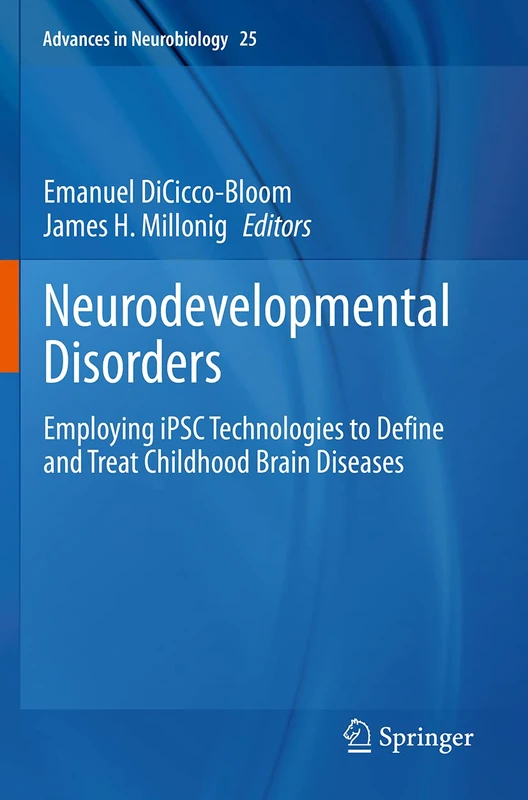
Springer Neurodevelopmental Disorders: Employing iPSC Technologies to Define and Treat Childhood Brain Diseases: 25 (Advances in Neurobiology, 25)
Price data last checked 74 day(s) ago - refreshing...
We'll watch every seller, every day. One email when your price arrives.
Price History & Forecast
Grey patches = out of stock. Cheaper = lower on the chart. Hover for exact prices.
Last 7 days · 7 data points (no recent data)
Price data last checked 74 day(s) ago - refreshing...
NEW HERE?
Amazon shows you one price. We show you all of them.
Tosheroon watches Amazon prices so you don't have to. Every product on Amazon has a price history — we make it visible. Set the price you'd actually pay, and we'll email you the second it gets there. No app, no account, one email.
WHAT'S ON THIS PAGE
when this has been cheap or pricey
where the price is heading next
all-time high & low, recent range
name your number, we'll email you
Price Distribution
Price distribution over 7 days • 1 price levels
Price Analysis
Most common price: £108 (7 days, 100.0%)
Price range: £108 - £108
Price levels: 1 different prices over 7 days
Description
Product Specifications
- Brand
- Springer
- Format
- paperback
- ASIN
- 3030454959
- Domain
- Amazon UK
- Release Date
- 24 June 2021
- Listed Since
- 28 May 2021
Barcode
No barcode data available
Similar Products You Might Like
The 2027-2032 World Outlook for Optic Nerve Disorders Treatments

The 2027-2032 World Outlook for Complex Programmable Logic Devices (CPLDs) and Field Programmable Gate Arrays (FPGAs)
The 2026-2031 World Outlook for Cloud Computing Applications in Cell Biology, Genomics and Drug Developments
The 2027-2032 World Outlook for Programmable Logic Devices

The 2027-2032 World Outlook for IBD (Ulcerative Colitis and Crohn's Disease) Treatments
The 2025-2030 World Outlook for Telecommunication Double Play Services
The 2027-2032 World Outlook for Scientific Toys
The 2027-2032 World Outlook for Interventional Radiology Systems
The 2027-2032 World Outlook for High-Density Multiplexed Diagnostic Assays

The 2027-2032 World Outlook for Speech Generating Devices

The 2027-2032 World Outlook for Antidepressants for Anxiety Disorders
The 2027-2032 World Outlook for Medical Bionic Implants and Exoskeletons
The 2027-2032 World Outlook for Chronic Obstructive Pulmonary Disease Treatments

The 2025-2030 World Outlook for Hydrogen Generation

The 2027-2032 World Outlook for Baby Food and Infant Formulas
The 2027-2032 World Outlook for Medical Exoskeletons
The 2027-2032 World Outlook for Vital Organs Support Systems and Medical Bionics
The 2027-2032 World Outlook for Media Streaming Devices
The 2027-2032 World Outlook for High Density Interconnects
The 2027-2032 World Outlook for Smart Exoskeletons

The 2027-2032 World Outlook for Nanoscale 3D Printings

The 2027-2032 World Outlook for Newborn Disposable Diapers

The 2027-2032 World Outlook for MEMS Foundry Outsourcing