£109.18

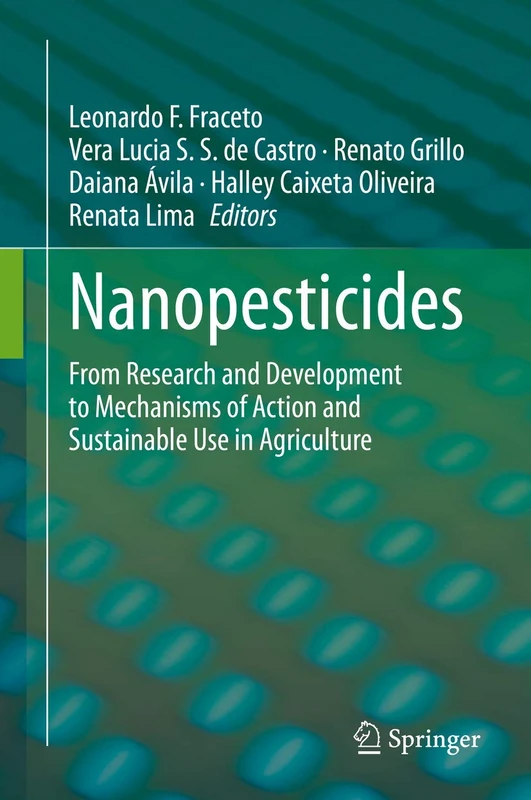
Springer Nanopesticides: From Research and Development to Mechanisms of Action and Sustainable Use in Agriculture

Price data last checked 9 day(s) ago - will refresh soon

View at Amazon

We'll watch every seller, every day. One email when your price arrives.

About as cheap as it gets. The only time it was cheaper was 1 month ago.

£109 today · all-time low £109 (May 2026) · usually £109

NEW HERE?

Amazon shows you one price. We show you all of them.

Tosheroon watches Amazon prices so you don't have to. Every product on Amazon has a price history — we make it visible. Set the price you'd actually pay, and we'll email you the second it gets there. No app, no account, one email.

WHAT'S ON THIS PAGE

↓ Price chart
when this has been cheap or pricey
↓ Forecast
where the price is heading next
↓ Statistics
all-time high & low, recent range
↑ Price alert
name your number, we'll email you

Price History & Forecast

Grey patches = out of stock. Cheaper = lower on the chart. Hover for exact prices.

Last 82 days · 82 data points (no recent data)

Historical
Generating forecast…
£113.77 £108.44 £109.60 £110.76 £111.93 £113.09 £114.26 25 April 2026 15 May 2026 04 June 2026 24 June 2026 15 July 2026

Price Distribution

Price distribution over 82 days • 2 price levels

Days at Price
Current Price
51 days · current 31 days 0 13 26 38 51 £109 £114 Days at Price

Price Analysis

Most common price: £109 (51 days, 62.2%)

Price range: £109 - £114

Price levels: 2 different prices over 82 days

Description

This book explores the development of nanopesticides and tests of their biological activity against target organisms. It also covers the effects of nanopesticides in the aquatic and terrestrial environments, along with related subjects including fate, behaviour, mechanisms of action and toxicity. Moreover, the book discusses the potential risks of nanopesticides for non-target organisms, as well as regulatory issues and future perspectives. From the Back Cover This book explores the development of nanopesticides and tests of their biological activity against target organisms. It also covers the effects of nanopesticides in the aquatic and terrestrial environments, along with related subjects including fate, behaviour, mechanisms of action and toxicity. Moreover, the book discusses the potential risks of nanopesticides for non-target organisms, as well as regulatory issues and future perspectives. About the Author Leonardo F. Fraceto holds a PhD in Molecular and Functional Biology from São Paulo State University, where he has developed carrier systems for herbicides and other compounds of interest for pest control in agriculture, resulting in research articles and patents. In addition, he has conducted studies on long-term repellents for controlling arboviruses and pests. Vera Lúcia de Castro holds a PhD in Experimental Pathology from the University of São Paulo and joined Embrapa to develop ecotoxicology studies in non-target organisms. Her main focus is on the ecotoxicological effects of photocatalytic nanoparticles and hybrid nanomaterials on aquatic organisms, as well as the effects of nanoparticles and nanopesticides.Renato Grillo is a Professor of Chemistry and Biochemistry at São Paulo State University. He received his PhD and MS degrees from the University of Campinas and was a post-doc at the International Iberian Nanotechnology Laboratory and Federal University of ABC. He is an expert on environmental nanotechnology, including the development of nanostructured solutions for the controlled release of pesticides, interactions of nanomaterials with natural colloids, exposure and risk assessment.  Daiana Ávila holds a PhD in Toxicological Biochemistry from the Federal University of Santa Maria and completed her postdoc at Vanderbilt University. Currently an Associate Professor at the Federal University of Pampa, her research focuses on nanotoxicology using Caenorhabditis elegans as an alternative animal model. She received the “For Woman in Science- L´Oreal/UNESCO/ABC” Award in 2015. Halley Caixeta Oliveira holds a PhD in Molecular and Functional Biology from the State University of Campinas and completed his postdoc in Plant Physiology at the same institution. He is currently an Associate Professor at the State University of Londrina. An expert on plant biochemistry and physiology, his research focuses on how plants respond to abiotic stresses and how we can improve plant performance in a scenario of climate change by exploring the application of nanotechnology in agriculture and the plant sciences. Renata de Lima holds an MSc in Genetics and Evolution from the Federal University of São Carlos and a PhD in Medical Sciences from the State University of Campinas. She was the coordinator of the Biotechnology and the Engineering of Biotechnology and Bioprocess undergraduate courses at the University of Sorocaba. Her current research areas are ecotoxicology, toxicity of nanomaterials, environmental mutagenesis, agrochemicals and biocides.

Product Specifications

Format
hardcover
Domain
Amazon UK
Release Date
07 July 2020
Listed Since
03 March 2020

Barcode

No barcode data available