We can't find the internet
Attempting to reconnect
Something went wrong
Hang in there while we get back on track

£86.45
It has never been this cheap. We have no record of a lower price.
£86 today · cheaper than every other day in the last 3 months
Springer Finite Volumes for Complex Applications IX - Methods, Theoretical Aspects, Examples: FVCA 9, Bergen, Norway, June 2020: 323 (Springer Proceedings in Mathematics & Statistics, 323)
We'll watch every seller, every day. One email when your price arrives.
Price History & Forecast
Grey patches = out of stock. Cheaper = lower on the chart. Hover for exact prices.
Last 39 days · 39 data points (no recent data)
NEW HERE?
Amazon shows you one price. We show you all of them.
Tosheroon watches Amazon prices so you don't have to. Every product on Amazon has a price history — we make it visible. Set the price you'd actually pay, and we'll email you the second it gets there. No app, no account, one email.
WHAT'S ON THIS PAGE
when this has been cheap or pricey
where the price is heading next
all-time high & low, recent range
name your number, we'll email you
Price Distribution
Price distribution over 39 days • 1 price levels
Price Analysis
Most common price: £86 (39 days, 100.0%)
Price range: £86 - £86
Price levels: 1 different prices over 39 days
Description
Product Specifications
- Brand
- Springer
- Format
- hardcover
- ASIN
- 3030436500
- Domain
- Amazon UK
- Release Date
- 10 June 2020
- Listed Since
- 16 February 2020
Barcode
No barcode data available
Similar Products You Might Like

Finite Volumes for Complex Applications VIII - Methods and Theoretical Aspects: FVCA 8, Lille, France, June 2017: 199 (Springer Proceedings in Mathematics & Statistics, 199)
Springer

Finite Volumes for Complex Applications VII-Elliptic, Parabolic and Hyperbolic Problems: FVCA 7, Berlin, June 2014: 78 (Springer Proceedings in Mathematics & Statistics, 78)
Springer
Price unavailable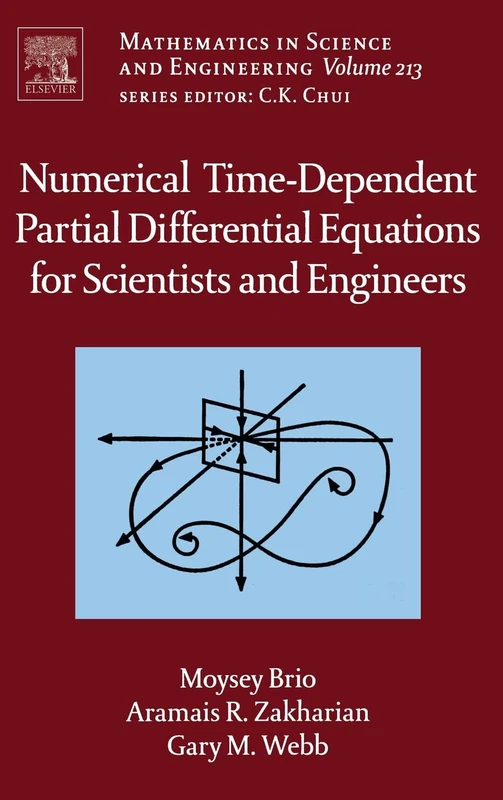
Numerical Time-Dependent Partial Differential Equations for Scientists and Engineers: Volume 213 (Mathematics in Science and Engineering, Volume 213)
Elsevier

Numerical Methods for Partial Differential Equations: An Introduction
Wiley

Convection-Diffusion Problems: An Introduction to Their Analysis and Numerical Solution (Graduate Studies in Mathematics)

Finite Elements III: First-Order and Time-Dependent PDEs: 74 (Texts in Applied Mathematics, 74)
Springer

Finite Elements III: First-Order and Time-Dependent PDEs: 74 (Texts in Applied Mathematics, 74)
Springer
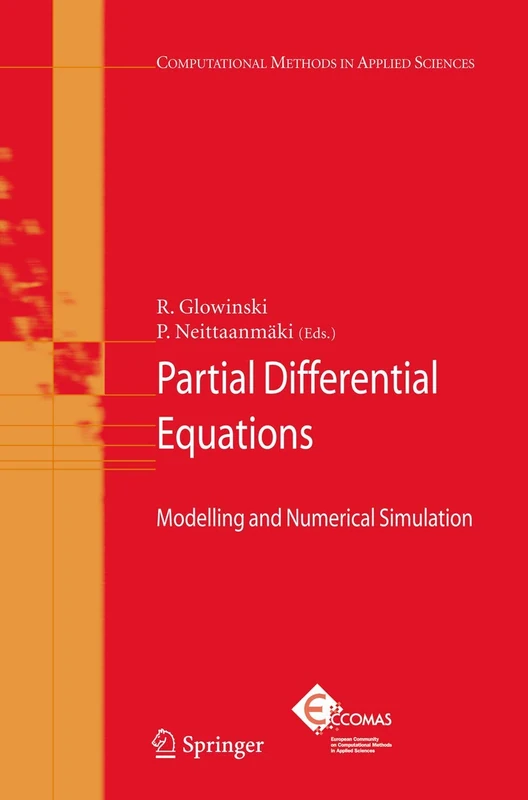
Springer Partial Differential Equations - Numerical Simulation
Springer

Numerical Methods for Partial Differential Equations: Finite Difference and Finite Volume Methods
Elsevier

RECENT ADVANCES IN COMPUTATIONAL SCIENCES: SELECTED PAPERS FROM THE INTERNATIONAL WORKSHOP ON COMPUTATIONAL SCIENCES AND ITS EDUCATION
World Scientific Publishing Company

Numerical Models for Differential Problems: 16 (MS&A, 16)
Springer

Partial Differential Equations in Action: From Modelling to Theory: 147 (UNITEXT, 147)
Springer

Meshfree Methods for Partial Differential Equations: 26 (Lecture Notes in Computational Science and Engineering, 26)
Springer

Property-preserving Numerical Schemes For Conservation Laws
World Scientific Publishing Company

BEM-based Finite Element Approaches on Polytopal Meshes: 130 (Lecture Notes in Computational Science and Engineering, 130)
Springer

Numerical Methods for Conservation Laws: From Analysis to Algorithm (Computational Science and Engineering)
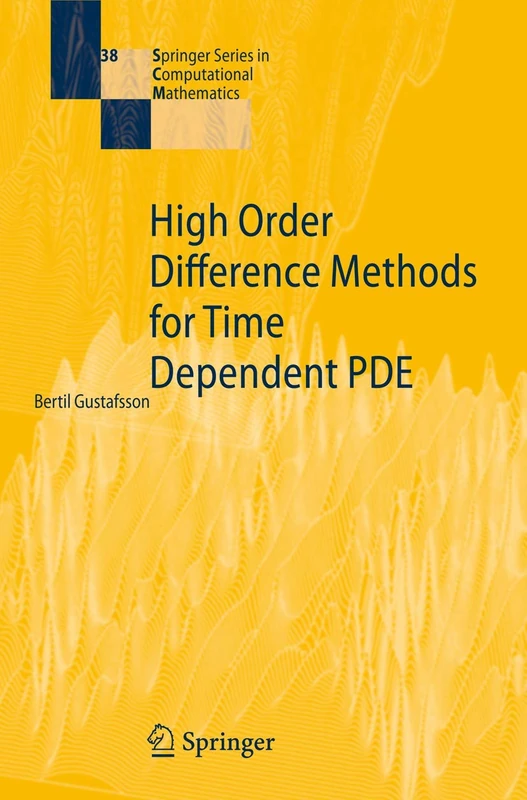
High Order Difference Methods for Time Dependent PDE: 38 (Springer Series in Computational Mathematics, 38)
Springer

Numerical Differential Equations: Theory And Technique, Ode Methods, Finite Differences, Finite Elements And Collocation
World Scientific Publishing Company
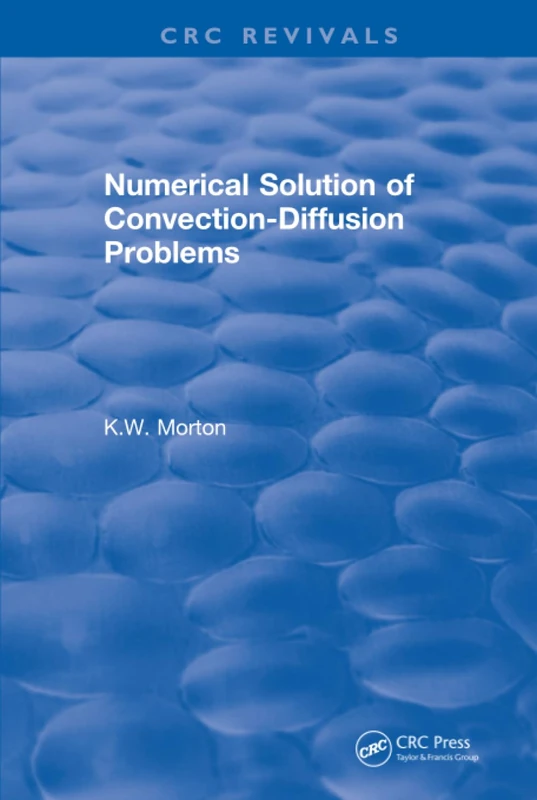
Revival: Numerical Solution Of Convection-Diffusion Problems (1996) (CRC Press Revivals)
CRC Press

Godunov-type Schemes: An Introduction for Engineers
Elsevier

Numerical Solution of Time-Dependent Advection-Diffusion-Reaction Equations: 33 (Springer Series in Computational Mathematics, 33)
Springer

The Hybrid High-Order Method for Polytopal Meshes: Design, Analysis, and Applications: 19 (MS&A, 19)
Springer

The Hybrid High-Order Method for Polytopal Meshes: Design, Analysis, and Applications: 19 (MS&A, 19)
Springer
Essential Mathematics for the Physical Sciences, Volume 1: Homogenous Boundary Value Problems, Fourier Methods, and Special Functions (Iop Concise Physics)
Morgan & Claypool