We can't find the internet
Attempting to reconnect
Something went wrong
Hang in there while we get back on track

£99.87
It has never been this cheap. We have no record of a lower price.
£100 today · cheaper than every other day in the last 3 months
Springer Advances in Social Networking-based Learning: Machine Learning-based User Modelling and Sentiment Analysis: 181 (Intelligent Systems Reference Library, 181)
We'll watch every seller, every day. One email when your price arrives.
Price History & Forecast
Grey patches = out of stock. Cheaper = lower on the chart. Hover for exact prices.
Last 16 days · 16 data points (no recent data)
NEW HERE?
Amazon shows you one price. We show you all of them.
Tosheroon watches Amazon prices so you don't have to. Every product on Amazon has a price history — we make it visible. Set the price you'd actually pay, and we'll email you the second it gets there. No app, no account, one email.
WHAT'S ON THIS PAGE
when this has been cheap or pricey
where the price is heading next
all-time high & low, recent range
name your number, we'll email you
Price Distribution
Price distribution over 16 days • 1 price levels
Price Analysis
Most common price: £100 (16 days, 100.0%)
Price range: £100 - £100
Price levels: 1 different prices over 16 days
Description
Product Specifications
- Brand
- Springer
- Format
- paperback
- ASIN
- 3030391329
- Domain
- Amazon UK
- Release Date
- 21 January 2021
- Listed Since
- 25 December 2020
Barcode
No barcode data available
Similar Products You Might Like

Machine Learning Paradigms: Advances in Learning Analytics: 158 (Intelligent Systems Reference Library, 158)
Springer

Semantic Hyper/Multimedia Adaptation: Schemes and Applications: 418 (Studies in Computational Intelligence, 418)
Springer

Putting Social Media and Networking Data in Practice for Education, Planning, Prediction and Recommendation (Lecture Notes in Social Networks)
Springer
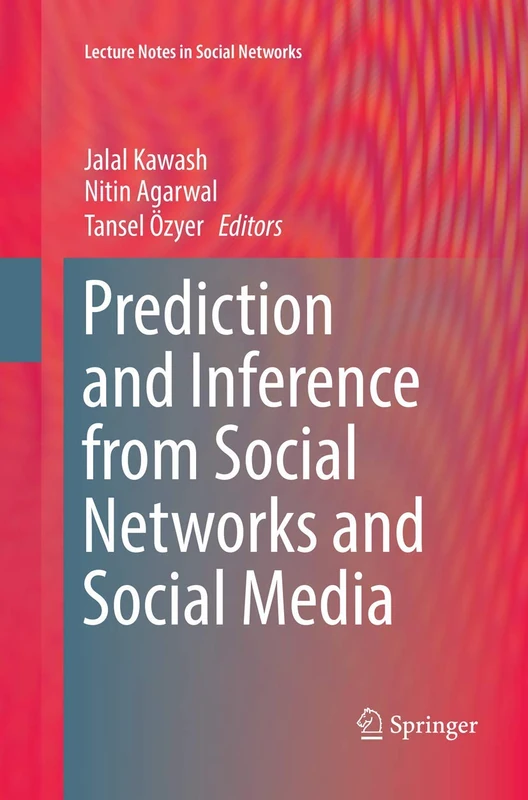
Prediction and Inference from Social Networks and Social Media (Lecture Notes in Social Networks)
Springer

Intelligent Adaptation and Personalization Techniques in Computer-Supported Collaborative Learning: 408 (Studies in Computational Intelligence, 408)
Springer

Hybrid Intelligence for Social Networks
Springer

Towards an Intelligent Learning Management System Under Blended Learning: Trends, Profiles and Modeling Perspectives: 59 (Intelligent Systems Reference Library, 59)
Springer

Smart Learning Environments (Lecture Notes in Educational Technology)
Springer

Bayesian Networks for Managing Learner Models in Adaptive Hypermedia Systems: Emerging Research and Opportunities
Information Science Reference

E-Learning Systems: Intelligent Techniques for Personalization: 112 (Intelligent Systems Reference Library, 112)
Springer

Machine Learning Paradigms: Advances in Deep Learning-based Technological Applications: 18 (Learning and Analytics in Intelligent Systems, 18)
Springer

Exploring the Theory, Pedagogy and Practice of Networked Learning
Springer

Intelligent Interactive Systems in Knowledge-Based Environments: 104 (Studies in Computational Intelligence, 104)
Springer

E-Learning Networked Environments and Architectures: A Knowledge Processing Perspective (Advanced Information and Knowledge Processing)
Springer

Social Networking and Education: Global Perspectives (Lecture Notes in Social Networks)
Springer

Applications of Social Media and Social Network Analysis (Lecture Notes in Social Networks)
Springer

New Perspectives on Affect and Learning Technologies: 3 (Explorations in the Learning Sciences, Instructional Systems and Performance Technologies, 3)
Springer

Research, Boundaries, and Policy in Networked Learning (Research in Networked Learning)
Springer
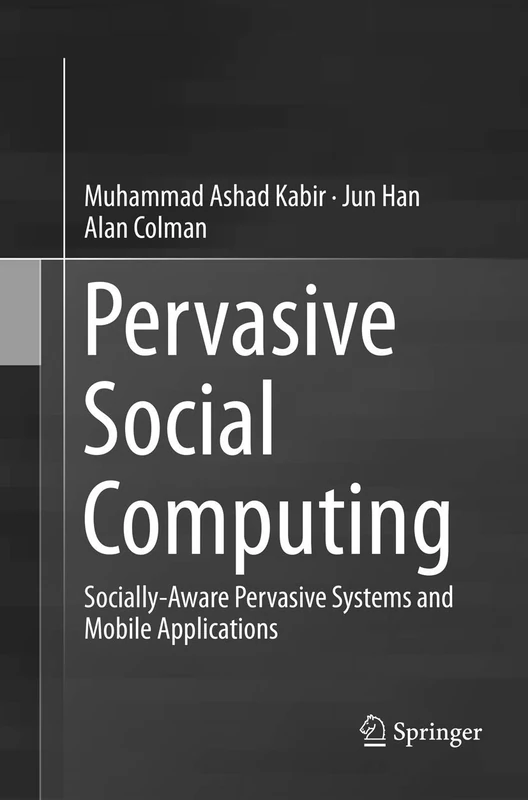
Pervasive Social Computing: Socially-Aware Pervasive Systems and Mobile Applications
Springer

Sentiment Analysis and Ontology Engineering: An Environment of Computational Intelligence: 639 (Studies in Computational Intelligence, 639)
Springer

Advances in Social Media Analysis: 602 (Studies in Computational Intelligence, 602)
Springer

Advances in Social Media Analysis: 602 (Studies in Computational Intelligence, 602)
Springer

Advanced Techniques in Web Intelligence-2: Web User Browsing Behaviour and Preference Analysis: 452 (Studies in Computational Intelligence, 452)
Springer
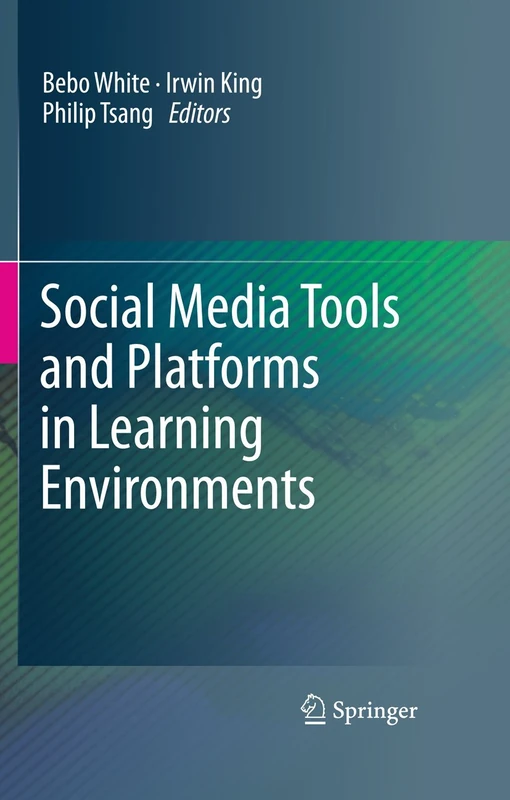
Social Media Tools and Platforms in Learning Environments
Springer