£91.37

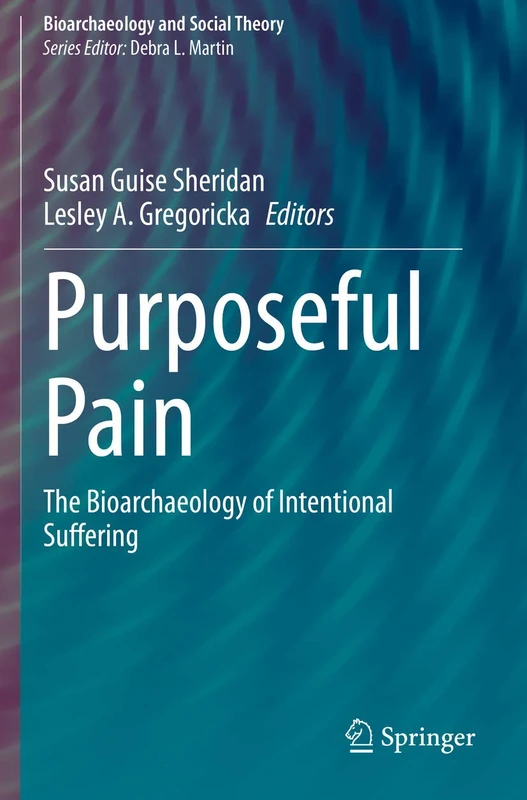
Springer Purposeful Pain: The Bioarchaeology of Intentional Suffering (Bioarchaeology and Social Theory)

Price data last checked 91 day(s) ago - refreshing...

View at Amazon

We'll watch every seller, every day. One email when your price arrives.

This is the usual price. Wait for it to drop, or tell us your number.

£91 today · usual range £0–£0 · best ever £86

NEW HERE?

Amazon shows you one price. We show you all of them.

Tosheroon watches Amazon prices so you don't have to. Every product on Amazon has a price history — we make it visible. Set the price you'd actually pay, and we'll email you the second it gets there. No app, no account, one email.

WHAT'S ON THIS PAGE

↓ Price chart
when this has been cheap or pricey
↓ Forecast
where the price is heading next
↓ Statistics
all-time high & low, recent range
↑ Price alert
name your number, we'll email you

Price History & Forecast

Grey patches = out of stock. Cheaper = lower on the chart. Hover for exact prices.

Last 640 days • 640 data points (No recent data available)

Historical
Generating forecast...
£109.99 £83.52 £89.30 £95.07 £100.85 £106.62 £112.40 07 July 2024 13 December 2024 22 May 2025 29 October 2025 07 April 2026

Price Distribution

Price distribution over 640 days • 7 price levels

Days at Price
Current Price
197 days 29 days 37 days 118 days 101 days 152 days · current 6 days 0 49 99 148 197 £86 £87 £88 £89 £90 £91 £110 Days at Price

Price Analysis

Most common price: £86 (197 days, 30.8%)

Price range: £86 - £110

Price levels: 7 different prices over 640 days

Description

Pain is an evolutionary and adaptive mechanism to prevent harm to an individual. Beyond this, how it is defined, expressed, and borne is dictated culturally. Thus, the study of pain requires a holistic approach crossing cultures, disciplines, and time. This volume explores how and why pain-inducing behaviors are selected, including their potential to demonstrate individuality, navigate social hierarchies, and express commitment to an ideal. It also explores how power dynamics affect individual choice, at times requiring self-induced suffering. Taking bioanthropological and bioarchaeological approaches, this volume focuses on those who purposefully seek pain to show that, while often viewed as “exotic,” the pervasiveness of pain-inducing practices is more normative than expected. Theory and practice are employed to re-conceptualize pain as a strategic path towards achieving broader individual and societal goals. Past and present motivations for self-inflicted pain, its socio-political repercussions, and the physical manifestations of repetitive or long-term pain inducing behaviors are examined. Chapters span geographic and temporal boundaries and a wide variety of activities to illustrate how purposeful pain is used by individuals for personal expression and manipulated by political powers to maintain the status quo. This volume reveals how bioarchaeology illuminates paleopathology, how social theory enhances bioarchaeology, and how ethnography benefits from a longer temporal perspective. From the Back Cover Pain is an evolutionary and adaptive mechanism to prevent harm to an individual. Beyond this, how it is defined, expressed, and borne is dictated culturally. Thus, the study of pain requires a holistic approach crossing cultures, disciplines, and time. This volume explores how and why pain-inducing behaviors are selected, including their potential to demonstrate individuality, navigate social hierarchies, and express commitment to an ideal. It also explores how power dynamics affect individual choice, at times requiring self-induced suffering. Taking bioanthropological and bioarchaeological approaches, this volume focuses on those who purposefully seek pain to show that, while often viewed as “exotic,” the pervasiveness of pain-inducing practices is more normative than expected. Theory and practice are employed to re-conceptualize pain as a strategic path towards achieving broader individual and societal goals. Past and present motivations for self-inflicted pain, its socio-political repercussions, and the physical manifestations of repetitive or long-term pain inducing behaviors are examined. Chapters span geographic and temporal boundaries and a wide variety of activities to illustrate how purposeful pain is used by individuals for personal expression and manipulated by political powers to maintain the status quo. This volume reveals how bioarchaeology illuminates paleopathology, how social theory enhances bioarchaeology, and how ethnography benefits from a longer temporal perspective. About the Author Dr. Susan Guise Sheridan is an Associate Professor at the University of Notre Dame. Shereceived her B.A. and M.A.A. from the University of Maryland-College Park, and her Ph.D. from the University of Colorado-Boulder. She has worked extensively in the southern Levant, as well as the American Southwest, and Sudanese Nubia. She coedited a volume on the Hohokam of Pueblo Grande, published on demography and disease in ancient Nubia, and has spent the last 20 years reconstructing aspects of daily life using paleopathology, bone chemistry, and biomechanics for large commingled collections from Jerusalem, Qumran, southern Jordan, and ancient Palestine. She ran a summer National Science Foundation-Research Experiences for Undergraduates (NSF-REU) program in bioarchaeology for 12 years. Sheridan is also the founder and administrator of the very large and active BioAnth News

Product Specifications

Format
paperback
Domain
Amazon UK
Release Date
26 August 2021
Listed Since
09 December 2020

Barcode

No barcode data available