We can't find the internet
Attempting to reconnect
Something went wrong
Hang in there while we get back on track
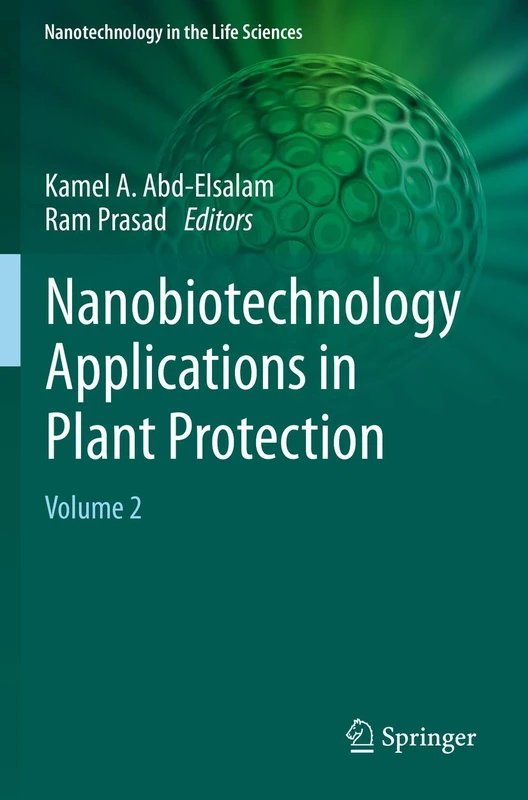
£108.01
This is the most expensive it has ever been. Walk away.
£108 today · previous high £108 · all-time low £108
Springer Nanobiotechnology Applications in Plant Protection: Volume 2 (Nanotechnology in the Life Sciences)
We'll watch every seller, every day. One email when your price arrives.
Price History & Forecast
Grey patches = out of stock. Cheaper = lower on the chart. Hover for exact prices.
Last 14 days · 14 data points (no recent data)
NEW HERE?
Amazon shows you one price. We show you all of them.
Tosheroon watches Amazon prices so you don't have to. Every product on Amazon has a price history — we make it visible. Set the price you'd actually pay, and we'll email you the second it gets there. No app, no account, one email.
WHAT'S ON THIS PAGE
when this has been cheap or pricey
where the price is heading next
all-time high & low, recent range
name your number, we'll email you
Price Distribution
Price distribution over 14 days • 1 price levels
Price Analysis
Most common price: £108 (14 days, 100.0%)
Price range: £108 - £108
Price levels: 1 different prices over 14 days
Description
Product Specifications
- Brand
- Springer
- Format
- paperback
- ASIN
- 3030132986
- Domain
- Amazon UK
- Release Date
- 17 October 2020
- Listed Since
- 22 September 2020
Barcode
No barcode data available
Similar Products You Might Like
Magnetic Nanostructures: Environmental and Agricultural Applications (Nanotechnology in the Life Sciences)
Springer
Magnetic Nanostructures: Environmental and Agricultural Applications (Nanotechnology in the Life Sciences)
Springer
Microbial Nanobionics: Volume 2, Basic Research and Applications (Nanotechnology in the Life Sciences)
Springer
Nanobiotechnology in Bioformulations (Nanotechnology in the Life Sciences)
Springer

Fungal Endophytes Volume II: Applications in Agroecosystems and Plant Protection
Springer
Nanotechnology for Food, Agriculture, and Environment (Nanotechnology in the Life Sciences)
Springer

Revolutionizing Agriculture: A Comprehensive Exploration of Agri-Nanotechnology (Nanotechnology in the Life Sciences)
Springer
Nanoscience and Plant–Soil Systems: 48 (Soil Biology, 48)
Springer
Agriculturally Important Fungi for Sustainable Agriculture: Volume 2: Functional Annotation for Crop Protection (Fungal Biology)
Springer
Cellular and Molecular Phytotoxicity of Heavy Metals (Nanotechnology in the Life Sciences)
Springer
Nanotechnology in Photosynthesis: Innovations for Global Food Sustainability
Elsevier

Microbial Nanobionics: Volume 1, State-of-the-Art (Nanotechnology in the Life Sciences)
Springer
Agriculturally Important Fungi for Sustainable Agriculture: Volume 2: Functional Annotation for Crop Protection (Fungal Biology)
Springer
Microbial Nanobionics: Volume 1, State-of-the-Art (Nanotechnology in the Life Sciences)
Springer
Nanomaterials for Environmental and Agricultural Sectors (Smart Nanomaterials Technology)
Springer
Natural Bio-active Compounds: Volume 3: Biotechnology, Bioengineering, and Molecular Approaches
Springer
Innovative Approaches in Plant Disease Management: Crop Diseases and their Management
LAP Lambert Academic Publishing
Nanobotany
Springer
Microbial Interventions in Agriculture and Environment: Volume 2: Rhizosphere, Microbiome and Agro-ecology
Springer
Microbial Fertilizers: Innovations and Applications for Sustainable Agriculture (Developments in Applied Microbiology and Biotechnology)
Elsevier
Nanobiotechnology: A Multidisciplinary Field of Science (Nanotechnology in the Life Sciences)
Springer
Price unavailable
Cottage Industry of Biocontrol Agents and Their Applications: Practical Aspects to Deal Biologically with Pests and Stresses Facing Strategic Crops
Springer

Nanophytomedicine: Concept to Clinic
Springer
Nanomaterials from Agricultural and Horticultural Products (Smart Nanomaterials Technology)
Springer