£106.30

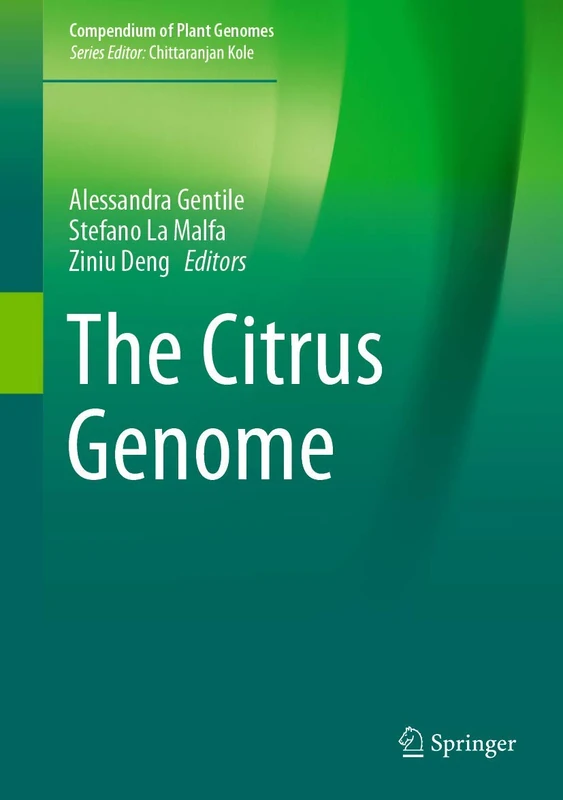
Springer The Citrus Genome (Compendium of Plant Genomes)

Price data last checked 16 day(s) ago - will refresh soon

View at Amazon

We'll watch every seller, every day. One email when your price arrives.

It has never been this cheap. We have no record of a lower price.

£106 today · cheaper than every other day in the last 3 months

NEW HERE?

Amazon shows you one price. We show you all of them.

Tosheroon watches Amazon prices so you don't have to. Every product on Amazon has a price history — we make it visible. Set the price you'd actually pay, and we'll email you the second it gets there. No app, no account, one email.

WHAT'S ON THIS PAGE

↓ Price chart
when this has been cheap or pricey
↓ Forecast
where the price is heading next
↓ Statistics
all-time high & low, recent range
↑ Price alert
name your number, we'll email you

Price History & Forecast

Grey patches = out of stock. Cheaper = lower on the chart. Hover for exact prices.

Last 75 days · 75 data points (no recent data)

Historical
Generating forecast…
£106.30 £100.99 £103.11 £105.24 £107.36 £109.49 £111.62 26 April 2026 14 May 2026 02 June 2026 20 June 2026 09 July 2026

Price Distribution

Price distribution over 75 days • 1 price levels

Days at Price
75 days 0 19 38 56 75 £106 Days at Price

Price Analysis

Most common price: £106 (75 days, 100.0%)

Price range: £106 - £106

Price levels: 1 different prices over 75 days

Description

This book reviews how the release of the citrus genome facilitates the investigation of ancestral species, the study of their complex biological features, and the genetic basis of agronomic traits of paramount importance for their sustainable cultivation.   The first chapters discuss citrus origin and distribution, and the economic importance and varietal composition of the cultivated species, providing an overview of citrus and related genera genetic resources. The book then describes the role of traditional breeding techniques (for scion and rootstocks) as well as the potential of genomic breeding and innovative protocols for biotechnological approaches. The second part provides essential information on the genus Citrus, the attributes of pure citrus species, genetic admixtures, hybrids and citrus relatives, and on the horticultural classification of cultivated species, varieties and rootstocks. The third part then focuses on the different molecular mechanisms, covering various aspects of citrus biology, including the role of beneficial compounds of citrus fruits. In addition, it examines the molecular responses of citrus to abiotic stresses and to field and post-harvest diseases.   Providing insights gained in recent years, it is a valuable guide for those who are interested in gene discovery, comparative genomics, molecular breeding and new breeding techniques. It is particularly useful for scientists, breeders and students at universities and public sector institutes involved in research for the citrus industry. From the Back Cover This book reviews how the release of the citrus genome facilitates the investigation of ancestral species, the study of their complex biological features, and the genetic basis of agronomic traits of paramount importance for their sustainable cultivation.   The first chapters discuss citrus origin and distribution, and the economic importance and varietal composition of the cultivated species, providing an overview of citrus and related genera genetic resources. The book then describes the role of traditional breeding techniques (for scion and rootstocks) as well as the potential of genomic breeding and innovative protocols for biotechnological approaches. The second part provides essential information on the genus Citrus, the attributes of pure citrus species, genetic admixtures, hybrids and citrus relatives, and on the horticultural classification of cultivated species, varieties and rootstocks. The third part then focuses on the different molecular mechanisms, covering various aspects of citrus biology, including the role of beneficial compounds of citrus fruits. In addition, it examines the molecular responses of citrus to abiotic stresses and to field and post-harvest diseases.   Providing insights gained in recent years, it is a valuable guide for those who are interested in gene discovery, comparative genomics, molecular breeding and new breeding techniques. It is particularly useful for scientists, breeders and students at universities and public sector institutes involved in research for the citrus industry. About the Author

Product Specifications

Format
hardcover
Domain
Amazon UK
Release Date
19 March 2020
Listed Since
14 December 2018

Barcode

No barcode data available