£58.99

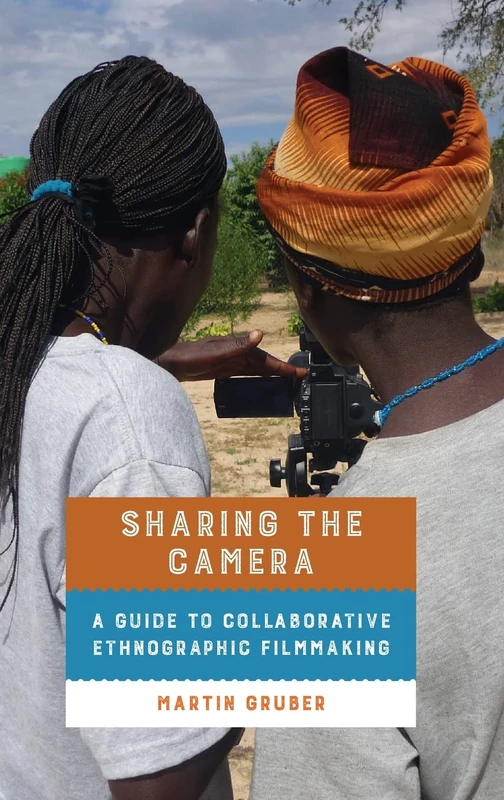
Sharing the Camera: A Guide to Collaborative Ethnographic Filmmaking

Price data last checked 123 day(s) ago - refreshing...

View at Amazon

We'll watch every seller, every day. One email when your price arrives.

It has never been this cheap. We have no record of a lower price.

£59 today · cheaper than every other day in the last 24 months

NEW HERE?

Amazon shows you one price. We show you all of them.

Tosheroon watches Amazon prices so you don't have to. Every product on Amazon has a price history — we make it visible. Set the price you'd actually pay, and we'll email you the second it gets there. No app, no account, one email.

WHAT'S ON THIS PAGE

↓ Price chart
when this has been cheap or pricey
↓ Forecast
where the price is heading next
↓ Statistics
all-time high & low, recent range
↑ Price alert
name your number, we'll email you

Price History & Forecast

Grey patches = out of stock. Cheaper = lower on the chart. Hover for exact prices.

Last 608 days • 608 data points (No recent data available)

Historical
Generating forecast...
£84.27 £56.46 £62.53 £68.60 £74.66 £80.73 £86.80 07 July 2024 05 December 2024 06 May 2025 05 October 2025 06 March 2026

Price Distribution

Price distribution over 608 days • 7 price levels

Days at Price
Current Price
148 days · current 320 days 19 days 38 days 15 days 40 days 28 days 0 80 160 240 320 £59 £60 £64 £77 £80 £81 £84 Days at Price

Price Analysis

Most common price: £60 (320 days, 52.6%)

Price range: £59 - £84

Price levels: 7 different prices over 608 days

Description

Participatory video and collaborative filmmaking have become powerful assets in a broad range of contexts and academic disciplines. In Sharing the Camera, Martin Gruber shows how 'Collaborative Ethnographic Filmmaking' enables the participants and conveners of workshops to produce highly cinematic films together. This approach facilitates collaboration in all aspects of making a film, from its conception and direction, to shooting, editing and distribution. While drawing inspiration from seminal examples in the history of ethnographic filmmaking, Gruber searches for a more mutual form of collaboration than is usual in the field. Borrowing insights from Indigenous media, and the role of film in struggles for selfdetermination, he explores the cultural dynamics that may occur when introducing film into small-scale social arenas. He considers what can be gained from participatory video (PV), an applied visual anthropology approach, and its goal of social change. Admirably unconstrained by disciplinary boundaries but ever mindful of potential pitfalls, this guidebook finds a way through critical objections to informed practical implementation. Gruber's methodological toolkit, based on his experiences in Angola, Botswana and Namibia, provides honest and practical advice on topics such as pre-production legal work, navigating local power structures, conflicts around decision-making, and fostering inclusion of the wider community. The wealth of knowledge presented makes Sharing the Camera a vital resource for planning collaborative media projects in any context. "A welcome guide through the history and ideas regarding collaborative filmmaking that emerged from shifting paradigms in ethnographic filmmaking, the emergence of Indigenous media, and the field of participatory video. Laying clear groundwork that shows a decolonial path through important fields, Gruber provides an insightful framework for the practice of ethnographic filmmaking at its most collaborative and creative, using his own thoughtful media projects made with his research partners ... His clear writing, sophisticated command of several fields, and generous approach to filmmaking make Gruber's book a welcome addition for a wide range of readers across the fields of anthropology, documentary studies, and filmmaking." Faye Ginsburg, Kriser Professor of Anthropology and Director, Graduate Program in Culture & Media, New York University "Sharing the Camera is an impressive and valuable addition to written studies of collaboration in ethnographic filmmaking ... The book is judicious in tone and is written in clear, undogmatic language, free of academic jargon. It is both practical and intellectually nuanced, addressing questions of production and reception as well as those of authorship, authority, ethical practice and interpersonal relationships in the field. It will be essential reading for anyone contemplating the use of video cameras in future research projects." David MacDougall, Honorary Professor, Research School of Humanities and the Arts, Australian National University

Product Specifications

Format
hardcover
Domain
Amazon UK
Release Date
30 September 2022
Listed Since
22 July 2022

Barcode

No barcode data available