We can't find the internet
Attempting to reconnect
Something went wrong
Hang in there while we get back on track

£72.78
It has never been this cheap. We have no record of a lower price.
£73 today · cheaper than every other day in the last 3 months
Edward Elgar Publishing European Economics at a Crossroads
We'll watch every seller, every day. One email when your price arrives.
Price History & Forecast
Grey patches = out of stock. Cheaper = lower on the chart. Hover for exact prices.
Last 18 days · 18 data points (no recent data)
NEW HERE?
Amazon shows you one price. We show you all of them.
Tosheroon watches Amazon prices so you don't have to. Every product on Amazon has a price history — we make it visible. Set the price you'd actually pay, and we'll email you the second it gets there. No app, no account, one email.
WHAT'S ON THIS PAGE
when this has been cheap or pricey
where the price is heading next
all-time high & low, recent range
name your number, we'll email you
Price Distribution
Price distribution over 18 days • 1 price levels
Price Analysis
Most common price: £73 (18 days, 100.0%)
Price range: £73 - £73
Price levels: 1 different prices over 18 days
Description
Product Specifications
- Brand
- Edward Elgar Publishing
- Format
- hardcover
- ASIN
- 1848445784
- Domain
- Amazon UK
- Release Date
- 30 April 2010
- Listed Since
- 01 March 2010
Barcode
No barcode data available
Similar Products You Might Like

Teaching Innovations in Economics: Strategies and Applications for Interactive Instruction
Edward Elgar Publishing
Economics for Policy Makers: A Guide for Non-Economists
Routledge

Economic Theory in the Twentieth Century, An Intellectual History―Volume II: 1919–1945. Economic Theory in an Age of Crisis and Uncertainty: 2
MACMILLAN
Economic Theory for the Real World - Routledge
Routledge
Economic Theory for the Real World (Routledge Frontiers of Political Economy)
Routledge
From Political Economy to Economics: Method, the social and the historical in the evolution of economic theory (Economics as Social Theory)
Routledge

From Economics Imperialism to Freakonomics: The Shifting Boundaries between Economics and other Social Sciences (Economics as Social Theory)
Routledge

From Economics Imperialism to Freakonomics: The Shifting Boundaries between Economics and other Social Sciences (Economics as Social Theory)
Routledge

Oxford University Press - Economy, Society, and Public Policy
Oxford University Press
Principles and Pluralist Approaches in Teaching Economics: Towards a Transformative Science: 41 (Routledge Advances in Heterodox Economics)
Routledge
Advancing Pluralism in Teaching Economics: International Perspectives on a Textbook Science (Routledge Advances in Heterodox Economics)
Routledge
Economics as a Science of Human Behaviour: Towards a New Social Science Paradigm
Springer

A New Principles of Economics: The Science of Markets
Routledge
Open Economics: Economics & Other Disciplines - Routledge Studies
Routledge
Economics As Discourse: An Analysis of the Language of Economists: 21 (Recent Economic Thought, 21)
Springer
The World in the Model: How Economists Work and Think
Cambridge University Press
Cambridge Economics in the Post-Keynesian Era - Macmillan
MACMILLAN
Microeconomics: Competition, Conflict, and Coordination
Oxford University Press

Educating Economists: The Teagle Discussion on Re-evaluating the Undergraduate Economics Major
Edward Elgar Publishing
Cambridge Economics in the Post-Keynesian Era - History Book
Palgrave
Exemplary Economists, II: Volume II: Europe, Asia and Australasia: 2
Edward Elgar Publishing
Economics
McGraw-Hill Education
The Concept of Equilibrium in Different Economic Traditions: An Historical Investigation
Edward Elgar Publishing
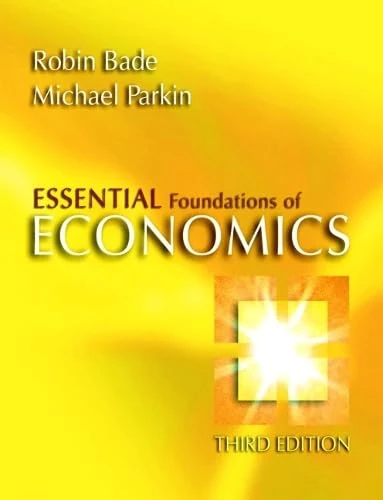
Essential Foundations of Economics plus MyEconLab plus eBook 1-semester Student Access Kit
PEARSON EDUCATION