£90.00

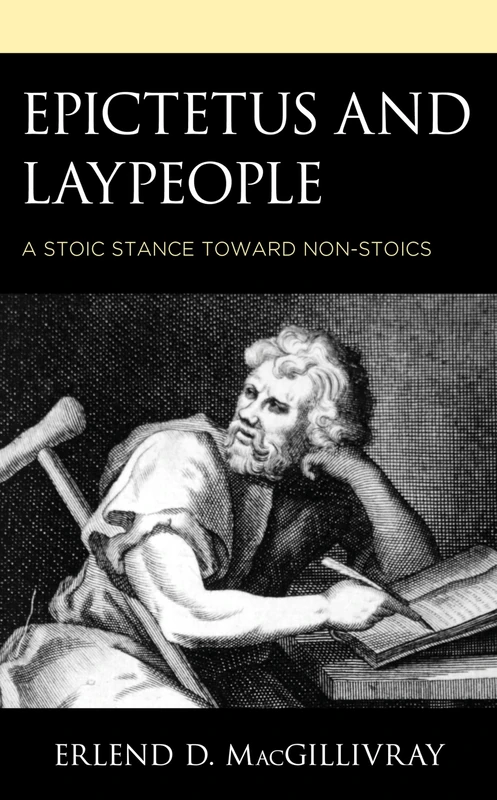
Lexington Books Epictetus and Laypeople: A Stoic Stance toward Non-Stoics

Price data last checked 21 day(s) ago - will refresh soon

View at Amazon

We'll watch every seller, every day. One email when your price arrives.

It has never been this cheap. We have no record of a lower price.

£90 today · cheaper than every other day in the last 3 months

NEW HERE?

Amazon shows you one price. We show you all of them.

Tosheroon watches Amazon prices so you don't have to. Every product on Amazon has a price history — we make it visible. Set the price you'd actually pay, and we'll email you the second it gets there. No app, no account, one email.

WHAT'S ON THIS PAGE

↓ Price chart
when this has been cheap or pricey
↓ Forecast
where the price is heading next
↓ Statistics
all-time high & low, recent range
↑ Price alert
name your number, we'll email you

Price History & Forecast

Grey patches = out of stock. Cheaper = lower on the chart. Hover for exact prices.

Last 70 days · 70 data points (no recent data)

Historical
Generating forecast…
£90.00 £85.50 £87.30 £89.10 £90.90 £92.70 £94.50 26 April 2026 13 May 2026 30 May 2026 16 June 2026 04 July 2026

Price Distribution

Price distribution over 70 days • 1 price levels

Days at Price
70 days 0 18 35 53 70 £90 Days at Price

Price Analysis

Most common price: £90 (70 days, 100.0%)

Price range: £90 - £90

Price levels: 1 different prices over 70 days

Description

Erlend D. MacGillivray's Epictetus and Laypeople: A Stoic Stance toward the Rest of Humanity explores the understanding that ancient philosophers had towards the vast majority of people at the time, those who had no philosophical knowledge or adherence-laypeople. After exploring how philosophical identity was established in antiquity, this book examines the Stoic philosopher Epictetus, who reflected upon laypeople with remarkable frequency. MacGillivray shows that Epictetus maintained his stance that a small and distinguishable group of philosophically aware individuals existed, alongside his conviction that most of humanity can be inclined to act in accordance with virtuous principles by their dependence upon preconceptions, civic law, popular religion, exempla, and the adoption of primitive conditions, among other means. This book also highlights other Stoics and their commentators to show that the means of lay reform that MacGillivray explores were not just implicitly understood in antiquity, but reveal a well-developed system of thought in the school which has, until now, evaded the notice of modern scholars. Review Epictetus is an excellent choice for studying an ancient philosopher's attitudes toward non-philosophers. In this learned, wide-ranging, and well-conceived monograph, MacGillivray provides a probing account of this Stoic's frustrations with laypersons, his advice to students to be cautious around them, his various pedagogical appeals to paragons, and his hopes for ethical progress despite the ineradicable flaws we all share. This work fills a real gap in scholarship on Epictetus.--William O. Stephens, Creighton UniversityIn the end, this book, whose prose is smooth and a pleasure to read, and which does not demand previous in-depth knowledge of Stoic philosophy or of Epictetus' thinking, allows for a good approach to a fascinating subject that is not much studied.-- "Bryn Mawr Classical Review"MacGillivray (independent scholar) explores these two questions in Epictetus. What distinguishes the philosopher from the non-philosopher? How can the non-philosopher illuminate the philosopher's views? The first part of the book treats the first question. Philosophers are people who can articulate their school's ideas and who live in accord with the philosophy's ethical demands. Laypeople, on the other hand, are subject to vices. Philosophers should, in general, avoid public engagement with laypeople. These conclusions set up the rest of the book, which investigates the second question. Here the layperson takes a more positive role, whether as virtuous early humans or as moderns supported by moral preconceptions, law, popular religion, and exempla. This book helps illuminate Epictetus's distinctive interest in discussing ordinary people, instead of hypothetical descriptions of the perfect, and impossible, Stoic sage. It likewise contributes to a greater understanding of Stoic philosophy's disinterest in venerating their founders and their willingness to find instruction in ideas and activities of those outside their school. . . the book is accessible to non-specialist audiences, as translations accompany Latin and Greek. Summing Up: Recommended. Upper-division undergraduates through faculty.-- "Choice"MacGillivray captures Epictetus's double-mindedness about non-philosophers with scholarly discipline and principled clarity. This book is rich with detail and is a useful lesson in how philosophers must manage the broader non-(and even anti-) philosophical culture in which they must live. --Scott Aikin, Vanderbilt UniversityThis new study on Epictetus is a must read for anyone intrigued by the influential practical philosophy of this ancient Roman sage.--Massimo Pigliucci PhD, author of How to Be Stoic: Using Ancient Philosophy to Live a Modern Life About the Author Erlend D. MacGillivray received his PhD from the University of Aberdeen, Scotland, in 2018.

Product Specifications

Format
hardcover
Domain
Amazon UK
Release Date
15 September 2020
Listed Since
04 March 2020

Barcode

No barcode data available

Similar Products You Might Like
Stoic Ethics: Epictetus and Happiness as Freedom (Continuum Studies in Ancient Philosophy): 1
97% match

Stoic Ethics: Epictetus and Happiness as Freedom (Continuum Studies in Ancient Philosophy): 1

Continuum

£99.28 03 Jul 2026
The Ethics of the Stoic Epictetus: An English Translation, Revised Edition: 2 (Revisioning Philosophy)
97% match

The Ethics of the Stoic Epictetus: An English Translation, Revised Edition: 2 (Revisioning Philosophy)

Peter Lang Gmbh, Internationaler Verlag Der Wissenschaften
£72.29 04 Jul 2026
Stoicism: Traditions and Transformations
97% match

Stoicism: Traditions and Transformations

Cambridge University Press
£94.00 04 Jul 2026
Platonic Stoicism - Stoic Platonism: The Dialogue between Platonism and Stoicism in Antiquity: 39 (Ancient and Medieval Philosophy - Series 1, 39)
97% match

Platonic Stoicism - Stoic Platonism: The Dialogue between Platonism and Stoicism in Antiquity: 39 (Ancient and Medieval Philosophy - Series 1, 39)

Brill

£53.90 14 Jul 2026
The Stoics on Determinism and Compatibilism (Ashgate New Critical Thinking in Philosophy)
96% match

The Stoics on Determinism and Compatibilism (Ashgate New Critical Thinking in Philosophy)

Routledge
£147.25 06 Jul 2026
Stoic Virtues: Chrysippus and the Theological Foundations of Stoic Ethics (Continuum Studies in Ancient Philosophy): Chrysippus and the Religious Character of Stoic Ethics: 15
96% match

Stoic Virtues: Chrysippus and the Theological Foundations of Stoic Ethics (Continuum Studies in Ancient Philosophy): Chrysippus and the Religious Character of Stoic Ethics: 15

Bloomsbury
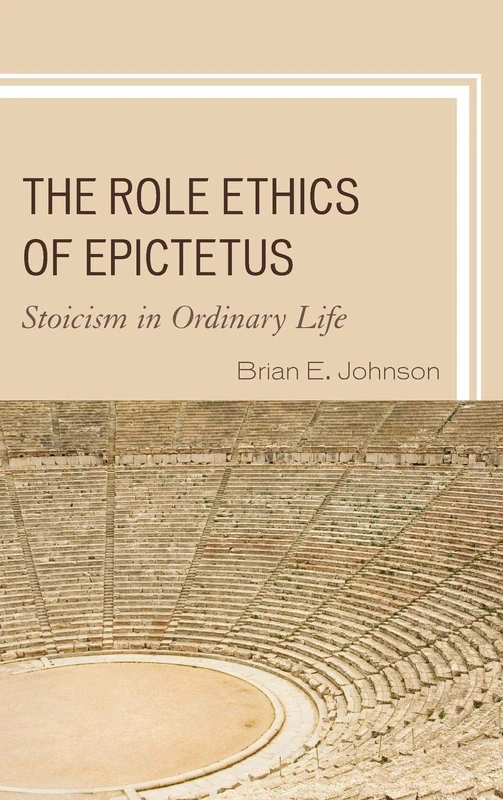
£110.00 06 Jul 2026
The Role Ethics of Epictetus: Stoicism in Ordinary Life
96% match

The Role Ethics of Epictetus: Stoicism in Ordinary Life

Lexington Books
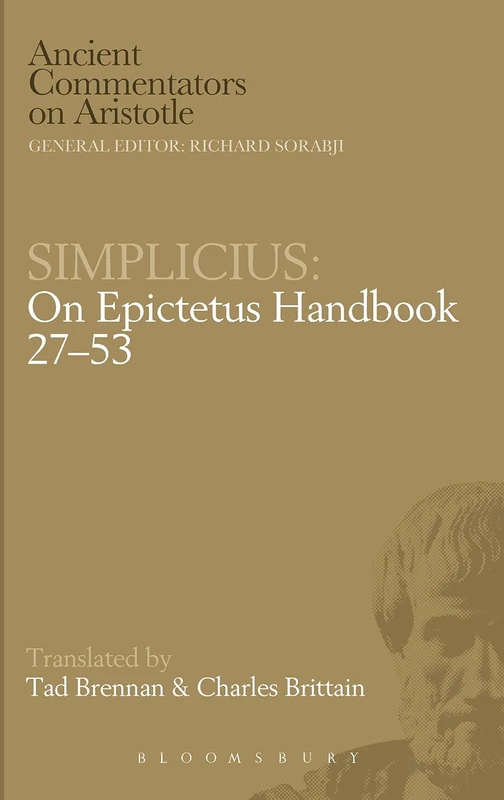
£102.00 06 Jul 2026
Simplicius: On Epictetus Handbook 27-53 (Ancient Commentators on Aristotle)
96% match

Simplicius: On Epictetus Handbook 27-53 (Ancient Commentators on Aristotle)

By

£53.40 09 Jul 2026
Reading Seneca: Stoic Philosophy at Rome
96% match

Reading Seneca: Stoic Philosophy at Rome

Oxford University Press
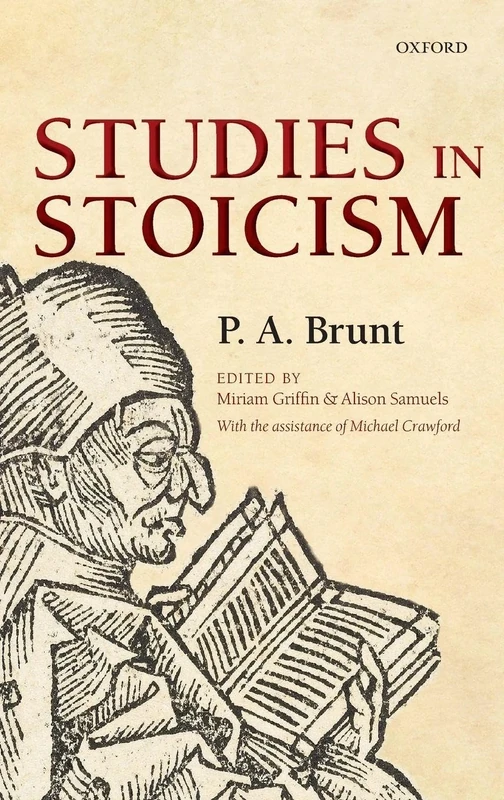
£40.35 11 Jul 2026
Studies in Stoicism
96% match

Studies in Stoicism

Oxford University Press
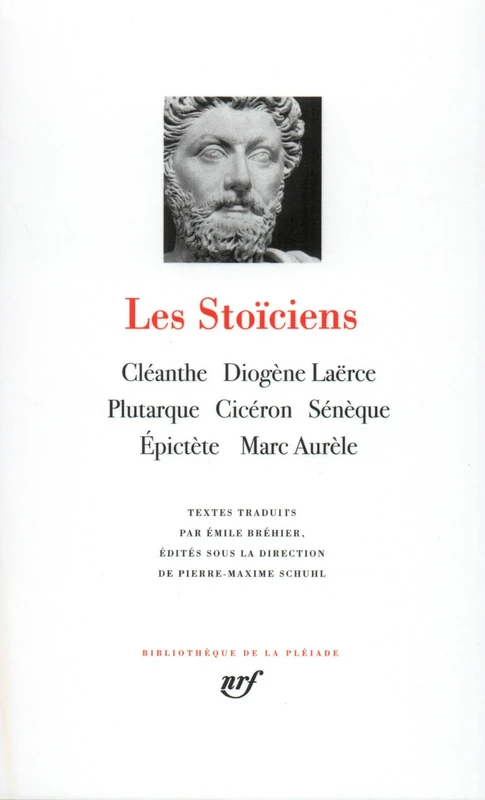
£147.99 04 Jul 2026
Les Stoïciens
96% match

Les Stoïciens

GALLIMARD

£52.00 04 Jul 2026
The Present Alone is Our Happiness: Conversations with Jeannie Carlier and Arnold I. Davidson (Cultural Memory in the Present)
96% match

The Present Alone is Our Happiness: Conversations with Jeannie Carlier and Arnold I. Davidson (Cultural Memory in the Present)

Stanford University Press

£60.10 12 Jul 2026