We can't find the internet
Attempting to reconnect
Something went wrong
Hang in there while we get back on track

£43.45
This is the most expensive it has ever been. Walk away.
£43 today · previous high £43 · all-time low £42
Peter Lang Gmbh, Internationaler Verlag Der Wissenschaften Personhood and Epistemic Interactivism in Indigenous Esan Thought: From theories of representation to an African knowledge system
Price data last checked 28 day(s) ago - will refresh soon
We'll watch every seller, every day. One email when your price arrives.
Price History & Forecast
Grey patches = out of stock. Cheaper = lower on the chart. Hover for exact prices.
Last 63 days · 63 data points (no recent data)
Price data last checked 28 day(s) ago - will refresh soon
NEW HERE?
Amazon shows you one price. We show you all of them.
Tosheroon watches Amazon prices so you don't have to. Every product on Amazon has a price history — we make it visible. Set the price you'd actually pay, and we'll email you the second it gets there. No app, no account, one email.
WHAT'S ON THIS PAGE
when this has been cheap or pricey
where the price is heading next
all-time high & low, recent range
name your number, we'll email you
Price Distribution
Price distribution over 63 days • 2 price levels
Price Analysis
Most common price: £43 (58 days, 92.1%)
Price range: £42 - £43
Price levels: 2 different prices over 63 days
Description
Product Specifications
- Format
- paperback
- ASIN
- 1789972442
- Domain
- Amazon UK
- Release Date
- 25 October 2019
- Listed Since
- 21 October 2019
Barcode
No barcode data available
Similar Products You Might Like

The Question of Being in Husserl's Logical Investigations
Springer

African Epistemology: Essays on Being and Knowledge (Routledge Studies in African Philosophy)
Routledge

Normativity, Lifeworld, and Science in Sellars’ Synoptic Vision
MACMILLAN

The New Yearbook for Phenomenology and Phenomenological Philosophy: Volume 16
Routledge

Debating African Philosophy: Perspectives on Identity, Decolonial Ethics and Comparative Philosophy
Routledge

On the Aesthetics of Roman Ingarden: Interpretations and Assessments: 27 (Nijhoff International Philosophy Series, 27)
Springer

The Phenomenology of Aesthetic Consciousness and Phantasy: Working with Husserl (Routledge Research in Aesthetics)
Routledge
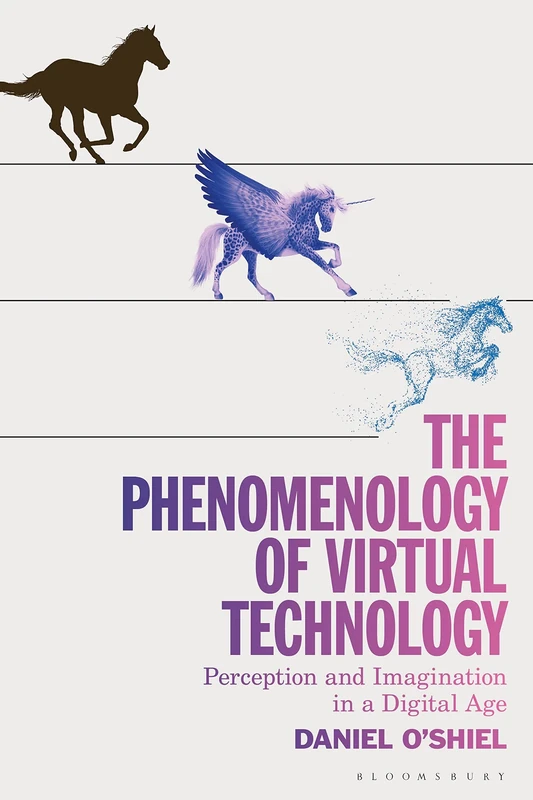
Phenomenology of Virtual Technology, The: Perception and Imagination in a Digital Age
Bloomsbury

Naturalistic Epistemology: A Symposium of Two Decades: 100 (Boston Studies in the Philosophy and History of Science, 100)
Springer

Life - The Outburst of Life in the Human Sphere: Scientific Philosophy / Phenomenology of Life and the Sciences of Life. Book II: 60 (Analecta Husserliana, 60)
Springer

Metaphysics, Epistemology, and Technology: 19 (Research in Philosophy and Technology, 19)
Jai Press Inc.

Routledge Philosophy GuideBook to Merleau-Ponty and Phenomenology of Perception
Routledge

Ingardeniana II: New Studies in the Philosophy of Roman Ingarden With a New International Ingarden Bibliography: 30 (Analecta Husserliana, 30)
Springer

Representation, Experience, and Metaphysics: Towards an Integrated Anti-Representationalist Philosophy: 473 (Synthese Library, 473)
Springer

The World Unclaimed: A Challenge to Heidegger’s Critique of Husserl: 30 (Series in Continental Thought)
OHIO UNIVERSITY PRESS

The Question of Being in Western and African Analytic Metaphysics: Comparative Metaphysics Using the Analytic Framework: 438 (Synthese Library, 438)
Springer

The Human: Bare Life and Ways of Life
Bloomsbury

Springer Life - The Outburst of Life in the Human Sphere Book II
Springer

Philosophy's Nature: Husserl's Phenomenology & Science
Routledge

How Change and Identity Coexist in Personal Individuality: A Phenomenological Account of Self-Shaping: 116 (Contributions to Phenomenology, 116)
Springer

Dieter Henrich and Contemporary Philosophy: The Return to Subjectivity (Ashgate New Critical Thinking in Philosophy)
Routledge

The Humanities and the Dynamics of African Culture in the 21st Century
Cambridge Scholars Publishing

American Phenomenology: Origins and Developments: 26 (Analecta Husserliana, 26)
Springer

American Phenomenology: Origins and Developments: 26 (Analecta Husserliana, 26)
Springer