We can't find the internet
Attempting to reconnect
Something went wrong
Hang in there while we get back on track

£91.86
Emerald Publishing Limited Improving the Marriage of Modeling and Theory for Accurate Forecasts of Outcomes: 25 (Advances in Business Marketing and Purchasing, 25)
Price data last checked 78 day(s) ago - refreshing...
We'll watch every seller, every day. One email when your price arrives.
It has never been this cheap. We have no record of a lower price.
£92 today · cheaper than every other day in the last 3 months
NEW HERE?
Amazon shows you one price. We show you all of them.
Tosheroon watches Amazon prices so you don't have to. Every product on Amazon has a price history — we make it visible. Set the price you'd actually pay, and we'll email you the second it gets there. No app, no account, one email.
WHAT'S ON THIS PAGE
when this has been cheap or pricey
where the price is heading next
all-time high & low, recent range
name your number, we'll email you
Price History & Forecast
Grey patches = out of stock. Cheaper = lower on the chart. Hover for exact prices.
Last 13 days · 13 data points (no recent data)
Price Distribution
Price distribution over 13 days • 1 price levels
Price Analysis
Most common price: £92 (13 days, 100.0%)
Price range: £92 - £92
Price levels: 1 different prices over 13 days
Description
Product Specifications
- Format
- hardcover
- ASIN
- 1786351226
- Domain
- Amazon UK
- Release Date
- 29 January 2018
- Listed Since
- 18 May 2016
Barcode
No barcode data available
Similar Products You Might Like

Fuzzy Cognitive Maps: Best Practices and Modern Methods
Springer

Mehrfachregelungen. Grundlagen einer Systemtheorie: Zweiter Band
Springer

Integrating Soft Computing into Strategic Prospective Methods: Towards an Adaptive Learning Environment Supported by Futures Studies: 387 (Studies in Fuzziness and Soft Computing, 387)
Springer

Contextual Management: A Global Perspective - Routledge
Routledge

Unternehmer-Planspiele für die betriebswirtschaftliche Ausbildung: Spielbeschreibungen: 1914 (Forschungsberichte des Landes Nordrhein-Westfalen, 1914)
VS Verlag für Sozialwissenschaften
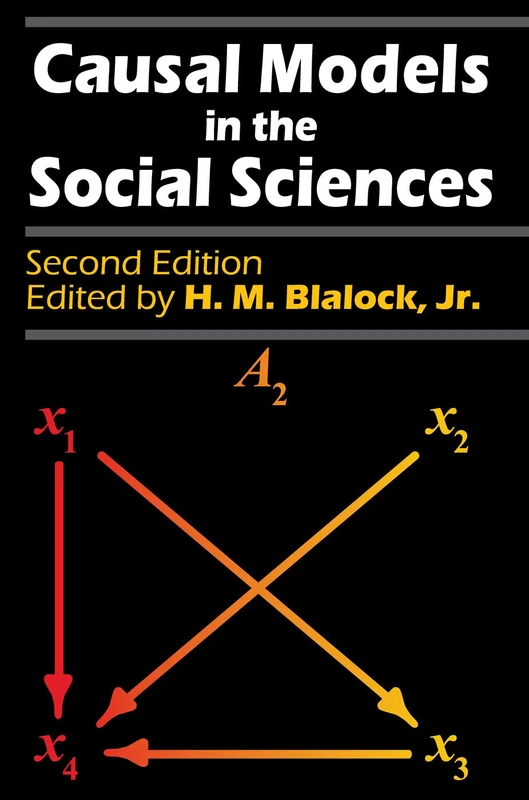
Causal Models in the Social Sciences
Routledge

Fuzzy Cognitive Maps: A Tool for the Modeling and Simulation of Processes and Systems: 427 (Studies in Fuzziness and Soft Computing, 427)
Springer
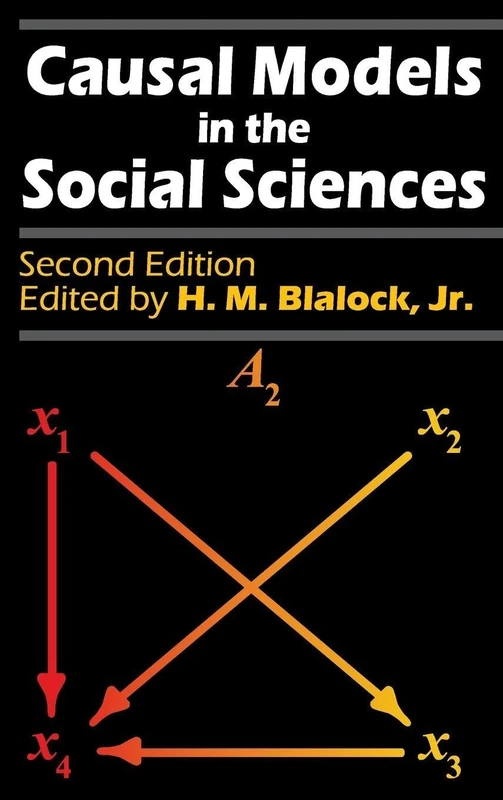
Causal Models in the Social Sciences - Routledge
Routledge

Accuracy Improvements in Linguistic Fuzzy Modeling: 129 (Studies in Fuzziness and Soft Computing, 129)
Springer

Interkulturelle Zusammenarbeit: Kulturen ― Organisationen ― Management
Gabler Verlag

Linear Mixed Models: A Practical Guide Using Statistical Software
CRC Press

Advanced Methods for Modeling Markets (International Series in Quantitative Marketing)
Springer

Causal Inference in Econometrics: 622 (Studies in Computational Intelligence, 622)
Springer

Mathematical-Statistical Models and Qualitative Theories for Economic and Social Sciences: 104 (Studies in Systems, Decision and Control, 104)
Springer

Mathematical-Statistical Models and Qualitative Theories for Economic and Social Sciences: 104 (Studies in Systems, Decision and Control, 104)
Springer

Multilevel Modeling Methods with Introductory and Advanced Applications (Quantitative Methods in Education and the Behavioral Sciences: Issues, Research, and Teaching)
Information Age Publishing
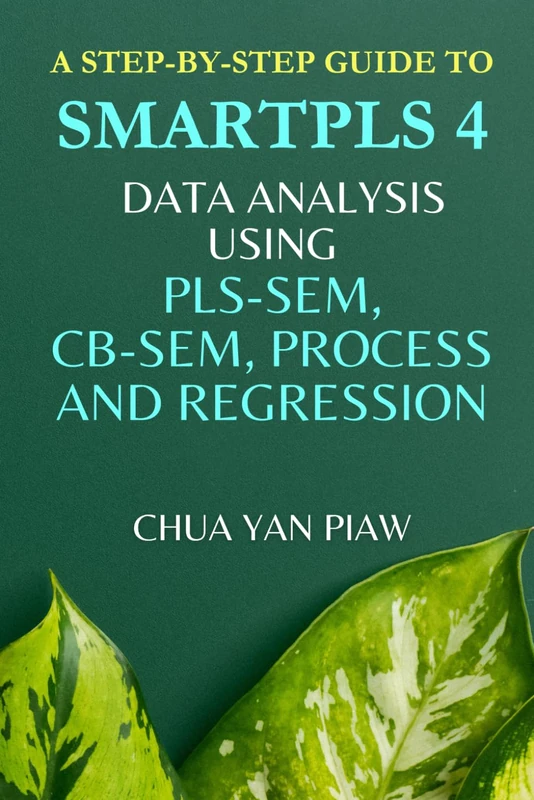
A step-by-step guide to SMARTPLS 4: Data analysis using PLS-SEM, CB-SEM, Process and Regression

Introduction to Business Analytics Using Simulation
Academic Press

World Scientific Indonesia Provincial Competitiveness 2015
World Scientific Publishing Company

Adaption-Innovation: In the Context of Diversity and Change
Routledge

Linear Causal Modeling with Structural Equations (Chapman & Hall/CRC Statistics in the Social and Behavioral Sciences)
CRC Press

Soft Computing in Management and Business Economics Vol. 2
Springer

Recent Advances and Future Prospects in Knowledge, Information and Creativity Support Systems: Selected Revised Papers from the Tenth International ... in Intelligent Systems and Computing, 685)
Springer

Routinen und Charakteristika dynamischer Fähigkeiten von Unternehmen: Eine qualitative Studie in den Bereichen Neuproduktentwicklung und Personal in der chemischen Industrie (Edition KWV)
Springer