£77.36

About as cheap as it gets — within 5% of the all-time low it hit 1 month ago.

£77 today · all-time low £77 (Aug 2026) · usually the usual

Delve Publishing Fungal Biology

View at Amazon

Price History & Forecast

Grey patches = out of stock. Cheaper = lower on the chart. Hover for exact prices.

Last 42 days · 42 data points (no recent data)

Historical
Generating forecast…
£78.40 £76.61 £77.00 £77.39 £77.78 £78.17 £78.56 25 July 2026 04 August 2026 14 August 2026 24 August 2026 04 September 2026
View at Amazon ↗

Price data last checked 49 day(s) ago - refreshing...

NEW HERE?

Amazon shows you one price. We show you all of them.

Tosheroon watches Amazon prices so you don't have to. Every product on Amazon has a price history — we make it visible. Set the price you'd actually pay, and we'll email you the second it gets there. No app, no account, one email.

WHAT'S ON THIS PAGE

↑ Price chart
when this has been cheap or pricey
↑ Forecast
where the price is heading next
↓ Statistics
all-time high & low, recent range
↑ Price alert
name your number, we'll email you

Price Distribution

Price distribution over 42 days • 2 price levels

Days at Price
Current Price
11 days 31 days 0 8 16 23 31 £77 £78 Days at Price

Price Analysis

Most common price: £78 (31 days, 73.8%)

Price range: £77 - £78

Price levels: 2 different prices over 42 days

Description

Fungi is a diverse kingdom comprising a vast range of eukaryotic organisms. It has some similar and different characters to both animals and plants. Therefore it was not easy to recognize where they should be classified in among living things. Because of a few important characteristics, fungi were separated from different eukaryotic systems of plants and animals. It was different from Protista, bacteria and plants due to presence of chitin in their cell wall. They are similar to animals because they are heterotrophs, they secrete enzymes in the environment that causes breakdown of food and converts them into dissolved food particles which the fungus absorbs. Fungi are major decomposers in their ecosystem. All these and some other differences urge to place fungi in a separate kingdom which is known as Eumycota (True Fungi). In biology the discipline which deals with fungus is known as mycology. It was in past considered as branch of botany, but recently due to progress in modern genetics it has proved that fungi is closer to animals than plants. In term of presence, nearly 10,000 fungal species have been known, however its worldwide biodiversity is has not been understood completely. Fungal kingdom has been expected to have nearly 1.5 million species, on the base of interpretations of the number of plants species to the number of fungal species in particular atmosphere. Although according to recent research estimation there are 5 million species of fungi.Fungi are classified according to fruiting structure or shape and size of spores, and physiological and biochemical characteristics. Fungi can be found in vast range of habitats, comprising worst habitats like hot deserts, high salt concentrations, sediments of deep sea and ionizing radiations, e.g., cosmic radiations and intense UV. They also have huge difference in their sizes according to environmental conditions, types, etc. They can be found as microscopic organisms, for example, yeast and penicillium to macroscopic organisms, such as, mushrooms. Even the largest organism present on the earth is also a fungus known as “Honey fungus” from genus Armillaria. Reproduction of fungus is also very complex due to wide variety of organisms It has been observed that about 1/3rd of fungi reproduce with the help of same method of reproduction called propagation, in two distinct stages, that are the anamorph and telomorph. They can reproduce through both types of eproduction, sexually and asexually. Asexual reproduction happens through mycelial fragmentation or via vegetative pores. Few fungi don’t have observable sexual cycle, known as “Fungi imperfecti” or Deuteromycota. Sexual reproduction can be seen in all phyla of fungus except Glomeromycota, but genetic investigation put forward meiosis in Glomeromycota also. Both sexual and asexual spores which can be called as sporangiospores are sometimes actively dispersed from their reproductive structures through forcible ejection. This discharge guarantees leaving of spores from the reproductive structures and also their travelling over long distances. Beside these processes some fungi might exchange their genetic material through para-sexual processes. However the process of sexual reproduction is greatly differ from animals and plants. Alterations also present among groups of fungus and can be used to differ species through morphological alterations in reproductive strategies and sexual reproduction. Some modern developments are also discussed in this book. Current progress in genomics, molecular genetics and fungal genetics are discussed with deep examples, which comprises the processes of heritable information in fungi. Filamentous fungi and yeasts are greatly used as exemplary organisms for the purpose of genetic research of eukaryotes, comprising gene regulation, genetic recombination, chromatin structure and cell cycle regulation. One chapters includes growth and physiology of fungi. Growth occurs with the help of hyphae on or within the solid substrate or in the form of single cells in aquatic environments is adjusted for adequate withdrawal of nutrients. Some fungi even penetrate the substrate, Magnaporthe grisea form a structure known as appressorium that invade tissue of plants. A section of a book deals with pathogenic effects of fungus on animals and plants. Some examples has been discussed in this book, Cryphonectria parasitica responsible for chestnut blight, Cryptoccocus cause immune-deficiencies in humans, and Paecilomyces lilacinus are predators of nematodes. Mostly fungi make biologically active compounds, few of which are toxic for plants and animals and that’s why known as mycotoxins. Different methods of preventing from pathogenic fungi also been discussed in this book. As some organisms are parasites of fungus and known as mycoparasitic organisms. Oomycetes from genus Pythium are used as bio control agents in contradiction of various fungi. One section deals with symbiotic associations of f

Product Specifications

Format
hardcover
Domain
Amazon UK
Release Date
30 January 2018
Listed Since
03 November 2017

Barcode

No barcode data available

Similar Products You Might Like
Recent Trends in Mycological Research: Volume 1: Agricultural and Medical Perspective (Fungal Biology)
97% match

Recent Trends in Mycological Research: Volume 1: Agricultural and Medical Perspective (Fungal Biology)

Springer
£111.47 19 Sep 2026
Springer Recent Trends in Mycological Research Volume 1
97% match

Springer Recent Trends in Mycological Research Volume 1

Springer

£119.91 01 Oct 2026
Growing Fungus
97% match

Growing Fungus

Springer

£150.16 22 Aug 2026
Fungal Genomics: Methods and Protocols: 1775 (Methods in Molecular Biology, 1775)
97% match

Fungal Genomics: Methods and Protocols: 1775 (Methods in Molecular Biology, 1775)

Humana
£87.21 23 Sep 2026
Industrially Important Fungi for Sustainable Development Volume 2
97% match

Industrially Important Fungi for Sustainable Development Volume 2

Springer

£122.14 03 Oct 2026
Pathogenic Fungi: Structural Biology and Taxonomy
97% match

Pathogenic Fungi: Structural Biology and Taxonomy

Caister Academic Press Limited

£195.96 22 Aug 2026
Fungal Genomics: Methods and Protocols: 722 (Methods in Molecular Biology, 722)
97% match

Fungal Genomics: Methods and Protocols: 722 (Methods in Molecular Biology, 722)

Humana

£84.82 17 Sep 2026
Fungal Biology
96% match

Fungal Biology

Wiley

£53.89 30 Sep 2026
Molecular and Cell Biology Methods for Fungi: 638 (Methods in Molecular Biology, 638)
96% match

Molecular and Cell Biology Methods for Fungi: 638 (Methods in Molecular Biology, 638)

Humana
£104.34 08 Sep 2026
The Fungal Community: Its Organization and Role in the Ecosystem, Fourth Edition (Mycology)
96% match

The Fungal Community: Its Organization and Role in the Ecosystem, Fourth Edition (Mycology)

CRC Press
£50.99 02 Oct 2026
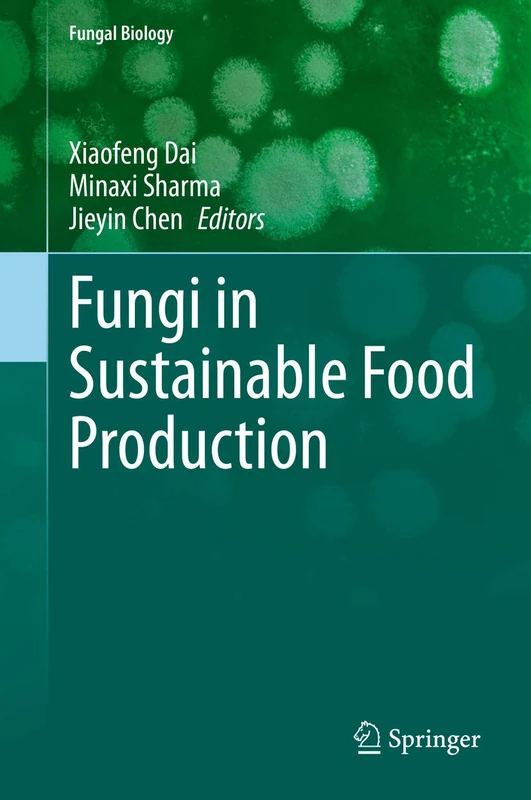
Fungi in Sustainable Food Production (Fungal Biology)
96% match

Fungi in Sustainable Food Production (Fungal Biology)

Springer

£76.42 01 Oct 2026
Advancing Frontiers in Mycology & Mycotechnology: Basic and Applied Aspects of Fungi
96% match

Advancing Frontiers in Mycology & Mycotechnology: Basic and Applied Aspects of Fungi

Springer

£140.82 21 Aug 2026
Advancing Frontiers in Mycology & Mycotechnology - Springer
96% match

Advancing Frontiers in Mycology & Mycotechnology - Springer

Springer

£142.97 03 Oct 2026
Host-Fungus Interactions: Methods and Protocols: 845 (Methods in Molecular Biology, 845)
96% match

Host-Fungus Interactions: Methods and Protocols: 845 (Methods in Molecular Biology, 845)

Humana
£121.39 01 Oct 2026
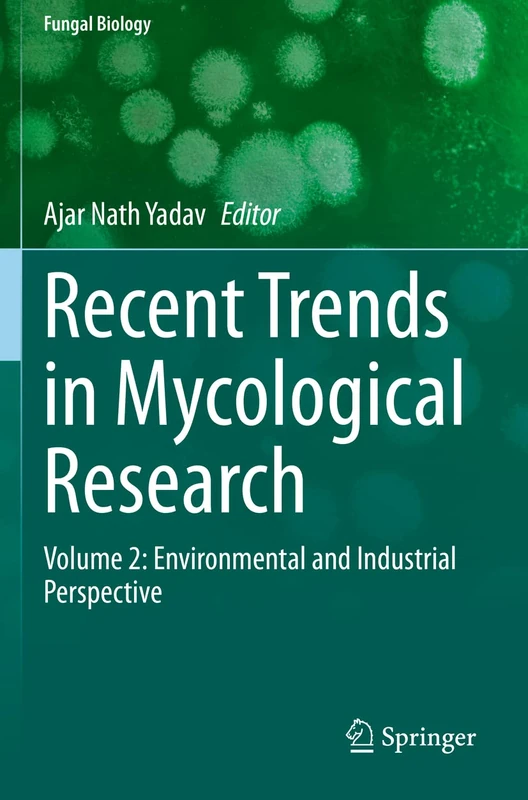
Springer Mycological Research Vol 2 - Fungal Biology Book
96% match

Springer Mycological Research Vol 2 - Fungal Biology Book

Springer

£116.98 01 Oct 2026
Growth, Differentiation and Sexuality: 1 (The Mycota, 1)
96% match

Growth, Differentiation and Sexuality: 1 (The Mycota, 1)

Springer

£253.00 08 Sep 2026
Pathogenic Fungi in Humans and Animals: 16 (Mycology Series)
96% match

Pathogenic Fungi in Humans and Animals: 16 (Mycology Series)

CRC Press

£273.29 21 Aug 2026
Introduction to Fungi
96% match

Introduction to Fungi

Cambridge University Press
£72.99 02 Oct 2026
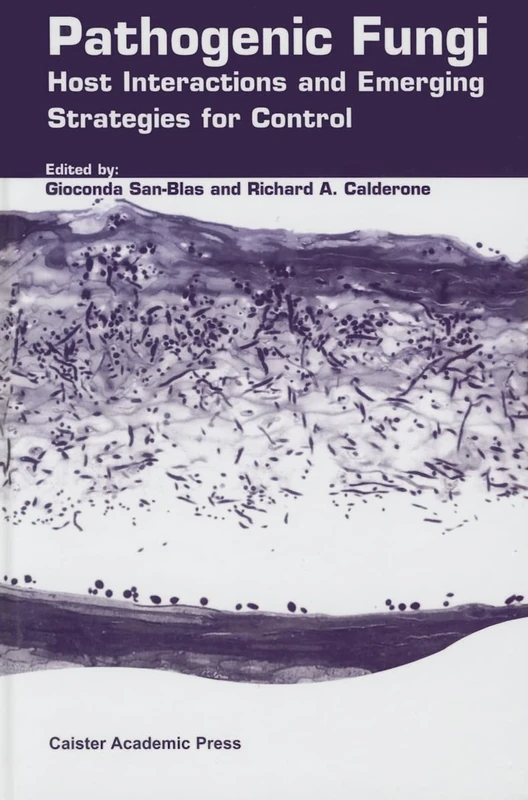
Pathogenic Fungi: Host Interactions and Emerging Strategies for Control
96% match

Pathogenic Fungi: Host Interactions and Emerging Strategies for Control

Caister Academic Press Limited

£195.96 22 Aug 2026
Environmental and Microbial Relationships: 4 (The Mycota, 4)
96% match

Environmental and Microbial Relationships: 4 (The Mycota, 4)

Springer

£137.62 06 Sep 2026