£122.20

New to our records — first sighting 22 days ago. We'll learn its rhythm.

22 days of data · current price £122

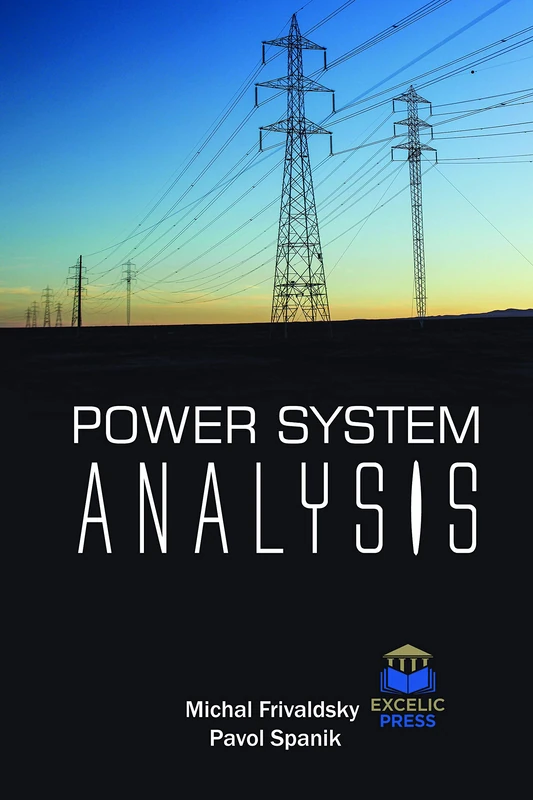
Power System Analysis

View at Amazon

Price History & Forecast

Grey patches = out of stock. Cheaper = lower on the chart. Hover for exact prices.

Last 1 days · 1 data points (no recent data)

Historical
Generating forecast…
Not enough data points to display chart (need at least 2 points)
View at Amazon ↗

Price data last checked 22 day(s) ago - will refresh soon

NEW HERE?

Amazon shows you one price. We show you all of them.

Tosheroon watches Amazon prices so you don't have to. Every product on Amazon has a price history — we make it visible. Set the price you'd actually pay, and we'll email you the second it gets there. No app, no account, one email.

WHAT'S ON THIS PAGE

↑ Price chart
when this has been cheap or pricey
↑ Forecast
where the price is heading next
↓ Statistics
all-time high & low, recent range
↑ Price alert
name your number, we'll email you

Price Distribution

Price distribution over 1 days • 1 price levels

Days at Price
1 day 0 0 1 1 1 £122 Days at Price

Price Analysis

Most common price: £122 (1 days, 100.0%)

Price range: £122 - £122

Price levels: 1 different prices over 1 days

Description

As modern systems have become increasingly complex such as with the introduction of load dynamics, other power electronic models, and renewable energy sources, the system has become potentially more susceptible to numerical instability issues. Nowadays, electrical utilities and consumers are paying much attention to enhance the quality of the generated and distributed electrical energy. The main aims are to produce clean electrical power and to distribute it to the end customers with acceptable power quality performance in a cost-effective manner. Today, the importance of power quality aspects has increased due to the booming developments in power-electronic devices and renewable energy resources under the umbrella of smart grids. Modern power systems operate closer to their operation and stability limits. This is because of load demand growth, the open access of transmission network, and economic operation. Therefore, dynamic security assessment has become increasingly important. Power system transient stability analysis is a fundamental tool for this dynamic security assessment. This monograph covers state of the art treatment of the major electrical engineering problems allied to the design and operation of electric power systems. The book starts with the opening chapter that describes a simple equivalent circuit model for magnetic-coupled and resonant magnetic-coupled WET systems. The resonant coupling is any represented in details, whereby all key systems equations for numerous configurations of a resonant compensation network with pure Resistive load square measure derived. From the part style purpose of read, it's conjointly vital to possess data regarding values of voltage and current within the main circuit. In the last part of the chapter, the general recommendations for practical use of each variant are provided. Next, the book focuses on increasing importance of system reliability and resilience is changing the way distribution systems are planned and operated. To achieve a distribution system self-healing against power outages, emerging technologies and devices, such as remote-controlled switches (RCSs) and smart meters, are being deployed.Succeedingly, the book focuses on synchronization of low-frequency oscillation in power systems. Since power electronic systems like high voltage electrical energy (HVDC) and versatile AC transmission square measure wide utilized in power systems, the necessity for magnetism transient (EMT) studies to assess their impact on power systems have redoubled. Recently, the penetration level of distributed energy resources (DERs) like electrical phenomenon, wind, fuel cell, have redoubled because of environmental problems and fuel costs which might lead to uncertainties on each the availability and demand sides. Further, this book proposes an optimal subinterval selection approach for power system transient stability analysis, which is based on modal analysis using a single machine infinite bus (SMIB) system. All electrical equipment may fail or malfunction when come across power quality disturbances, depending on the severity of the disturbance. It is essential for engineers, technicians, manufacturers, and power system operators to well understand and face the several power quality disturbances. A wide range of research results are integrated together to make this book useful for students and researchers who will give contribution in the development of the existing technology in future.

Product Specifications

Format
hardcover
Domain
Amazon UK
Release Date
01 January 2020
Listed Since
12 November 2019

Barcode

No barcode data available