£128.10

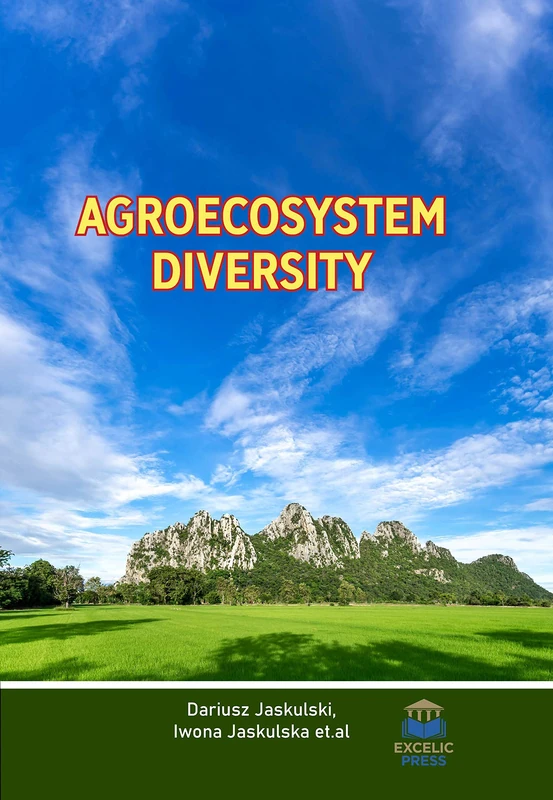
Agroecosystem Diversity

Price data last checked 26 day(s) ago - will refresh soon

View at Amazon

We'll watch every seller, every day. One email when your price arrives.

It has never been this cheap. We have no record of a lower price.

£128 today · cheaper than every other day in the last 3 months

NEW HERE?

Amazon shows you one price. We show you all of them.

Tosheroon watches Amazon prices so you don't have to. Every product on Amazon has a price history — we make it visible. Set the price you'd actually pay, and we'll email you the second it gets there. No app, no account, one email.

WHAT'S ON THIS PAGE

↓ Price chart
when this has been cheap or pricey
↓ Forecast
where the price is heading next
↓ Statistics
all-time high & low, recent range
↑ Price alert
name your number, we'll email you

Price History & Forecast

Grey patches = out of stock. Cheaper = lower on the chart. Hover for exact prices.

Last 65 days · 65 data points (no recent data)

Historical
Generating forecast…
£130.43 £127.87 £128.43 £128.99 £129.54 £130.10 £130.66 10 June 2026 26 June 2026 12 July 2026 28 July 2026 13 August 2026

Price Distribution

Price distribution over 65 days • 2 price levels

Days at Price
Current Price
1 day · current 64 days 0 16 32 48 64 £128 £130 Days at Price

Price Analysis

Most common price: £130 (64 days, 98.5%)

Price range: £128 - £130

Price levels: 2 different prices over 65 days

Description

Ecosystems are the basis of life and all human activities. Agroecology as an approach to foster the transition to food systems that conserve resources and improve human well-being, has been increasingly promoted by scientists, Non-Governmental Organization (NGOs), international organizations, and peasant movements. Conservation of biological diversity is very important for the proper functioning of the ecosystem and for delivering ecosystem services. Maintaining high biodiversity in agroecosystems makes agricultural production more sustainable and economically viable. During the last decades, worldwide losses of biodiversity have occurred at an unprecedented scale and agricultural intensification has been a major driver of this global change. Comprised into 14 chapters, this book integrates state of the art trends and challenges on biodiversity in agricultural ecosystems at both local and global perspective. This book opens with a chapter on plant diversity in agroecosystems and agricultural landscapes. Agricultural landscapes represent a cultural landscape group. Their origin, structure and ecological relations differ from natural landscapes considerably. Agroecology is increasingly promoted by scientists, non-governmental organizations (NGOs), international organizations and peasant movements as an approach to foster the transition to sustainable and equitable food systems. The challenges to agroecological transitions are not the same for all farmers, as they can face different social and bio-physical conditions. This book, next, intends to assess how agroecological practices and principles are associated with different farm types within a process of agroecological transition. It assesses variations between farm types and describes implications for promoting transitions. It also discusses how and why quantitative and participatory methodologies can be combined for more precise and relevant assessments to understand and promote agroecological transitions. The protection of ecosystems and biodiversity is an important task and a key challenge to the world. Therefore, the next chapter focuses on the role of biological diversity in agroecosystems and organic farming. Further, this book takes a look on the governance of ecosystem services in agroecology; the ecology of plant chemistry and multi-species interactions in diversified agroecosystems; activity and variety of soil microorganisms depending on the diversity of the soil tillage system; soil fungal resources in annual cropping systems and their potential for management; nocturnal risks-high bat activity in the agricultural landscape indicates potential pesticide exposure. In this chapter, we have discussed the major effects of crop protection on biodiversity in detail regarding the persistence of biodiversity that needs to be mediated, considering the preserving of ecological properties and sustainable maintenance of biological integrity in agroecosystems. Farming systems, with their concerns of biodiversity, ecosystem services, and productivity and production issues towards progress in human needs, wellbeing, and sustainable development, are challenging in most biosphere reserves. In this book, a case study presented in last chapter assesses the levels and trends of the agro-biodiversity and ecosystem services of different farming systems in the Yayo Biosphere Reserve in Ethiopia.

Product Specifications

Format
hardcover
Domain
Amazon UK
Release Date
01 January 2020
Listed Since
12 November 2019

Barcode

No barcode data available