We can't find the internet
Attempting to reconnect
Something went wrong
Hang in there while we get back on track
£67.31
It has never been this cheap. We have no record of a lower price.
£67 today · cheaper than every other day in the last 3 months
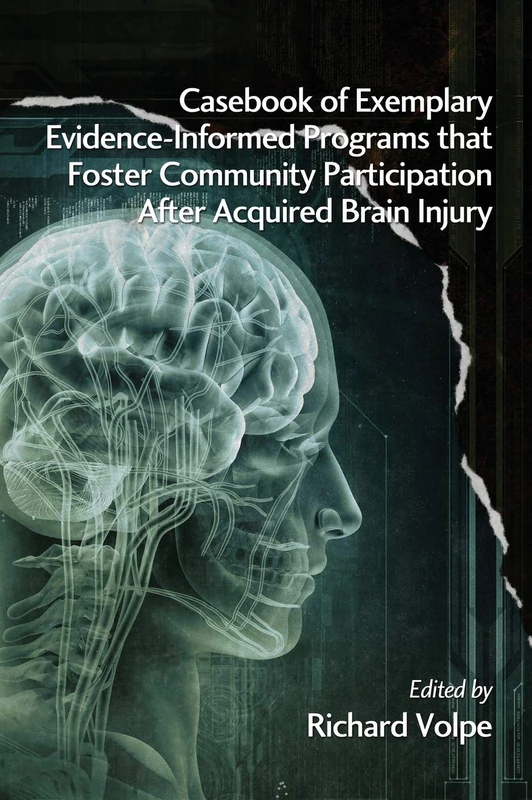
Information Age Publishing Casebook of Exemplary Evidence-Informed Programs that Foster Community Participation after Acquired Brain Injury
Price data last checked 42 day(s) ago - refreshing...
We'll watch every seller, every day. One email when your price arrives.
Price History & Forecast
Grey patches = out of stock. Cheaper = lower on the chart. Hover for exact prices.
Last 49 days · 49 data points (no recent data)
Price data last checked 42 day(s) ago - refreshing...
NEW HERE?
Amazon shows you one price. We show you all of them.
Tosheroon watches Amazon prices so you don't have to. Every product on Amazon has a price history — we make it visible. Set the price you'd actually pay, and we'll email you the second it gets there. No app, no account, one email.
WHAT'S ON THIS PAGE
when this has been cheap or pricey
where the price is heading next
all-time high & low, recent range
name your number, we'll email you
Price Distribution
Price distribution over 49 days • 1 price levels
Price Analysis
Most common price: £67 (49 days, 100.0%)
Price range: £67 - £67
Price levels: 1 different prices over 49 days
Description
Product Specifications
- Format
- hardcover
- ASIN
- 1623962900
- Domain
- Amazon UK
- Release Date
- 30 June 2013
- Listed Since
- 10 May 2013
Barcode
No barcode data available
Similar Products You Might Like
Addressing Brain Injury in Under-Resourced Settings: A Practical Guide to Community-Centred Approaches
Routledge
Contemporary Perspectives on Social Work in Acquired Brain Injury
Routledge
Group-Based Interventions for 'Understanding Brain Injury': A Manual and Workbook for Practitioners and Patients
Routledge
Self-Identity after Brain Injury (Neuropsychological Rehabilitation: A Modular Handbook)
Routledge
A Sociological Approach to Acquired Brain Injury and Identity (Interdisciplinary Disability Studies)
Routledge

Occupational Analysis and Group Process
Elsevier
Life After Brain Injury: Survivors' Stories
Routledge
Introduction to Neurogenic Communication Disorders
Mosby
Family Experience of Brain Injury: Surviving, Coping, Adjusting (After Brain Injury: Survivor Stories)
Routledge
Families in Rehabilitation Counseling: A Community-Based Rehabilitation Approach
Springer Publishing Company
Rehabilitation for Traumatic Brain Injury: Rehabilitation for Traumatic Brain Injury
Elsevier

Human-Computer Systems Interaction: Backgrounds and Applications 4: 551 (Advances in Intelligent Systems and Computing, 551)
Springer
Social and Communication Disorders Following Traumatic Brain Injury (Brain, Behaviour and Cognition)
Routledge
Policy, Program Evaluation, and Research in Disability: Community Support for All (Haworth Health and Social Policy)
Routledge
Digital Technology in Public Health and Rehabilitation Care: COVID Era
Elsevier

Careers of Care: Survivors of Traumatic Brain Injury and the Response of Health and Social Care (Routledge Revivals)
Routledge
Health and Healing after Traumatic Brain Injury: Understanding the Power of Family, Friends, Community, and Other Support Systems (Disability Insights and Issues)
Bloomsbury
Psychotherapy for Families after Brain Injury
Springer
Rehabilitation of Neuropsychological Disorders - Practical Guide
Routledge
The Routledge Handbook of Service User Involvement in Human Services Research and Education (Routledge International Handbooks)
Routledge
Effective Learning after Acquired Brain Injury: A practical guide to support adults with neurological conditions
Routledge
Frührehabilitation nach Schädel-Hirn-Trauma: Leitfaden zur ergebnisorientierten aktiven Therapie
Springer
People with Disabilities: Empowerment and Community Action
Routledge