£83.92

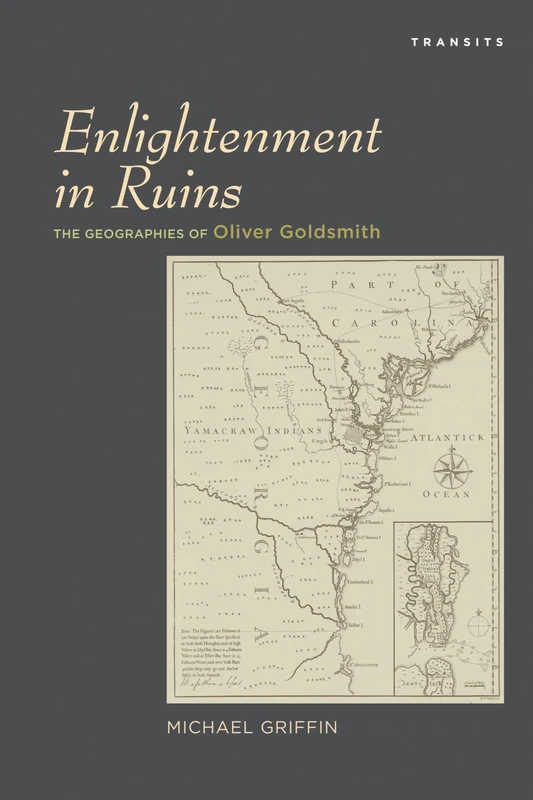
Bloomsbury Academic Enlightenment in Ruins: The Geographies of Oliver Goldsmith (Transits: Literature, Thought & Culture, 1650--1850)

Price data last checked 79 day(s) ago - refreshing...

View at Amazon

We'll watch every seller, every day. One email when your price arrives.

This is the most expensive it has ever been. Walk away.

£84 today · previous high £84 · all-time low £84

NEW HERE?

Amazon shows you one price. We show you all of them.

Tosheroon watches Amazon prices so you don't have to. Every product on Amazon has a price history — we make it visible. Set the price you'd actually pay, and we'll email you the second it gets there. No app, no account, one email.

WHAT'S ON THIS PAGE

↓ Price chart
when this has been cheap or pricey
↓ Forecast
where the price is heading next
↓ Statistics
all-time high & low, recent range
↑ Price alert
name your number, we'll email you

Price History & Forecast

Grey patches = out of stock. Cheaper = lower on the chart. Hover for exact prices.

Last 12 days • 12 data points (No recent data available)

Historical
Generating forecast...
£83.92 £83.72 £83.77 £83.81 £83.85 £83.89 £83.94 09 April 2026 11 April 2026 14 April 2026 17 April 2026 20 April 2026

Price Distribution

Price distribution over 12 days • 1 price levels

Days at Price
12 days 0 3 6 9 12 £84 Days at Price

Price Analysis

Most common price: £84 (12 days, 100.0%)

Price range: £84 - £84

Price levels: 1 different prices over 12 days

Description

Oliver Goldsmith (1728-1774) moved between the genres and geographies of enlightenment writing with considerable dexterity. As a consequence he has been characterized as a passive purveyor of enlightenment thought, a hack, a harried translator of the French enlightenment for an English audience, an ideological lackey, and a subtle ironist. In poetry, he is either a compliant pastoralist or an engaged social critic. Yet Goldsmith's career is as complex and as contradictory as the enlightenment currents across which he wrote, and there is in Goldsmith's oeuvre a set of themes-including his opposition to the new imperialism and to glibly declared principles of liberty-which this book addresses as a manifestation of his Irishness. Michael Griffin places Goldsmith in two contexts: one is the intellectual and political culture in which he worked as a professional author living in London; the other is that of his nationality and his as yet unstudied Jacobite politics. Enlightenment in Ruins thereby reveals a body of work that is compellingly marked by tensions and transits between Irishness and Englishness, between poetic and professional imperatives, and between cultural and scientific spheres. Review Enlightenment in Ruins offers a critical revaluation of Oliver Goldsmith's contributions to enlightenment thought, focusing particularly on elements that align with Irish strains produced by contemporaries such as Edmund Burke. Griffin asserts that Goldsmith has been too easily dismissed as a mawkish purveyor of simplistic nostalgia, when his imaginative works question cultural relations, parody fascination with the exotic, and critique the British imperial project.--Intelligencer Goldsmith might have something to tell us about what Michael Griffin in this very welcome book calls 'the destructive negligence of the rich'. . . .This book is a model of historically informed literary analysis, beautifully written and assiduously researched.--Times Literary Supplement Griffin (18th-century and Irish studies, Univ. of Limerick) offers a fresh look at the career of Oliver Goldsmith. Departing from the view that Goldsmith's dabbling in varied themes and genres renders his canon a 'sentimental foil to Swift, ' Griffin presents Goldsmith as representing complex political strands rooted in his Irish sympathies. This critical stance allows readers to appreciate the tensions between Enlightenment contexts and Jacobite politics. The study consists of four essays. The first chapters deal with Goldsmith's survey of human nature and examine contemporary theories. The second section concerns political landscapes and deals specifically with Irish themes and concerns. In the final chapter, Griffin's interpretation of 'The Deserted Village' gathers the considerations of the previous chapters and situates the poetic critique in an Irish context. This volume, part of Bucknell's 'Transits' series, devoted to 18th-century studies, offers a vital contribution toward understanding the work of an often underappreciated author. The extensive notes and bibliography support further study of Oliver Goldsmith by specialists in Irish and 18th-century literature. Summing Up: Recommended. Upper-division undergraduates through faculty.--CHOICE Griffin's new monograph, Enlightenment in Ruins: The Geographies of Oliver Goldsmith, extends this analysis to Goldsmith's entire career and offers a compelling picture of the self contradictions of Enlightenment culture at midcentury.--SEL: Studies in English Literature 1500-1900 About the Author Michael Griffin lectures in eighteenth-century and Irish studies at the University of Limerick, where he is Director of the Eighteenth Century Research Group. He has published widely on eighteenth-century studies, utopian satire, and Irish writing in English.

Product Specifications

Format
hardcover
Domain
Amazon UK
Release Date
15 August 2013
Listed Since
19 March 2013

Barcode

No barcode data available