£91.07

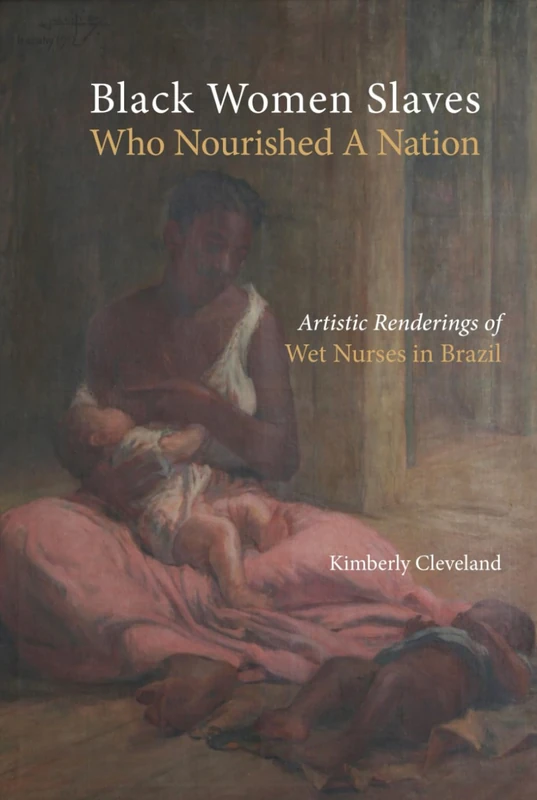
Cambria Press Black Women Slaves Who Nourished A Nation: Artistic Renderings of Black Wet Nurses of Brazil (Cambria Studies in Slavery)

Price data last checked 85 day(s) ago - refreshing...

View at Amazon

We'll watch every seller, every day. One email when your price arrives.

It has never been this cheap. We have no record of a lower price.

£91 today · cheaper than every other day in the last 3 months

NEW HERE?

Amazon shows you one price. We show you all of them.

Tosheroon watches Amazon prices so you don't have to. Every product on Amazon has a price history — we make it visible. Set the price you'd actually pay, and we'll email you the second it gets there. No app, no account, one email.

WHAT'S ON THIS PAGE

↓ Price chart
when this has been cheap or pricey
↓ Forecast
where the price is heading next
↓ Statistics
all-time high & low, recent range
↑ Price alert
name your number, we'll email you

Price History & Forecast

Grey patches = out of stock. Cheaper = lower on the chart. Hover for exact prices.

Last 6 days • 6 data points (No recent data available)

Historical
Generating forecast...
£91.07 £86.52 £88.34 £90.16 £91.98 £93.80 £95.62 09 April 2026 10 April 2026 11 April 2026 12 April 2026 14 April 2026

Price Distribution

Price distribution over 6 days • 1 price levels

Days at Price
6 days 0 2 3 5 6 £91 Days at Price

Price Analysis

Most common price: £91 (6 days, 100.0%)

Price range: £91 - £91

Price levels: 1 different prices over 6 days

Description

This book is in the Cambria Studies in Slavery book series (General Editor: Ana Lucia Araujo). This book includes color images. Wet nursing in Brazil dates to approximately the late eighteenth century when upper-class families used black women slaves to breastfeed their white infants. Soon use of a black wet nurse became the norm among elite families in various parts of the country. Wet nursing developed into a business based on the need for breast milk, and the purchase, sale, and renting of slaves to meet the demand. In the late nineteenth century, a growing number of medical experts and abolitionists lobbied against wet nursing. Their efforts, combined with the abolition of slavery and the switch to a Republican government, triggered a decline in the practice. Nevertheless, this custom had become so deep-rooted and widespread that it only became fully obsolete in the 1920s. Brazil’s history of wet nursing was recorded in artistic renderings. Europeans were the first to depict these black women slaves in their paintings and prints in the first half of the nineteenth century. Subsequently, international and national photographers created studio portraits of wet nurses with their white charges. Only in the twentieth century, when the nation was struggling with race relations post-abolition, did white artists acknowledge that the black women wet nurses were biological mothers, themselves, in their paintings. Since then, a small number of sculptors have used the black wet nurse as an artistic subject. While scholars have identified samba, Carnaval, and Candomblé as forms of expression through which to explore the topic of race in Brazil, more studies of how art has functioned as a reflection of race relations are needed. One might expect the anonymous black wet nurse to have faded into obscurity well before the start of the twenty-first century; yet, this female figure remains a durable subject of artistic renderings and discourse on racial politics. This study uses renderings of the black wet nurse as a lens through which to explore broader social developments in Brazilian history and to analyze how artistic representations of this body of women have both followed and challenged dominant attitudes toward race and the memory of slavery. Of the enslaved blacks who were used for a variety of types of labor in the urban and rural settings, and who also feature in artistic renderings, this black wet nurse is the only one who continues to be referenced in contemporary visual culture and discussions of race relations in Brazil. This is the first study to bring together a number of prints, photographs, paintings, and sculptures of this female figure from the nineteenth through twenty-first centuries, from Rio de Janeiro, Bahia, and São Paulo, and to not only consider the works in their individual artistic and historical contexts, but also in relation to each other. The range of different types of artworks underscores the fact that the black wet nurses were not simply marginalized “types,” relegated to the memory of the era of slavery, but a complex group of women who, in fact, nourished a nation. Black Women Slaves Who Nourished A Nation: Artistic Renderings of Wet Nurses in Brazil is an important book for art history, Latin American, and African diaspora collections. Review "This book is a remarkable accomplishment. It grows out of Kimberly Cleveland’s depth of knowledge not only of Brazilian art history but, equally, her considerable and nuanced understanding of the complexities of racial and class relationships, medical, social, and economic history as well as the poignant, intimate, and often tragic stories of black wet nurses in Brazilian urban society and their roles within the white, elite power structures. It is a moving and noteworthy text." —Edward J. Sullivan, Helen Gould Sheppard Professor of the History of Art, New York University "There is no book dedicated to the visual representations of Africa

Product Specifications

Format
hardcover
Domain
Amazon UK
Release Date
23 May 2019
Listed Since
31 May 2019

Barcode

No barcode data available