£63.56

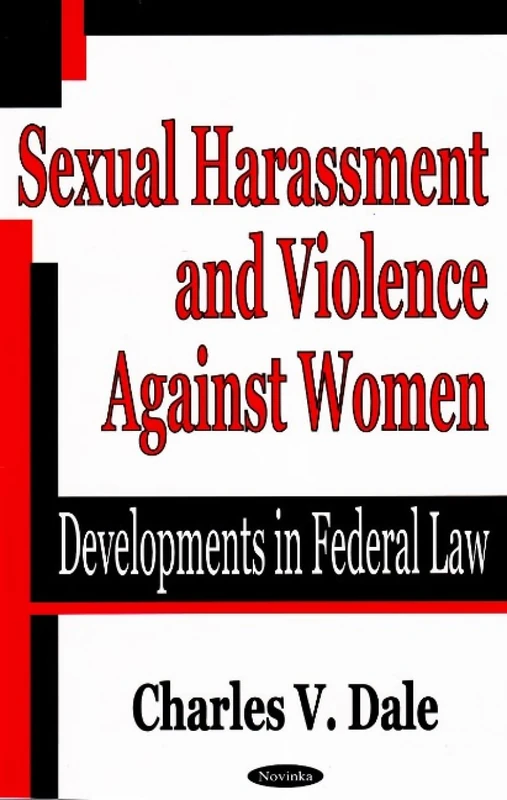
Brand: Nova Science Publishers Inc Sexual Harassment and Violence Against Women: Developments in Federal Law

Price data last checked 20 day(s) ago - will refresh soon

View at Amazon

We'll watch every seller, every day. One email when your price arrives.

It has never been this cheap. We have no record of a lower price.

£64 today · cheaper than every other day in the last 3 months

NEW HERE?

Amazon shows you one price. We show you all of them.

Tosheroon watches Amazon prices so you don't have to. Every product on Amazon has a price history — we make it visible. Set the price you'd actually pay, and we'll email you the second it gets there. No app, no account, one email.

WHAT'S ON THIS PAGE

↓ Price chart
when this has been cheap or pricey
↓ Forecast
where the price is heading next
↓ Statistics
all-time high & low, recent range
↑ Price alert
name your number, we'll email you

Price History & Forecast

Grey patches = out of stock. Cheaper = lower on the chart. Hover for exact prices.

Last 71 days · 71 data points (no recent data)

Historical
Generating forecast…
£65.45 £63.37 £63.82 £64.28 £64.73 £65.19 £65.64 29 April 2026 16 May 2026 03 June 2026 20 June 2026 08 July 2026

Price Distribution

Price distribution over 71 days • 2 price levels

Days at Price
Current Price
1 day · current 70 days 0 18 35 53 70 £64 £65 Days at Price

Price Analysis

Most common price: £65 (70 days, 98.6%)

Price range: £64 - £65

Price levels: 2 different prices over 71 days

Description

Gender-based discrimination, harassment, and violence against women in the home, workplace, and society at large are continuing topics of legislative and judicial concern. Legal doctrines condemning the extortion of sexual favours as a condition of employment or job advancement, and other sexually offensive workplace behaviours resulting in a 'hostile environment', have evolved from judicial decisions under Title VII of the 1964 Civil Rights Act and related federal laws. The earlier judicial focus on economic detriment or quid pro quo harassment -- making submission to sexual demands a condition to job benefits -- has largely given way to Title VII claims alleging harassment that creates an 'intimidating, hostile, or offensive environment'. In 1994, Congress broke new legal ground by creating a civil rights cause of action for victims of 'crimes of violence motivated by gender'. The new law also made it a federal offence to travel interstate with the intent to 'injure, harass, or intimidate' a spouse, causing bodily harm to the spouse by a crime of violence. In recent years, the US Supreme Court has addressed a range of issues from the legality of same-sex harassment to the vicarious liability of employers and a local school district for monetary damages as the result of harassment by supervisors and teachers. In Oncale vs Sundowner Offshore Services Inc., the US Supreme Court resolved a conflict among the federal circuit courts by ruling that sex discrimination consisting of same-sex harassment is actionable under Title VII. Faragher vs City of Boca Raton and Burlington Industries vs Ellerth, held employers vicariously liable for sexual harassment of an employee by a supervisor with immediate or successively higher authority of that employee. Where the harassment results in a 'tangible employment action' -- such as demotion or discharge -- against the victim, Title VII liability is automatic and no defence is available to the employer. In cases not involving tangible reprisals or loss of job benefits, however, the failure of a complaining employee to take advantage of any anti-harassment policy and procedures made available by the employer may be asserted as an affirmative defence. Doe vs Lago Vista Independent School District, by contrast, ruled 5 to 4 that Title IX of the Education Amendments of 1972 imposes no liability on local school districts for teacher harassment of students unless a school official with authority to institute corrective measures has actual knowledge of the alleged misconduct and is deliberately indifferent to it. On June 14, 2004 the Supreme Court considered the defences, if any, that may be available to an employer against an employee's claim that she was forced to resign because of 'intolerable' sexual harassment at the hands of a supervisor. In Pennsylvania State Police vs Suders, the plaintiff claimed the tangible adverse action was supervisory harassment so severe that it drove the employee to quit, a constructive discharge in effect. The Court, in an opinion by Justice Ginsburg, only Justice Thomas dissenting, accepted the theory of a constructive discharge as a tangible employment action, but it also set conditions under which the employer could assert an affirmative defense and avoid strict liability under Title VII of the 1964 Civil Rights Act.

Product Specifications

Format
paperback
Domain
Amazon UK
Release Date
17 April 2006
Listed Since
31 January 2007

Barcode

No barcode data available