We can't find the internet
Attempting to reconnect
Something went wrong
Hang in there while we get back on track

£95.92
It has never been this cheap. We have no record of a lower price.
£96 today · cheaper than every other day in the last 3 months
Microseismic Monitoring (Geophysical References)
We'll watch every seller, every day. One email when your price arrives.
Price History & Forecast
Grey patches = out of stock. Cheaper = lower on the chart. Hover for exact prices.
Last 17 days · 17 data points (no recent data)
NEW HERE?
Amazon shows you one price. We show you all of them.
Tosheroon watches Amazon prices so you don't have to. Every product on Amazon has a price history — we make it visible. Set the price you'd actually pay, and we'll email you the second it gets there. No app, no account, one email.
WHAT'S ON THIS PAGE
when this has been cheap or pricey
where the price is heading next
all-time high & low, recent range
name your number, we'll email you
Price Distribution
Price distribution over 17 days • 1 price levels
Price Analysis
Most common price: £96 (17 days, 100.0%)
Price range: £96 - £96
Price levels: 1 different prices over 17 days
Description
Product Specifications
- Format
- hardcover
- ASIN
- 1560803479
- Domain
- Amazon UK
- Release Date
- 30 January 2018
- Listed Since
- 07 August 2017
Barcode
No barcode data available
Similar Products You Might Like

Seismic Waves and Rays in Elastic Media (Volume 34) (Handbook of Geophysical Exploration: Seismic Exploration, Volume 34)
Elsevier
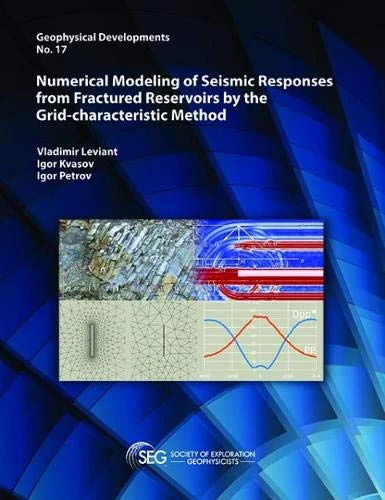
Numerical Modeling of Seismic Responses from Fractured Reservoirs by the Grid-characteristic Method (Geophysical Developments)

The Seismic Signal and Its Meaning (Geophysical References)
Anisotropy and Microseismics: Theory and Practice (Geophysical References)
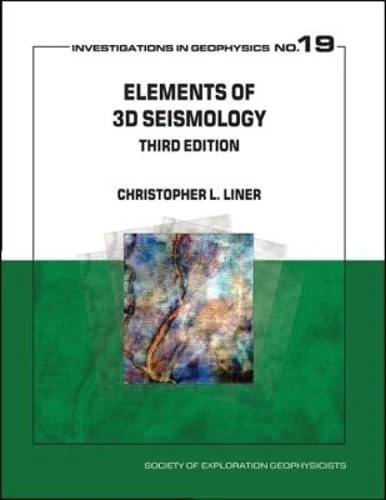
Elements of 3D Seismology (Investigations in Geophysics)

Prestack Depth Migration and Velocity Model Building (Geophysics Reprints)

Seismology of Azimuthally Anisotropic Media and Seismic Fracture Characterization (Geophysical References)

Seismic Signatures and Analysis of Reflection Data in Anisotropic Media (Volume 29) (Handbook of Geophysical Exploration: Seismic Exploration, Volume 29)
Elsevier

Handbook of Poststack Seismic Attributes (Geophysical References)

Seismic Ray Theory
Cambridge University Press

Seismic Ray Theory
Cambridge University Press

Land Seismic Case Studies - Near-Surface Modeling & Subsurface Imaging

Rock Quality, Seismic Velocity, Attenuation and Anisotropy (Balkema: Proceedings and Monographs in Engineering, Water and Earth Sciences)
Taylor & Francis

Seismic Petrophysics in Quantitative Interpretation (Investigations in Geophysics)

Basic Geophysics (Geophysical Monographs)

Seismic Exploration of Hydrocarbons in Heterogeneous Reservoirs: New Theories, Methods and Applications
Elsevier

Numerical Modeling of Seismic Wave Propagation: Gridded Two-Way Wave-Equation Methods: 28 (Geophysics Reprints)

Seismic Signatures and Anisotropic Media Analysis - Volume 29
Elsevier

Seismic Hydrocarbon Exploration: 2D and 3D Techniques
Springer

Numerical Methods of Exploration Seismology - MATLAB Algorithms
Cambridge University Press

Seismoelectric Exploration: Theory, Experiments, and Applications: 252 (Geophysical Monograph Series)
Wiley

Seismic Imaging Methods and Applications for Oil and Gas Exploration: Modern Seismic Methods for Hydrocarbon Exploration
Elsevier

Seismic Attributes as the Framework for Data Integration Throughout the Oilfield Life Cycle (Distinguished Instructor Series)

Geophysical Applications of Artificial Neural Networks and Fuzzy Logic: 21 (Modern Approaches in Geophysics, 21)
Springer