£178.99

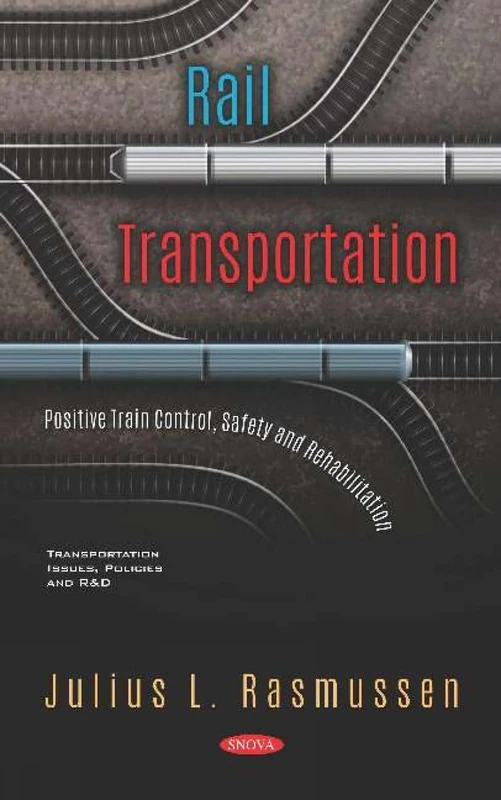
Rail Transportation: Positive Train Control, Safety and Rehabilitation: Positive Train Control, Safety and Rehabilitation

Price data last checked 63 day(s) ago - refreshing...

View at Amazon

We'll watch every seller, every day. One email when your price arrives.

It has never been this cheap. We have no record of a lower price.

£179 today · cheaper than every other day in the last 3 months

NEW HERE?

Amazon shows you one price. We show you all of them.

Tosheroon watches Amazon prices so you don't have to. Every product on Amazon has a price history — we make it visible. Set the price you'd actually pay, and we'll email you the second it gets there. No app, no account, one email.

WHAT'S ON THIS PAGE

↓ Price chart
when this has been cheap or pricey
↓ Forecast
where the price is heading next
↓ Statistics
all-time high & low, recent range
↑ Price alert
name your number, we'll email you

Price History & Forecast

Grey patches = out of stock. Cheaper = lower on the chart. Hover for exact prices.

Last 28 days • 28 data points (No recent data available)

Historical
Generating forecast...
£178.99 £170.04 £173.62 £177.20 £180.78 £184.36 £187.94 14 March 2026 20 March 2026 27 March 2026 03 April 2026 10 April 2026

Price Distribution

Price distribution over 28 days • 1 price levels

Days at Price
28 days 0 7 14 21 28 £179 Days at Price

Price Analysis

Most common price: £179 (28 days, 100.0%)

Price range: £179 - £179

Price levels: 1 different prices over 28 days

Description

The Rail Safety Improvement Act of 2008 (RSIA08) requires implementation of positive train control (PTC) on railroads which carry passengers or have high-volume freight traffic with toxic- or poisonous-by-inhalation hazardous materials. Chapters 1 and 2 discuss passenger railroads' PTC progress and FRA's steps to assist them, and how passenger railroads and FRA plan to approach the 2018 and 2020 deadlines. Chapter 3 reports on the FRA's passenger equipment safety standards using a performance-based approach to adopt new and modified requirements governing the construction of conventional and high-speed passenger rail equipment. Chapter 4 examines key characteristics of FRA's and FTA's rail safety oversight programs and strengths and limitations of FRA's and FTA's rail safety oversight programs. Crashes at highway-rail grade crossings are one of the leading causes of railroad-related deaths. Chapter 5 examines the focus of FRA's grade-crossing-safety research, how states select and implement grade-crossing projects and what data are available from FRA to inform their decisions, and the challenges states reported in implementing and assessing projects and the extent to which FHWA assesses the program's effectiveness. When a train is not moving but its engines are running, it can present risks and disruptions for the surrounding community as reported in chapter 6. Railroad bridges carry heavy and potentially dangerous loads over busy roadways and important waterways. Many of these bridges are a century old or more. However, unlike road bridges, which are the responsibility of public entities, railroad bridges are the responsibility of the private railroad companies that own or operate them. Congress has acted in recent years to improve oversight of railroad bridge safety, but incidents have prompted concerns about whether enough is being done to protect the public as discussed in chapter 7. Train derailments or collisions are often well-publicized events and receive significant attention from policymakers seeking to reduce their reoccurrence. Less attention has been devoted to trespassing, although it is a much greater cause of rail-related fatalities than derailments and collisions combined. As reported in chapter 8, over three-fifths of deaths in rail incidents have been pedestrian trespassers, and vehicle-train accidents at railroad grade crossings account for nearly one-third Congress created the Railroad Rehabilitation and Improvement Financing (RRIF) program to offer long-term, low-cost loans to railroad operators, with particular attention to small freight railroads, to help them finance improvements to infrastructure and investments in equipment. This program is the focus of chapter 9. Chapter 10 examines how WMATA spent its capital funds from fiscal years 2011 through 2017, how WMATA's new capital planning process addresses weaknesses it identified in the prior process, and WMATA's progress toward its track preventive maintenance program's goals and how the program aligns with leading program management practices.

Product Specifications

Format
hardcover
Domain
Amazon UK
Release Date
17 September 2019
Listed Since
25 July 2019

Barcode

No barcode data available