We can't find the internet
Attempting to reconnect
Something went wrong
Hang in there while we get back on track
£172.99
It has never been this cheap. We have no record of a lower price.
£173 today · cheaper than every other day in the last 3 months
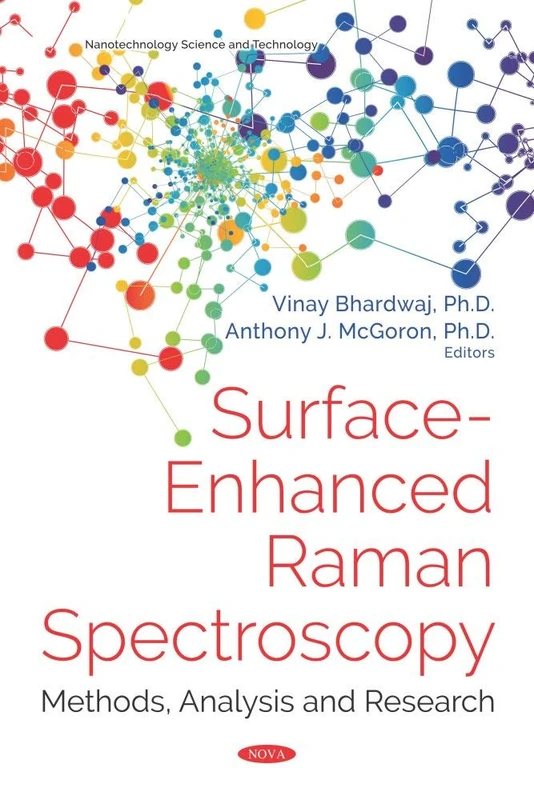
Surface-Enhanced Raman Spectroscopy: Methods, Analysis and Research
We'll watch every seller, every day. One email when your price arrives.
Price History & Forecast
Grey patches = out of stock. Cheaper = lower on the chart. Hover for exact prices.
Last 63 days · 63 data points (no recent data)
NEW HERE?
Amazon shows you one price. We show you all of them.
Tosheroon watches Amazon prices so you don't have to. Every product on Amazon has a price history — we make it visible. Set the price you'd actually pay, and we'll email you the second it gets there. No app, no account, one email.
WHAT'S ON THIS PAGE
when this has been cheap or pricey
where the price is heading next
all-time high & low, recent range
name your number, we'll email you
Price Distribution
Price distribution over 63 days • 1 price levels
Price Analysis
Most common price: £173 (63 days, 100.0%)
Price range: £173 - £173
Price levels: 1 different prices over 63 days
Description
Product Specifications
- Format
- hardcover
- ASIN
- 153614861X
- Domain
- Amazon UK
- Release Date
- 31 May 2019
- Listed Since
- 05 March 2019
Barcode
No barcode data available
Similar Products You Might Like

Recent Developments In Plasmon-Supported Raman Spectroscopy: 45 Years Of Enhanced Raman Signals
World Scientific Publishing Company

SERS for Point-of-care and Clinical Applications
Elsevier

Industrial Applications of Laser Diagnostics
CRC Press
Springer Modern Techniques of Spectroscopy - Science Textbook
Springer

New Frontiers in Ultrasensitive Bioanalysis: Advanced Analytical Chemistry Applications in Nanobiotechnology, Single Molecule Detection, and Single ... on Analytical Chemistry and Its Applications)
Wiley

Swansea and Nantgarw Porcelains: A Scientific Reappraisal
Springer
Infrared and Raman Spectroscopic Imaging
Wiley
Confocal Raman Microscopy: 158 (Springer Series in Optical Sciences)
Springer