£119.99

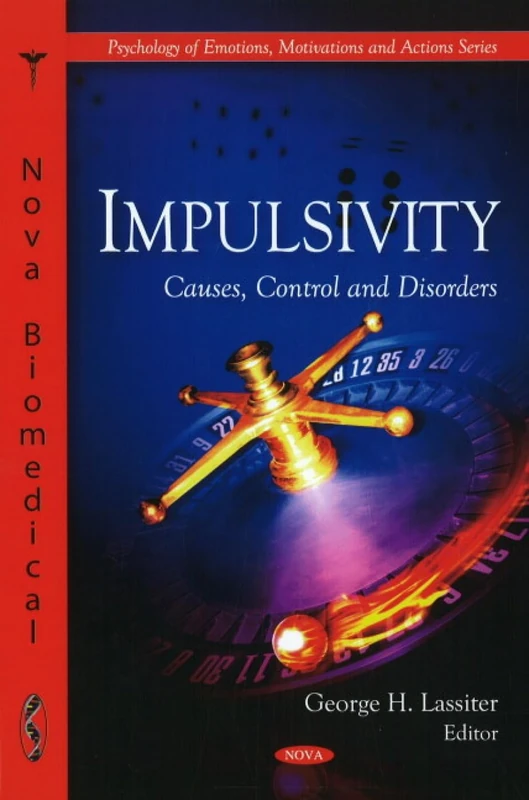
Understanding Impulsive Behavior: Assessment, Influences and Gender Differences (Psychology of Emotions, Motivations and Actions)

Price data last checked 55 day(s) ago - refreshing...

View at Amazon

We'll watch every seller, every day. One email when your price arrives.

It has never been this cheap. We have no record of a lower price.

£120 today · cheaper than every other day in the last 3 months

NEW HERE?

Amazon shows you one price. We show you all of them.

Tosheroon watches Amazon prices so you don't have to. Every product on Amazon has a price history — we make it visible. Set the price you'd actually pay, and we'll email you the second it gets there. No app, no account, one email.

WHAT'S ON THIS PAGE

↓ Price chart
when this has been cheap or pricey
↓ Forecast
where the price is heading next
↓ Statistics
all-time high & low, recent range
↑ Price alert
name your number, we'll email you

Price History & Forecast

Grey patches = out of stock. Cheaper = lower on the chart. Hover for exact prices.

Last 36 days · 36 data points (no recent data)

Historical
Generating forecast…
£119.99 £113.99 £116.39 £118.79 £121.19 £123.59 £125.99 10 June 2026 18 June 2026 27 June 2026 06 July 2026 15 July 2026

Price Distribution

Price distribution over 36 days • 1 price levels

Days at Price
36 days 0 9 18 27 36 £120 Days at Price

Price Analysis

Most common price: £120 (36 days, 100.0%)

Price range: £120 - £120

Price levels: 1 different prices over 36 days

Description

In this compilation, the authors begin by describing the main impulsive behavior assessment instruments in animals and humans. The following databases were searched from 2005 to 2017: MEDLINE, PsycINFO and BVS/Bireme. The search retrieved four questionnaires and eight tasks for humans, as well as six tasks for animals. This discussion, together with the analysis of instruments applied in human and non-human animals, is the greatest contribution to the field, since there is a lack of literature about the subject. In addition, this chapter discusses the importance of validating such instruments for each population. In the following chapter, the authors propose a developmental theory of persistence in problematic alcohol consumption that emanates from impulsigenic personality traits that differentially predispose individuals to drink when highly emotional. These patterns of behavior are reinforced over time and gradually shift from impulsive to compulsive, first to escape negative emotions, then to avoid them completely. For some, more adaptive methods of coping are not adequately developed. These individuals may transition into early adulthood far less equipped to cope with the stress related to this developmental period, and thus continue to drink in ways that are problematic and potentially harmful. The following chapter focuses on adolescence, a period of life wherein individuals pass through several changes, including experiencing new situations and new relationships with peers, parents and superiors. This phase of life is also marked by physical and brain maturation. The last area to develop in the central nervous system is the prefrontal cortex (PFC), the area also linked to the ability to control impulses. This suggests that adolescents tend to have more impulsive behaviors that can result in risky behaviors such as alcohol and drugs. So, the purpose of this chapter is to discuss impulsivity in adolescence, and clarify issues that may help us to understand topics related to this, such as the difference in impulsive behaviors between genders at this stage of life and what influence socioeconomic status may have on such behaviors. Afterwards, findings relating to emotional impulsiveness (EI) from the authors work and that of others are reviewed. Early work is first described that identified a neural (brain-wave) signature of EI in personality disordered offenders detained in high security. It was shown that, by categorizing offenders on the basis of this brain-wave measure as a priori high vs. low risk and following them up following their release into the community, it was possible to predict both general and violent re-offending with a modest degree of accuracy. Continuing, a review is included which summarizes the existing literature on the influence of the dimensions of impulsivity and alcohol use problems among racial/ethnic groups. In particular, the authors focus on how chronic stress may influence the relationship between specific dimensions of impulsivity (e.g., negative and positive urgency) and alcohol use. While much of the existing literature has been conducted in white samples, individuals from minority backgrounds often deal with greater stress and stress specifically related to their identity as minority. The authors go on to investigate the association between impulsive behaviors at age 7 and the development of problem gambling by adulthood. To determine the specificity of any observed association between impulsive behaviors and problem gambling, the chapter also examines the link between respondents shy/depressed behaviors in childhood and later problem gambling. The longitudinal investigation found prospective evidence that impulsive behaviors at age 7 are a specific and significant risk factor for later problem gambling. In the concluding study, a total of 318 psychiatric patients from the outpatient services of two institutions and 184 healthy subjects were recruited. Patients were included if they were > 18 years of age, met DSM-IV criteria for a psychotic, mood- or stress-related disorder and were clinically stable enough according to the treating physician to complete the study assessments. Healthy subjects were screened using the Structured Clinical Interview for DSM-IV (SCID-I) and were excluded if any diagnostic criteria was met or if they verbally reported a history of psychiatric disorders. The goal was to determine the impact of demographic variables and substance use in the overt expression of impulsivity in men and women with and without mental disorders.

Product Specifications

Format
paperback
Domain
Amazon UK
Release Date
10 July 2018
Listed Since
25 April 2018

Barcode

No barcode data available