£61.41

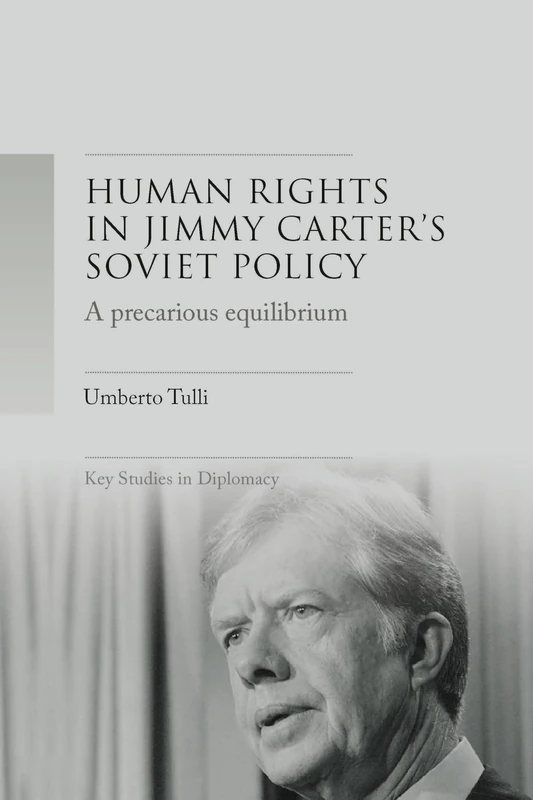
Manchester University Press A Precarious Equilibrium: Human Rights and déTente in Jimmy Carter's Soviet Policy (Key Studies in Diplomacy)

Price data last checked 71 day(s) ago - refreshing...

View at Amazon

Price History & Forecast

Last 20 days • 20 data points (No recent data available)

Historical
Generating forecast...
£76.75 £59.88 £63.56 £67.24 £70.92 £74.60 £78.28 28 January 2026 01 February 2026 06 February 2026 11 February 2026 16 February 2026

Price Distribution

Price distribution over 20 days • 2 price levels

Days at Price
Current Price
13 days · current 7 days 0 3 7 10 13 £61 £77 Days at Price

Price Analysis

Most common price: £61 (13 days, 65.0%)

Price range: £61 - £77

Price levels: 2 different prices over 20 days

Description

Product Description In January 1981, just days before Jimmy Carter left the White House, many of the presidents officials were well satisfied with the administrations campaign to promote human rights. But as commentators, scholars, and the incoming president began to critique Carters bipolar policy, it became clear that Carter had not only failed to persuade the American public that he had a clear grasp on the international role of the US, but he failed to build a lasting domestic consensus on foreign policy. The Carter administration aimed to renew its ideological challenge to the USSR through human rights and to persuade the Soviets to ease internal repression in order to strengthen Congressional support for détente and arms control. Contrary to what he envisioned, the more vigorously the White House pursued a pro-human rights agenda, the more the Soviets lost interest in détente; the more the administration relegated human rights to quiet diplomacy, the more critics within the United States accused the President of abandoning his commitment to human rights. In the end, the White House lost the opportunity to stabilise bipolar relations and the domestic support Carter had managed to garner in 1976. Critics of détente, helped by the Iran hostage crisis and the Soviet invasion of Afghanistan, defeated him. Based on recently declassified archival documents, A precarious equilibrium offers a fresh interpretation of President Jimmy Carters human rights policy and its contradictory impact on USSoviet affairs. From the Inside Flap In January 1981, just days before Jimmy Carter left the White House, many of the presidents officials were well satisfied with the administrations campaign to promote human rights. But as commentators, scholars, and the incoming president began to critique Carters bipolar policy, it became clear that Carter had not only failed to persuade the American public that he had a clear grasp on the international role of the US, but he failed to build a lasting domestic consensus on foreign policy.The Carter administration aimed to renew its ideological challenge to the USSR through human rights and to persuade the Soviets to ease internal repression in order to strengthen Congressional support for détente and arms control. Contrary to what he envisioned, the more vigorously the White House pursued a pro-human rights agenda, the more the Soviets lost interest in détente; the more the administration relegated human rights to quiet diplomacy, the more critics within the United States accused the President of abandoning his commitment to human rights. In the end, the White House lost the opportunity to stabilise bipolar relations and the domestic support Carter had managed to garner in 1976. Critics of détente, helped by the Iran hostage crisis and the Soviet invasion of Afghanistan, defeated him.Based on recently declassified archival documents, A precarious equilibrium offers a fresh interpretation of President Jimmy Carters human rights policy and its contradictory impact on USSoviet affairs. From the Back Cover In January 1981, just days before Jimmy Carter left the White House, many of the president's officials were well satisfied with the administration's campaign to promote human rights. But as commentators, scholars, and the incoming president began to critique Carter's bipolar policy, it became clear that Carter had not only failed to persuade the American public that he had a clear grasp on the international role of the US, but he failed to build a lasting domestic consensus on foreign policy. The Carter administration aimed to renew its ideological challenge to the USSR through human rights and to persuade the Soviets to ease internal repression in order to strengthen Congressional support for détente and arms control. Contrary to what he envisioned, the more vigorously the White House pursued a pro-human rights agenda, the more the Soviets lost interest in détente; the more the administrati

Product Specifications

Barcode

No barcode data available

Similar Products You Might Like
Negotiating Sovereignty and Human Rights: International Society and the International Criminal Court
93% match

Negotiating Sovereignty and Human Rights: International Society and the International Criminal Court

Manchester University Press

£59.74 08 Mar 2026
The Struggle over Human Rights: The Non-Aligned Movement, Jimmy Carter, and Neoliberalism
92% match

The Struggle over Human Rights: The Non-Aligned Movement, Jimmy Carter, and Neoliberalism

Lexington Books

£63.89 26 Feb 2026
The Wars on Terrorism and Iraq: Human Rights, Unilateralism and US Foreign Policy
92% match

The Wars on Terrorism and Iraq: Human Rights, Unilateralism and US Foreign Policy

Routledge

£144.59 02 Mar 2026
Jimmy Carter, the Politics of Family and the Rise of the Religious Right (Since 1970: Histories of Contemporary America)
92% match

Jimmy Carter, the Politics of Family and the Rise of the Religious Right (Since 1970: Histories of Contemporary America)

University of Georgia Press

£84.97 14 Apr 2026
US Foreign Policy in a Challenging World: Building Order on Shifting Foundations
92% match

US Foreign Policy in a Challenging World: Building Order on Shifting Foundations

Springer

£103.81 19 Apr 2026
The Military-Humanitarian Complex in Afghanistan: Key Debates and New Approaches (Humanitarianism: Key Debates and New Approaches)
92% match

The Military-Humanitarian Complex in Afghanistan: Key Debates and New Approaches (Humanitarianism: Key Debates and New Approaches)

Manchester University Press

£61.41 25 Feb 2026
Routledge - Uncertainty, Threat, and International Security
92% match

Routledge - Uncertainty, Threat, and International Security

Routledge

£146.74 19 Apr 2026
Routledge - American Presidents and the United Nations
92% match

Routledge - American Presidents and the United Nations

Routledge

£135.00 17 Apr 2026
Routledge Human Rights and U.S. Foreign Policy - Academic Book
92% match

Routledge Human Rights and U.S. Foreign Policy - Academic Book

Routledge

£136.27 06 Mar 2026
Understanding U.S. Human Rights Policy: A Paradoxical Legacy
92% match

Understanding U.S. Human Rights Policy: A Paradoxical Legacy

Routledge

£170.00 06 Mar 2026
Stable Outside, Fragile Inside?: Post-Soviet Statehood in Central Asia (Post-Soviet Politics)
92% match

Stable Outside, Fragile Inside?: Post-Soviet Statehood in Central Asia (Post-Soviet Politics)

Routledge

£54.67 20 Apr 2026
Myth and Reality in International Politics: Meeting Global Challenges through Collective Action (International Studies Intensives)
92% match

Myth and Reality in International Politics: Meeting Global Challenges through Collective Action (International Studies Intensives)

Routledge

£153.08 10 Mar 2026
Neoliberalism and U.S. Foreign Policy: From Carter to Trump
92% match

Neoliberalism and U.S. Foreign Policy: From Carter to Trump

Springer

£67.94 08 Mar 2026
Neoliberalism and U.S. Foreign Policy: From Carter to Trump
92% match

Neoliberalism and U.S. Foreign Policy: From Carter to Trump

Springer

£67.78 21 Feb 2026
Human Rights in the United States: Beyond Exceptionalism
92% match

Human Rights in the United States: Beyond Exceptionalism

Cambridge University Press

£63.00 12 Feb 2026
Readings in American Government
92% match

Readings in American Government

Cengage Learning

£25.01 16 Feb 2026
Legitimacy and Force: State Papers and Current Perspectives: Volume 1: Political and Moral Dimensions: 001
92% match

Legitimacy and Force: State Papers and Current Perspectives: Volume 1: Political and Moral Dimensions: 001

Routledge

£115.00 27 Feb 2026
Kennedy, Johnson, and the Nonaligned World
92% match

Kennedy, Johnson, and the Nonaligned World

Cambridge University Press

£56.35 22 Feb 2026
The Politics of Humanity: Justice and Power
92% match

The Politics of Humanity: Justice and Power

MACMILLAN

£84.95 09 Mar 2026
The Demise of the Soviet Union: Analysing the Collapse of a State (Routledge Revivals)
92% match

The Demise of the Soviet Union: Analysing the Collapse of a State (Routledge Revivals)

Routledge

£87.15 07 Mar 2026
Sovereign Emergencies: Latin America and the Making of Global Human Rights Politics (Human Rights in History)
92% match

Sovereign Emergencies: Latin America and the Making of Global Human Rights Politics (Human Rights in History)

Cambridge University Press

£72.79 08 Mar 2026
US Foreign Policy in the Eastern Mediterranean: Power Politics and Ideology Under the Sun
92% match

US Foreign Policy in the Eastern Mediterranean: Power Politics and Ideology Under the Sun

Springer

£75.68 16 Feb 2026
Reassessing Orientalism: Interlocking Orientologies during the Cold War (Routledge Studies in the History of Russia and Eastern Europe)
92% match

Reassessing Orientalism: Interlocking Orientologies during the Cold War (Routledge Studies in the History of Russia and Eastern Europe)

Routledge

£139.37 13 Jan 2026
Human Rights in American Foreign Policy: From the 196s to the Soviet Collapse (Pennsylvania Studies in Human Rights)
92% match

Human Rights in American Foreign Policy: From the 196s to the Soviet Collapse (Pennsylvania Studies in Human Rights)

University of Pennsylvania Museum Publications

£66.58 13 Feb 2026