We can't find the internet
Attempting to reconnect
Something went wrong
Hang in there while we get back on track
£62.15
This is the most expensive it has ever been. Walk away.
£62 today · previous high £62 · all-time low £62
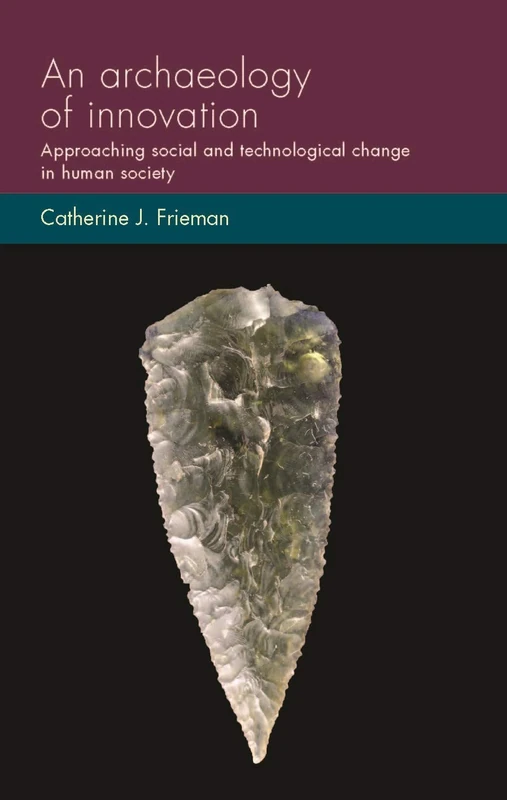
Manchester University Press An Archaeology of Innovation: Approaching Social and Technological Change in Human Society (Social Archaeology and Material Worlds)
We'll watch every seller, every day. One email when your price arrives.
Price History & Forecast
Grey patches = out of stock. Cheaper = lower on the chart. Hover for exact prices.
Last 15 days · 15 data points (no recent data)
NEW HERE?
Amazon shows you one price. We show you all of them.
Tosheroon watches Amazon prices so you don't have to. Every product on Amazon has a price history — we make it visible. Set the price you'd actually pay, and we'll email you the second it gets there. No app, no account, one email.
WHAT'S ON THIS PAGE
when this has been cheap or pricey
where the price is heading next
all-time high & low, recent range
name your number, we'll email you
Price Distribution
Price distribution over 15 days • 1 price levels
Price Analysis
Most common price: £62 (15 days, 100.0%)
Price range: £62 - £62
Price levels: 1 different prices over 15 days
Description
Product Specifications
- Format
- hardcover
- ASIN
- 1526132648
- Category
- Books > Subjects > Science, Nature & Maths > Engineering & Technology > Reference > History
- Domain
- Amazon UK
- Release Date
- 02 March 2021
- Listed Since
- 11 July 2020
Barcode
No barcode data available
Similar Products You Might Like
Transforming Archaeology: Activist Practices and Prospects
Routledge

Archaeology for Today and Tomorrow
Routledge
The Technologisation of the Social: A Political Anthropology of the Digital Machine (Contemporary Liminality)
Routledge

Interpretative Archaeology (Explorations in Anthropology)
Routledge

Material Agency: Towards a Non-Anthropocentric Approach
Springer
Archaeology and its Discontents: Why Archaeology Matters (Themes in Archaeology Series)
Routledge
Investigating Archaeological Cultures: Material Culture, Variability, and Transmission
Springer

Historical Archaeology and Environment
Springer

Academic Anthropology and the Museum: Back to the Future: 13 (New Directions in Anthropology, 13)
Berghahn Books
Archaeology and Modernity
Routledge

The Intangible Elements of Culture in Ethnoarchaeological Research
Springer

The Intangible Elements of Culture in Ethnoarchaeological Research
Springer
Making Archaeology Happen: Design versus Dogma
Routledge

Theorizing Archaeological Museum Studies: From Artefact to Exhibit
Routledge

New Developments in the Bioarchaeology of Care: Further Case Studies and Expanded Theory (Bioarchaeology and Social Theory)
Springer

The Social Life of Materials: Studies in Materials and Society
Routledge

An Archaeology of Religion
Bloomsbury Academic

Technology, Literacy, and the Evolution of Society: Implications of the Work of Jack Goody
Routledge

The Prehistory of Human Migration - Human Expansion, Resource Use, and Mortuary Practice in Maritime Asia
IntechOpen
Macroevolution in Human Prehistory: Evolutionary Theory and Processual Archaeology
Springer

The Reinvention of Primitive Society: Transformations of a Myth
Routledge
Redrawing Anthropology: Materials, Movements, Lines (Anthropological Studies of Creativity and Perception)
Routledge

Complexity Perspectives in Innovation and Social Change: 7 (Methodos Series, 7)
Springer
An Archaeology of Land Ownership: 09 (Routledge Studies in Archaeology)
Routledge