We can't find the internet
Attempting to reconnect
Something went wrong
Hang in there while we get back on track
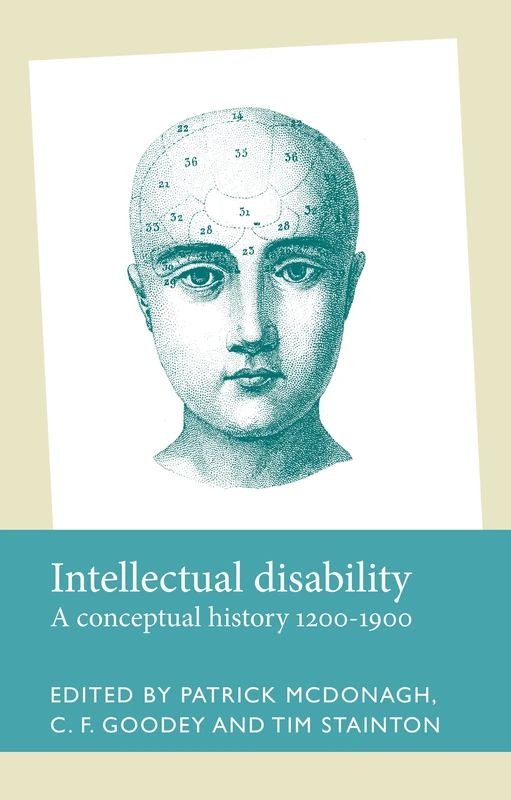
£66.55
Manchester University Press Intellectual Disability: A Conceptual History, 1200–1900 (Disability History)
Price data last checked 13 day(s) ago - will refresh soon
We'll watch every seller, every day. One email when your price arrives.
It has never been this cheap. We have no record of a lower price.
£67 today · cheaper than every other day in the last 3 months
NEW HERE?
Amazon shows you one price. We show you all of them.
Tosheroon watches Amazon prices so you don't have to. Every product on Amazon has a price history — we make it visible. Set the price you'd actually pay, and we'll email you the second it gets there. No app, no account, one email.
WHAT'S ON THIS PAGE
when this has been cheap or pricey
where the price is heading next
all-time high & low, recent range
name your number, we'll email you
Price History & Forecast
Grey patches = out of stock. Cheaper = lower on the chart. Hover for exact prices.
Last 78 days · 78 data points (no recent data)
Price Distribution
Price distribution over 78 days • 1 price levels
Price Analysis
Most common price: £67 (78 days, 100.0%)
Price range: £67 - £67
Price levels: 1 different prices over 78 days
Description
Product Specifications
- Format
- hardcover
- ASIN
- 1526125315
- Domain
- Amazon UK
- Release Date
- 04 January 2018
- Listed Since
- 05 June 2017
Barcode
No barcode data available
Similar Products You Might Like

Concise Encyclopedia of Special Education: A Reference for the Education of the Handicapped and Other Exceptional Children and Adults
Wiley
Learning with Learning Disability: What Learning Disability Can Teach Us About Being Human (Autocritical Disability Studies)
Routledge

Citizenship Inclusion and Intellectual Disability: Biopolitics Post-Institutionalisation (Routledge Advances in Disability Studies)
Routledge
New Lenses on Intellectual Disabilities
Routledge

Citizenship Inclusion and Intellectual Disability - Routledge
Routledge
Intellectual Disability and Being Human: A Care Ethics Model (Routledge Advances in Disability Studies)
Routledge
Cultural Clinical Psychology: Theory, Research, and Practice
Oxford University Press

Fools and Idiots?: Intellectual Disability in the Middle Ages (Disability History)
Manchester University Press

Diagnostische Tätigkeit als sonderpädagogische Kompetenz: Eine Betrachtung zum Erwerb und zur Transformation von Handlungswissen in Handlungskompetenz
GRIN Verlag

Education and Disability in the Global South: New Perspectives from Africa and Asia
Bloomsbury

The Economics of Disability: Insights from Irish Research (Irish Society)
Manchester University Press

Inclusive Education in Schools and Early Childhood Settings
Springer
A Feminist Ethnography of Secure Wards for Women with Learning Disabilities: Locked Away (Interdisciplinary Disability Studies)
Routledge

Politics of Empowerment: Disability Rights and the Cycle of American Policy Reform
Stanford University Press
Inclusive Education in Schools and Early Childhood Settings
Springer
Social Pedagogy and Social Work
Sage Publishing
A Feminist Ethnography of Secure Wards for Women with Learning Disabilities: Locked Away (Interdisciplinary Disability Studies)
Routledge
A history of disability in England: From the medieval period to the present day
Oxford University Press
Researching Learning Difficulties: A Guide for Practitioners
Sage Publishing
Exploring Disability
Polity

Contemporary Issues in Intellectual Disabilities (Disability Studies)
The Social Dimensions of Learning Disabilities: Essays in Honor of Tanis Bryan (The LEA Series on Special Education and Disability)
Routledge
Intellectual Disability in Health and Social Care
Routledge