We can't find the internet
Attempting to reconnect
Something went wrong
Hang in there while we get back on track

£170.45
Springer Acute Neuronal Injury: The Role of Excitotoxic Programmed Cell Death Mechanisms
Price data last checked 74 day(s) ago - refreshing...
We'll watch every seller, every day. One email when your price arrives.
This is the most expensive it has ever been. Walk away.
£170 today · previous high £170 · all-time low £164
NEW HERE?
Amazon shows you one price. We show you all of them.
Tosheroon watches Amazon prices so you don't have to. Every product on Amazon has a price history — we make it visible. Set the price you'd actually pay, and we'll email you the second it gets there. No app, no account, one email.
WHAT'S ON THIS PAGE
when this has been cheap or pricey
where the price is heading next
all-time high & low, recent range
name your number, we'll email you
Price History & Forecast
Grey patches = out of stock. Cheaper = lower on the chart. Hover for exact prices.
Last 17 days · 17 data points (no recent data)
Price Distribution
Price distribution over 17 days • 2 price levels
Price Analysis
Most common price: £164 (11 days, 64.7%)
Price range: £164 - £170
Price levels: 2 different prices over 17 days
Description
Product Specifications
- Brand
- Springer
- Format
- paperback
- ASIN
- 148998285X
- Domain
- Amazon UK
- Release Date
- 05 September 2014
- Listed Since
- 27 September 2014
Barcode
No barcode data available
Similar Products You Might Like

Sanctorum Communio: Die Christen als ‚Heilige‘ bei Paulus: 183 (Beihefte zur Zeitschrift fur die Neutestamentliche Wissenschaft, 183)
De Gruyter

Diltheys Erlebnisbegriff: Entstehung, Glanzzeit und Verkümmerung eines literaturhistorischen Begriffs: 45 (Quellen und Forschungen zur Sprach- und Kulturgeschichte der Germanischen Volker. N.F., 45)
De Gruyter
Excédents externes et correction du taux de change: Analyse Des Motivations Et Des Effets De La Réévaluation Allemande De Mars 1961: 3 ... la Faculté de Droit Et Des Sciences Économiq)
De Gruyter Mouton

Early Christianity in Rome: Literary, Historical, and Archaeological Traditions: 272 (Beihefte zur Zeitschrift fur die Neutestamentliche Wissenschaft, 272)
De Gruyter
Christology Revised: Kreuz, Auferweckung, Menschwerdung, ‚Jesus Remembered‘: 209 (Theologische Bibliothek Topelmann, 209)
De Gruyter
![Aspects of Grammaticalization: (Inter)Subjectification and Directionality: 305 (Trends in Linguistics. Studies and Monographs [TiLSM], 305)](/uploads/images/products/2/3110489694/21b089a4-40bd-4623-a2d5-aea6a003bc99.webp)
Aspects of Grammaticalization: (Inter)Subjectification and Directionality: 305 (Trends in Linguistics. Studies and Monographs [TiLSM], 305)
De Gruyter Mouton
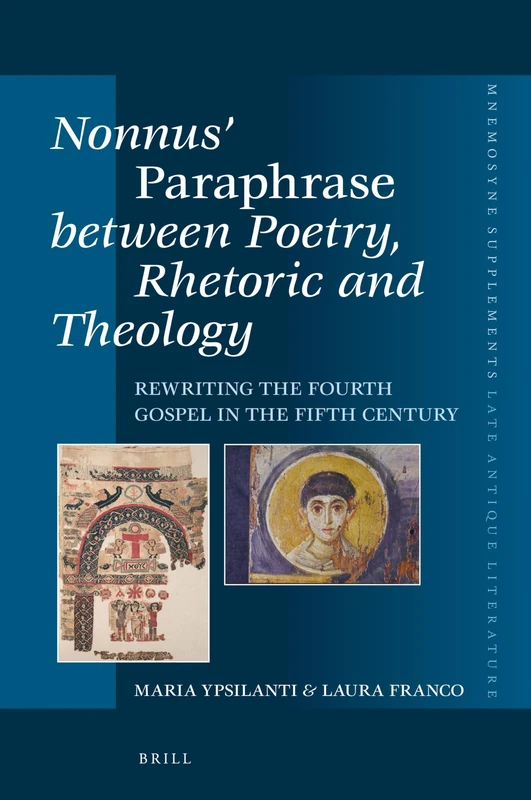
Nonnus’ Paraphrase between Poetry, Rhetoric and Theology: Rewriting the Fourth Gospel in the Fifth Century: 436 (Mnemosyne, Supplements, Late Antique Literature, 436)
Brill
Autobiographische Argumentation und Selbstdarstellung im Galaterbrief: Gal 1,11-2,21 vor dem Hintergrund antiker Autobiographie und Epistolographie: ... fur die Neutestamentliche Wissenschaft, 249)
De Gruyter
Matthausevangelium Tradition und Redaktion - BZNW 245
De Gruyter

Die Nebenklage im Gefüge strafprozessualer Verletztenbeteiligung: Der Weg in die viktimäre Gesellschaft. Gesetzgebung und Reformdiskurs seit 1870: 53 (Juristische Zeitgeschichte / Abteilung 3, 53)
De Gruyter
Arterielle Hypertonie, 3. Deutsch-Sowjetisches Symposium: Vom 22. Bis 25. Januar 1980 in Berlin: 1981 (Abhandlungen der Akademie der Wissenschaften ... N. Mathematik, Naturwissenschaften, Technik)
De Gruyter
Aulus Gellius und die ›Noctes Atticae‹: Die literarische Konstruktion einer Sammlung: 88 (Millennium Studien/Millennium Studies, 88)
De Gruyter

Aufklärung und Exzess: Epistemologie und Ästhetik des Übermäßigen im 18. Jahrhundert: 2 (Luxus und Moderne, 2)
De Gruyter
Correspondance de Madame de Graffigny: 20 Juin 1751-18 Aout 1752, Lettres 1723-1906 v. 12
Oxford University Press

Das Verhältnis der koptischen zur griechischen Überlieferung des Neuen Testaments: Dokumentation und Auswertung der Gesamtmaterialien beider ... zur Neutestamentlichen Textforschung, 33)
De Gruyter
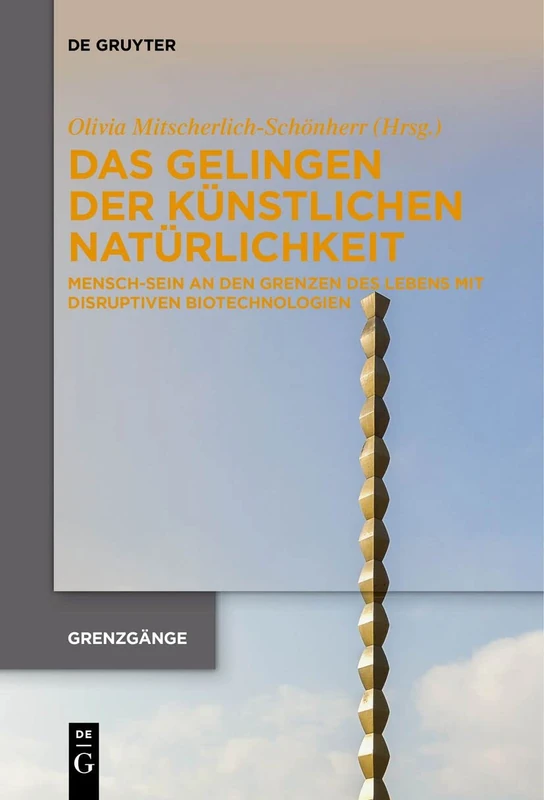
Das Gelingen der kunstlichen Naturlichkeit - Biotechnologien
De Gruyter

Gleichnisse und Parabeln Jesu im Thomasevangelium: Untersuchungen zu ihrer Form, Funktion und Bedeutung: 236 (Beihefte zur Zeitschrift fur die Neutestamentliche Wissenschaft, 236)
De Gruyter

Kommunikative Herstellung von Infotainment: Gesprächslinguistische und multimodale Analysen einer TV-Kochsendung: 70 (Linguistik – Impulse & Tendenzen, 70)
De Gruyter
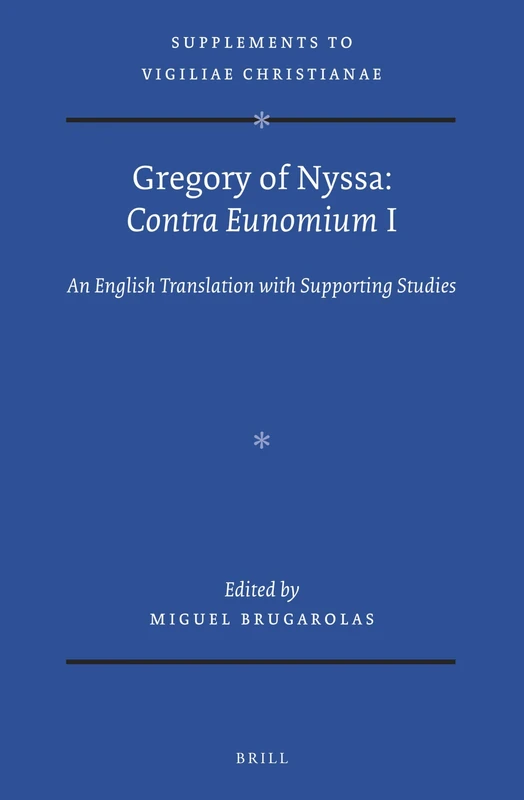
Gregory of Nyssa Contra Eunomium I - English Translation
Brill
Göttergespräche. Gespräche im Elysium: Aus C. M. Wieland's Sämmtliche Werke: 25
De Gruyter

Greek Epigraphy and Religion: Papers in Memory of Sara B. Aleshire from the Second North American Congress of Greek and Latin Epigraphy: 16 (Brill Studies in Greek and Roman Epigraphy, 16)
Brill
![Language Talent and Brain Activity: 1 (Trends in Applied Linguistics [TAL], 1)](/uploads/images/products/2/3110205181/7c68cdad-b29d-462f-bbf2-c9ec4bdf324b.webp)
Language Talent and Brain Activity: 1 (Trends in Applied Linguistics [TAL], 1)
De Gruyter Mouton

Paulus und das antike Schulwesen: Schule und Bildung des Paulus: 134 (Beihefte zur Zeitschrift fur die Neutestamentliche Wissenschaft, 134)
De Gruyter
Die Parusie bei Lukas: Eine literarisch-exegetische Untersuchung zu den Parusieaussagen im lukanischen Doppelwerk: 217 (Beihefte zur Zeitschrift fur die Neutestamentliche Wissenschaft, 217)
De Gruyter