£61.99

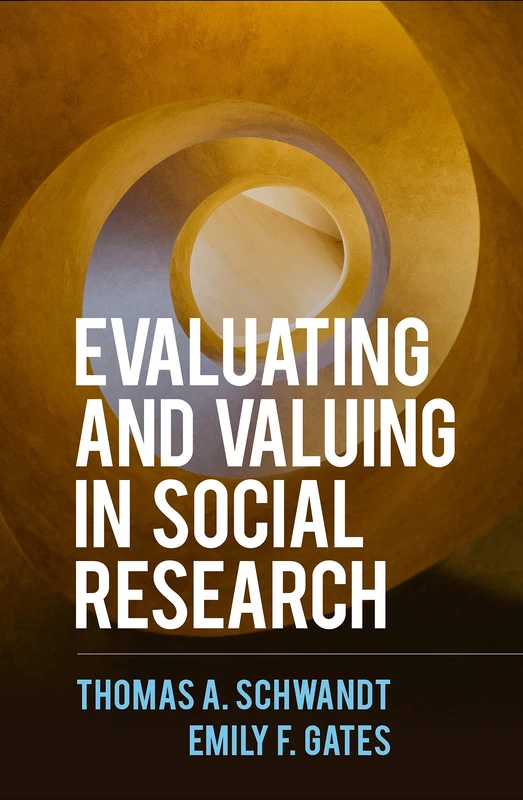
Taylor & Francis Evaluating and Valuing in Social Research

Price data last checked 11 day(s) ago - will refresh soon

View at Amazon

We'll watch every seller, every day. One email when your price arrives.

This is the most expensive it has ever been. Walk away.

£62 today · previous high £62 · all-time low £62

NEW HERE?

Amazon shows you one price. We show you all of them.

Tosheroon watches Amazon prices so you don't have to. Every product on Amazon has a price history — we make it visible. Set the price you'd actually pay, and we'll email you the second it gets there. No app, no account, one email.

WHAT'S ON THIS PAGE

↓ Price chart
when this has been cheap or pricey
↓ Forecast
where the price is heading next
↓ Statistics
all-time high & low, recent range
↑ Price alert
name your number, we'll email you

Price History & Forecast

Grey patches = out of stock. Cheaper = lower on the chart. Hover for exact prices.

Last 80 days · 80 data points (no recent data)

Historical
Generating forecast…
£61.99 £61.97 £61.97 £61.98 £61.98 £61.99 £61.99 26 April 2026 15 May 2026 04 June 2026 24 June 2026 14 July 2026

Price Distribution

Price distribution over 80 days • 1 price levels

Days at Price
80 days 0 20 40 60 80 £62 Days at Price

Price Analysis

Most common price: £62 (80 days, 100.0%)

Price range: £62 - £62

Price levels: 1 different prices over 80 days

Description

Much applied research takes place as if complex social problems--and evaluations of interventions to address them--can be dealt with in a purely technical way. In contrast, this groundbreaking book offers an alternative approach that incorporates sustained, systematic reflection about researchers' values, what values research promotes, how decisions about what to value are made and by whom, and how judging the value of social interventions takes place. The authors offer practical and conceptual guidance to help researchers engage meaningfully with value conflicts and refine their capacity to engage in deliberative argumentation. Pedagogical features include a detailed evaluation case, "Bridge to Practice" exercises and annotated resources in most chapters, and an end-of-book glossary. Review "It is not hyperbolic to call this book one of the most important contributions to the evaluation and social science research literature in the last decade. It offers the perfect antidote to the pervasive and fallacious ‘valuphobia’ that has gripped the field. Especially in this era of post-truth and alternative facts, social scientists have a paramount responsibility to deeply and thoughtfully engage with how they inevitably make value judgments, and how to do so well. Presenting an alternative framing of evaluation as an activity that deliberatively develops value rather than just determining it, this is an important guide for researchers who aspire to reflect the ethical and public responsibility of this work. It would be appropriate as one of a few core texts for advanced graduate courses on evaluation, policy analysis, and social science research methodology."--Thomas G. Archibald, PhD, Department of Agricultural, Leadership, and Community Education, Virginia Tech “There is a great deal to love about this thought-provoking book. Schwandt is our most important contemporary philosopher of evaluation. He is precisely the right scholar to further advance thinking on values determination and valuing. It is wonderful to see him thread his ideas on evaluation as a moral practice with Gates’s arguments for using diverse systems frameworks to grapple with competing conceptions of social problems and solutions. The book will push the evaluation field to new ways of thinking about values, valuing, and practice. I am eager to have it on my bookshelf and use it with my students. The goals for evaluation practice laid out in the book are inspiring. I look forward to reading it again and again."--Robin Lin Miller, PhD, Department of Psychology, Michigan State University "This book presents a compelling case for reconceptualizing the role of evaluation and evaluators in a world beset by 'wicked' problems. To what extent should evaluators function explicitly as moral agents and social critics? The perspective taken by the authors is provocative and powerful, and their analysis deserves to be widely read in the field."--Michael Morris, PhD, Department of Psychology (Emeritus), University of New Haven "An extraordinary achievement. This book elegantly targets the barriers posed by outmoded beliefs about what constitutes reliable evidence for social interventions. Rich in insight, the book shows that the work of tomorrow’s social changemakers cannot be understood by dividing complex initiatives into isolated, value-free parts. Schwandt and Gates offer both a clear theoretical frame and real-world examples that will enable stakeholders to support more ambitious initiatives to significantly improve lives."--Lisbeth B. Schorr, Senior Fellow, Center for the Study of Social Policy "The field has sorely needed this book. I am now reading it for the second time and have made it required reading for all of my students!”--Chris L. S. Coryn, PhD, Director, Interdisciplinary PhD in Evaluation, Western Michigan University- About the Author Thomas A. Schwandt, PhD, is Emeritus Professor of Educational Psychology at th

Product Specifications

Format
hardcover
Domain
Amazon UK
Release Date
12 October 2021
Listed Since
12 February 2021

Barcode

No barcode data available