£91.99

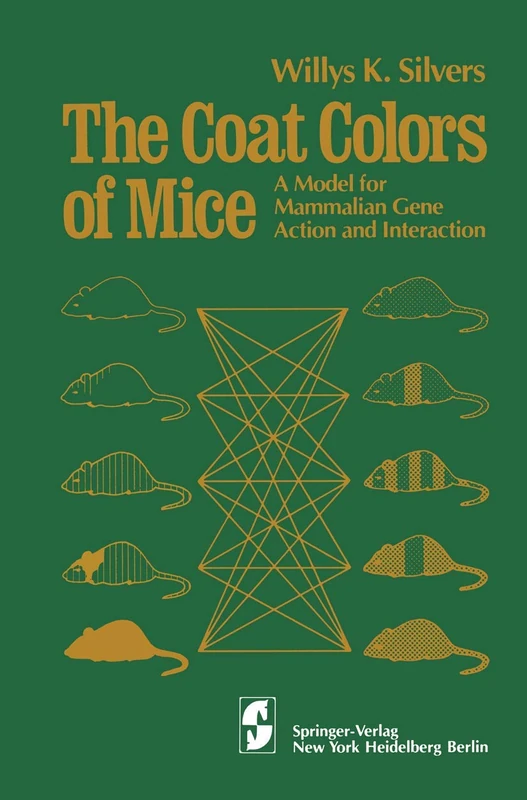
Springer The Coat Colors of Mice: A Model for Mammalian Gene Action and Interaction

Price data last checked 78 day(s) ago - refreshing...

View at Amazon

We'll watch every seller, every day. One email when your price arrives.

This is the most expensive it has ever been. Walk away.

£92 today · previous high £92 · all-time low £91

NEW HERE?

Amazon shows you one price. We show you all of them.

Tosheroon watches Amazon prices so you don't have to. Every product on Amazon has a price history — we make it visible. Set the price you'd actually pay, and we'll email you the second it gets there. No app, no account, one email.

WHAT'S ON THIS PAGE

↓ Price chart
when this has been cheap or pricey
↓ Forecast
where the price is heading next
↓ Statistics
all-time high & low, recent range
↑ Price alert
name your number, we'll email you

Price History & Forecast

Grey patches = out of stock. Cheaper = lower on the chart. Hover for exact prices.

Last 13 days • 13 data points (No recent data available)

Historical
Generating forecast...
£91.99 £90.37 £90.73 £91.08 £91.43 £91.78 £92.14 08 April 2026 11 April 2026 14 April 2026 17 April 2026 20 April 2026

Price Distribution

Price distribution over 13 days • 2 price levels

Days at Price
Current Price
12 days 1 day · current 0 3 6 9 12 £91 £92 Days at Price

Price Analysis

Most common price: £91 (12 days, 92.3%)

Price range: £91 - £92

Price levels: 2 different prices over 13 days

Description

Many investigators seem to be fascinated by the coat colors of the mam mals with which they work. This seems to be the case particularly for those utilizing isogenic strains of mice, not only because such strains display wide ly different phenotypes, but because scientists, by definition, are an inquisi tive lot and it is sometimes difficult for the uninitiated to comprehend how such phenotypes are produced. This bewilderment becomes even more ap parent if the investigator happens to be involved in breeding studies and a number of attractively colored animals, quite different from the original stocks, appear. Thus I can recall numerous occasions when my colleagues, frequently working in areas completely unrelated to any aspect of genetics, have come to me with an attractively pigmented animal or, more likely, with a popUlation of segregating coat color types (usually because they have not tended their animals properly and have ended up with a cage full of F 2S displaying a number of different colors). How, they ask, do such colors come about? While in some cases it is easy to take chalk in hand and explain what has been going on (segregating) and why, in other cases it is virtually impossible. It is extremely difficult because while the interactions of many coat-color factors obey the simple laws of heredity and of predictable gene interactions, others do not.

Product Specifications

Format
paperback
Domain
Amazon UK
Publication Date
12 October 2011
Listed Since
21 December 2012

Barcode

No barcode data available