£35.44

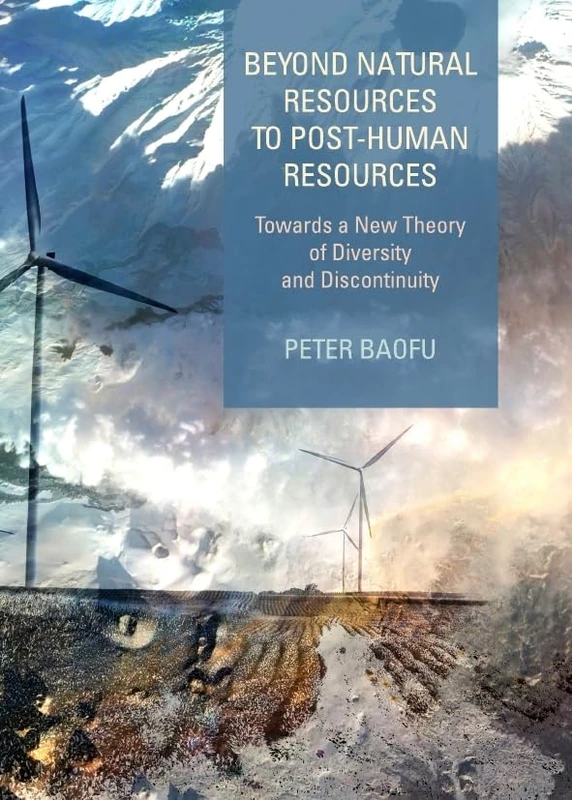
Cambridge Scholars Publishing Beyond Natural Resources to Post-Human Resources: Towards a New Theory of Diversity and Discontinuity

Price data last checked 109 day(s) ago - refreshing...

View at Amazon

We'll watch every seller, every day. One email when your price arrives.

About as cheap as it gets. The only time it was cheaper was 3 months ago.

£35 today · all-time low £34 (Feb 2026) · usually the usual

NEW HERE?

Amazon shows you one price. We show you all of them.

Tosheroon watches Amazon prices so you don't have to. Every product on Amazon has a price history — we make it visible. Set the price you'd actually pay, and we'll email you the second it gets there. No app, no account, one email.

WHAT'S ON THIS PAGE

↓ Price chart
when this has been cheap or pricey
↓ Forecast
where the price is heading next
↓ Statistics
all-time high & low, recent range
↑ Price alert
name your number, we'll email you

Price History & Forecast

Grey patches = out of stock. Cheaper = lower on the chart. Hover for exact prices.

Last 622 days • 622 data points (No recent data available)

Historical
Generating forecast...
£66.46 £31.16 £38.86 £46.56 £54.27 £61.97 £69.67 09 June 2024 11 November 2024 15 April 2025 17 September 2025 20 February 2026

Price Distribution

Price distribution over 622 days • 7 price levels

Days at Price
Current Price
6 days 2 days · current 173 days 47 days 30 days 319 days 45 days 0 80 160 239 319 £34 £35 £37 £38 £41 £42 £66 Days at Price

Price Analysis

Most common price: £42 (319 days, 51.3%)

Price range: £34 - £66

Price levels: 7 different prices over 622 days

Description

Are natural resources really so limited that, as Mahatma Gandhi once famously said, “Earth provides enough to satisfy every man’s need, but not every man’s greed”? (TE 2012) This limiting view of natural resources can be contrasted with an opposing view by John Maynard Keynes, who “summarized Say’s Law as ‘supply creates its own demand’” but then “turned Say’s Law on its head in the 1930s by declaring that demand creates its own supply,” so whenever a demand exists, there will be resources to create the supply. (EN 2012) Contrary to these opposing views (and other ones as will be discussed in the book), natural resources, in relation to both diversity and discontinuity are neither possible or impossible, nor desirable or undesirable to the extent that the respective ideologues on different sides would like us to believe. Needless to say, this challenge to the opposing views of natural resources does not mean that natural resources are unimportant, or that those interdisciplinary fields (related to natural resources) like conservation biology, environmental management, ecological economics, political ecology, environmental ethics, adaptive management, genetic engineering, Malthusianism, and so on are not worth studying. Of course, neither of these extreme views is reasonable. Rather, this book offers an alternative, better way to understand the future of natural resources, especially in the dialectic context of diversity and discontinuity―while learning from different approaches in the literature but without favoring any one of them or integrating them, since they are not necessarily compatible with each other. More specifically, this book offers a new theory (that is, the resilient theory of natural resources) to go beyond the existing approaches in a novel way. If successful, this seminal project is to fundamentally change the way that we think about natural resources in relation to diversity and discontinuity from the combined perspectives of the mind, nature, society, and culture, with enormous implications for the human future and what the author originally called its “post-human” fate. About the Author Dr Peter Baofu is the author of 63 new theories in 55 books (as of August 2012) to provide a visionary challenge to conventional wisdom in all fields of knowledge (i.e., the social sciences, the formal sciences, the natural sciences, and the humanities), with the aim for a unified theory of everything―together with numerous visions of the mind, nature, society, and culture in future history. As a polymath, he is known for his pioneering works on “post-capitalism,” “authoritarian liberal democracy,” “post-democracy,” “resilient natural resources,” “transfigurative waste,” “inquisitive culinary art,” “panoramic transportation,” “cyclical-progressive migration,” “multifold history,” “reflective criminology,” “transcendent architecture,” “interactive semantics,” “transdisciplinary performing arts,” “interventive-reshaping geography,” “complex data analysis,” “creational chemistry,” “comparative-impartial literature,” “supersession computing,” “detached gambling,” “multilateral acoustics,” “metamorphic humor,” “heterodox education,” “post-human mind games,” “post-Earth geology,” “substitutive religion,” “post-cosmology,” “contrarian personality,” “post-ethics,” “multifaceted war and peace,” “post-humanity,” “critical-dialectic formal science,” “combinational organization,” “hyper-sexual body,” “law reconstruction,” “comprehensive creative thinking,” “hyper-martial body,” “multilogical learning,” “contingent urban planning,” “selective geometry,” “contrastive advantages,” “ambivalent technology,” “the post-post-Cold-War era,” “post-civilization,” “transformative aesthetic experience,” “synthetic information architecture,” “contrastive mathematical logic,” “dialectic complexity,” “after-postmodernity,” “sophisticated methodological holism,” “post-human space-time,” “existential dialectics,” “u

Product Specifications

Format
Hardcover
Domain
Amazon UK
Release Date
22 January 2013
Listed Since
14 January 2013

Barcode

No barcode data available