£79.00

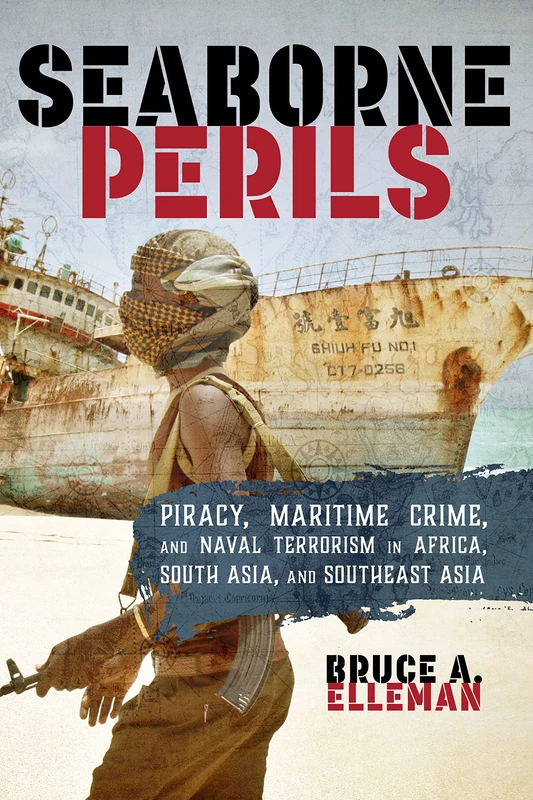
Rowman & Littlefield Publishers Seaborne Perils: Piracy, Maritime Crime, and Naval Terrorism in Africa, South Asia, and Southeast Asia

Price data last checked 10 day(s) ago - will refresh soon

View at Amazon

We'll watch every seller, every day. One email when your price arrives.

It has never been this cheap. We have no record of a lower price.

£79 today · cheaper than every other day in the last 3 months

NEW HERE?

Amazon shows you one price. We show you all of them.

Tosheroon watches Amazon prices so you don't have to. Every product on Amazon has a price history — we make it visible. Set the price you'd actually pay, and we'll email you the second it gets there. No app, no account, one email.

WHAT'S ON THIS PAGE

↓ Price chart
when this has been cheap or pricey
↓ Forecast
where the price is heading next
↓ Statistics
all-time high & low, recent range
↑ Price alert
name your number, we'll email you

Price History & Forecast

Grey patches = out of stock. Cheaper = lower on the chart. Hover for exact prices.

Last 81 days · 81 data points (no recent data)

Historical
Generating forecast…
£79.00 £75.05 £76.63 £78.21 £79.79 £81.37 £82.95 26 April 2026 16 May 2026 05 June 2026 25 June 2026 15 July 2026

Price Distribution

Price distribution over 81 days • 1 price levels

Days at Price
81 days 0 20 41 61 81 £79 Days at Price

Price Analysis

Most common price: £79 (81 days, 100.0%)

Price range: £79 - £79

Price levels: 1 different prices over 81 days

Description

This comprehensive survey of historical and contemporary issues related to maritime crime and piracy, with a special focus on Africa, South Asia, and Southeast Asia, explains why piracy is a growing problem and how it affects security policy making in the United States. Here, piracy is defined as taking place on the high seas, while maritime crime takes place within a country's territorial waters. Seaborne terrorism may occur in either one of these maritime zones. Maritime piracy can be divided into several categories, from pirates robbing a ship or its crew of petty items while at sea to taking a ship's cargo and taking control of a vessel, reflagging it, and then using this captured ship to smuggle drugs, transport illegal immigrants, or conduct further acts of piracy. This is the most dangerous, not only because pirates can use a captured ship to carry out more raids, but also because they can use the ship's identity papers to transport goods and weapons-potentially WMDs-into otherwise secure port areas. A special concern to the US is that the threat of piracy is growing most quickly in parts of the world-such as Africa, South Asia, and Southeast Asia-where both global trade is rapidly expanding and where international terrorist groups are actively functioning or have supporters. This geographical overlap suggests that the risk that pirates and terrorists may one day cooperate to strike at the US or an ally is most likely also on the rise. While many important African, South Asia, and Southeast Asian cases have received insufficient attention, many well-known historical piracy events stand in need of a reappraisal. This book integrates a number of multinational, multiregional, and historical cases of piracy, maritime crime, and seaborne terrorism to investigate whether piracy and other forms of maritime crime are becoming a major United States national security concern. It analyzes some of the most important cases, especially of the 19th, 20th, and early 21st centuries, as well as specific historical events. This allows to draw lessons as to what are the components of successful and unsuccessful piracy, common causes, the type of navy necessary to control it, and finally, possible military, political, and economic consequences. The book also discusses various types of cases, including parasitic, intrinsic, episodic, and opportunistic piracy. Specific cases are also evaluated in terms of the changing interpretations of international law and the recent reported growth rates of piracy, maritime crime, and seaborne terrorism. These findings are used to explore the impact of piracy on maritime security, in particular in Africa, South Asia, and Southeast Asia and their surrounding waters, which is where the majority of contemporary piracies and maritime crimes occur. Different methods of policing piracy and maritime crime are evaluated, including the viability of adopting greater Maritime Domain Awareness, which would require that all ships at sea-regardless of size or function-emit a signal beacon identifying their name, country of origin, and route. This combination of historical and modern day piracy and the many cases studied will provide readers with a broader understanding of maritime piracy. Review Bruce Elleman is a formidable scholar whose work has always brought together deep historical understanding and contemporary topicality. In focusing on the vital and neglected area of contextualised approaches to suppression of piracy as a threat to the security of the maritime commons, his latest work fills a gap in the literature of both maritime power and the Indo-Pacific region.--John Reeve, UNSW Canberra, Australian Defence Force Academy About the Author Bruce A. Elleman is a William V. Pratt Professor of International History a full professor at the U.S. Naval War College in Newport, RI

Product Specifications

Barcode

No barcode data available