We can't find the internet
Attempting to reconnect
Something went wrong!
Hang in there while we get back on track
£160.79
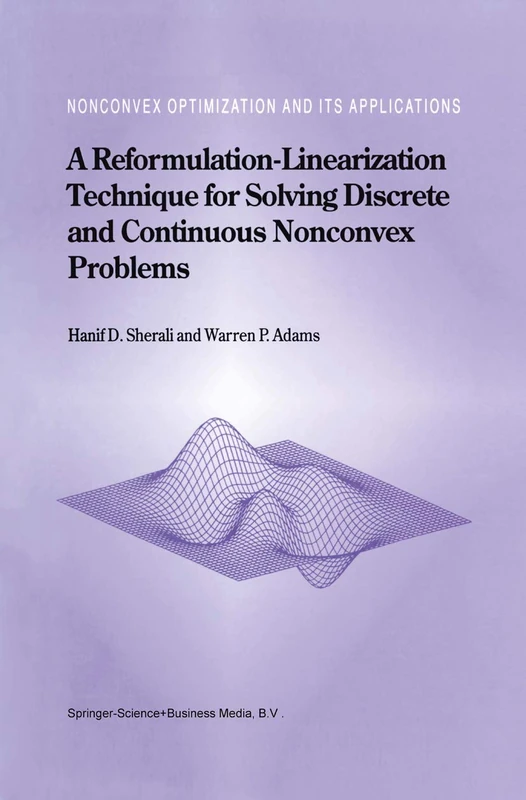
Springer A Reformulation-Linearization Technique for Solving Discrete and Continuous Nonconvex Problems: 31 (Nonconvex Optimization and Its Applications, 31)
Price data last checked 100 day(s) ago - refreshing...
We'll watch every seller, every day. One email when your price arrives.
This is the most expensive it has ever been. Walk away.
£161 today · previous high £161 · all-time low £142
NEW HERE?
Amazon shows you one price. We show you all of them.
Tosheroon watches Amazon prices so you don't have to. Every product on Amazon has a price history — we make it visible. Set the price you'd actually pay, and we'll email you the second it gets there. No app, no account, one email.
WHAT'S ON THIS PAGE
when this has been cheap or pricey
where the price is heading next
all-time high & low, recent range
name your number, we'll email you
Price History & Forecast
Grey patches = out of stock. Cheaper = lower on the chart. Hover for exact prices.
Last 631 days • 631 data points (No recent data available)
Price Distribution
Price distribution over 631 days • 5 price ranges
Price Analysis
Most common range: £142-146 (203 days, 32.2%)
Price range: £142 - £161
Price levels: 5 price ranges over 631 days
Description
Product Specifications
- Brand
- Springer
- Format
- Paperback
- ASIN
- 1441948082
- Domain
- Amazon UK
- Publication Date
- 02 December 2010
- Listed Since
- 06 July 2010
Barcode
No barcode data available
Similar Products You Might Like
Nonlinear Programming: Theory and Algorithms
Wiley
Convexification and Global Optimization in Continuous and Mixed-Integer Nonlinear Programming: Theory, Algorithms, Software, and Applications: 65 (Nonconvex Optimization and Its Applications, 65)
Springer
Convexification and Global Optimization in Continuous and Mixed-Integer Nonlinear Programming: Theory, Algorithms, Software, and Applications: 65 (Nonconvex Optimization and Its Applications, 65)
Springer

Linear Programming: Foundations and Extensions: 4 (International Series in Operations Research & Management Science, 4)
Springer

Linear Programming: Foundations and Extensions: 4 (International Series in Operations Research & Management Science, 4)
Springer
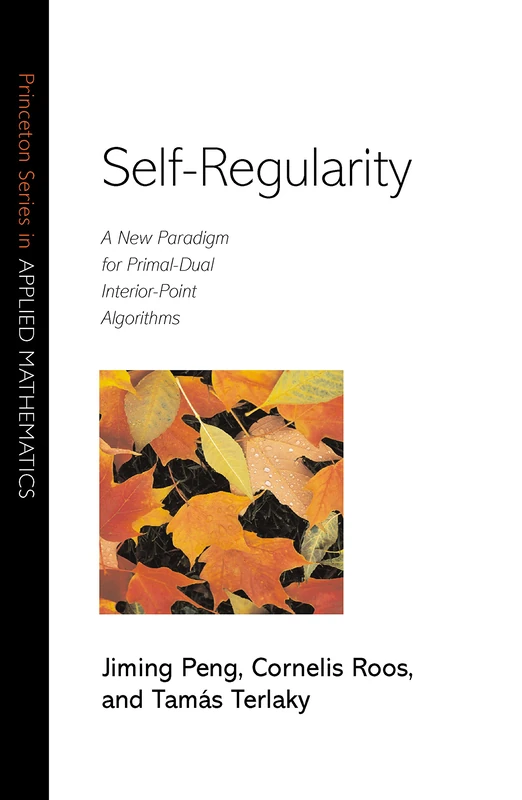
Self–Regularity – A New Paradigm for Primal–Dual Interior–Point Algorithms (Princeton Series in Applied Mathematics)
Princeton University Press
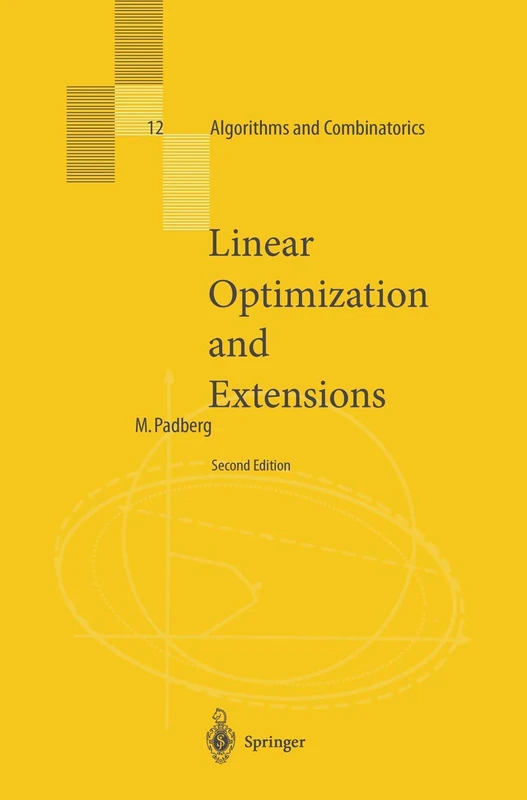
Linear Optimization and Extensions: 12 (Algorithms and Combinatorics, 12)
Springer
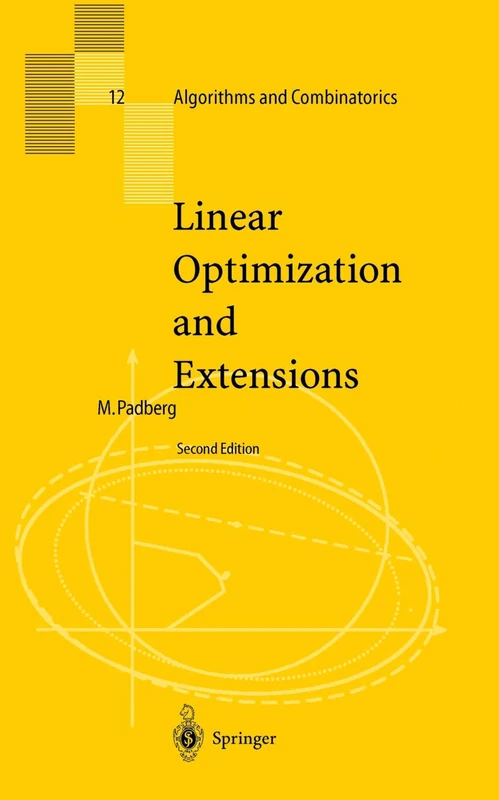
Linear Optimization and Extensions: 12 (Algorithms and Combinatorics, 12)
Springer
In-Depth Analysis of Linear Programming
Springer

Convex Analysis and Global Optimization: 22 (Nonconvex Optimization and Its Applications, 22)
Springer
Large Scale Linear and Integer Optimization: A Unified Approach
Springer
Linear and Nonlinear Programming: 228 (International Series in Operations Research & Management Science, 228)
Springer
Matrices and Simplex Algorithms: A Textbook in Mathematical Programming and Its Associated Mathematical Topics
Springer

Optimization Theory and Applications (Advanced Lectures in Mathematics)
Wiley

Linear Programming: A Modern Integrated Analysis: 1 (International Series in Operations Research & Management Science, 1)
Springer
Nonlinear Integer Programming: 84 (International Series in Operations Research & Management Science, 84)
Springer

High Performance Optimization: 33 (Applied Optimization, 33)
Springer
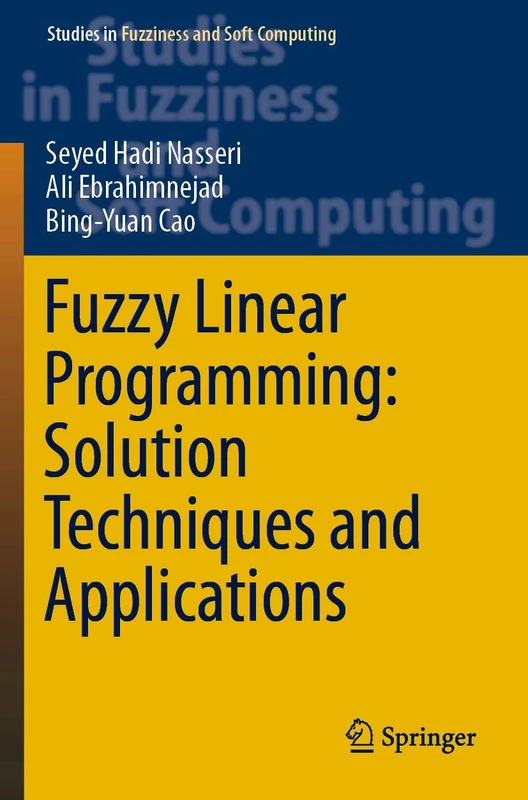
Fuzzy Linear Programming: Solution Techniques and Applications: 379 (Studies in Fuzziness and Soft Computing)
Springer

Nonlinear Multiobjective Optimization: 12 (International Series in Operations Research & Management Science, 12)
Springer
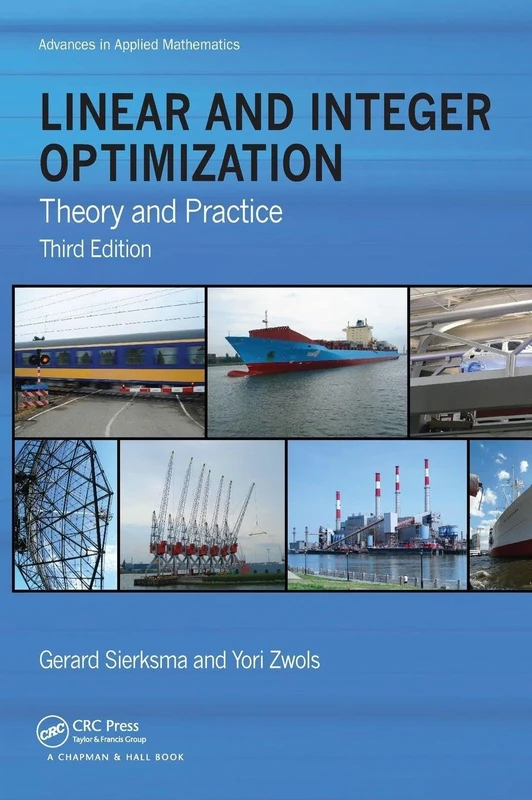
Linear and Integer Optimization: Theory and Practice, Third Edition (Advances in Applied Mathematics)
CRC Press
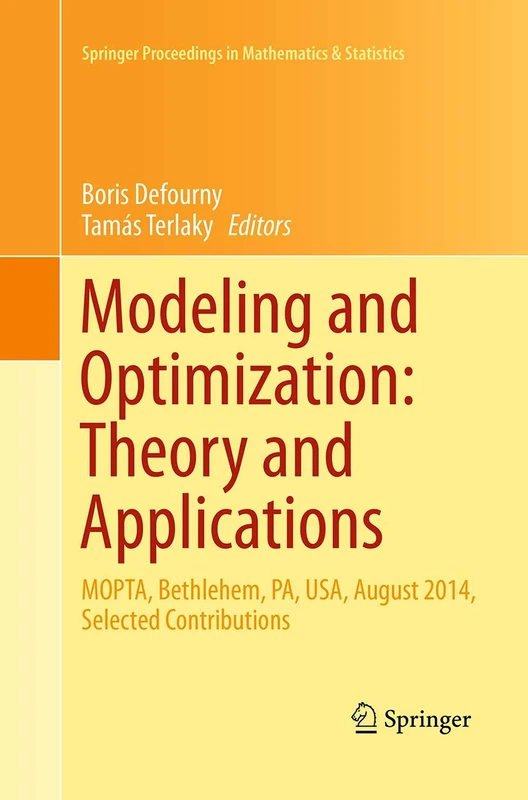
Modeling and Optimization: Theory and Applications: MOPTA, Bethlehem, PA, USA, August 2014 Selected Contributions: 147 (Springer Proceedings in Mathematics & Statistics, 147)
Springer
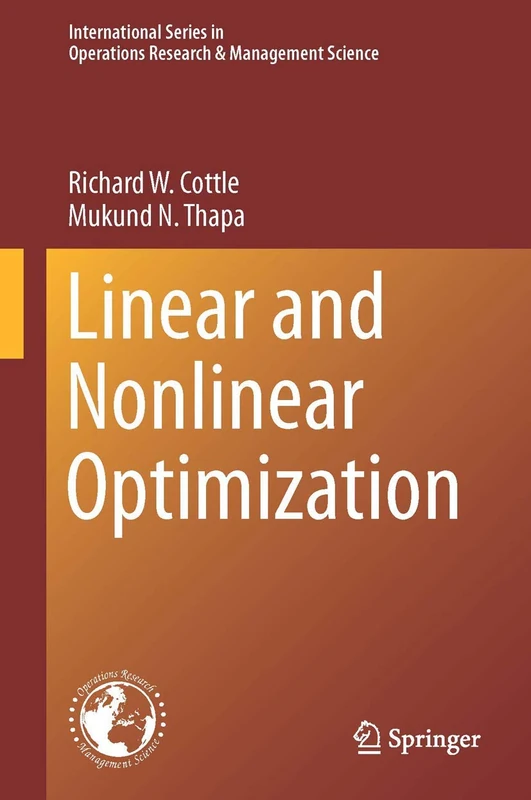
Linear and Nonlinear Optimization: 253 (International Series in Operations Research & Management Science, 253)
Springer
Linear and Nonlinear Optimization: 253 (International Series in Operations Research & Management Science, 253)
Springer

Linear and Convex Optimization: A Mathematical Approach
Wiley