We can't find the internet
Attempting to reconnect
Something went wrong
Hang in there while we get back on track
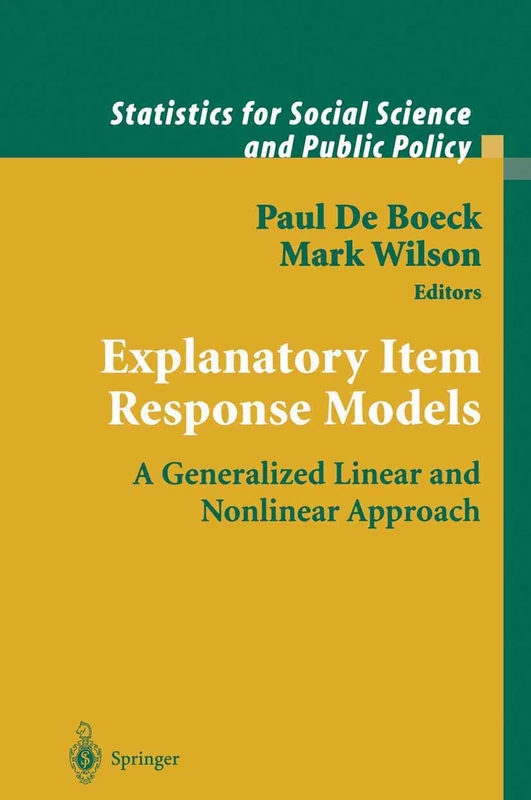
£141.85
This is the usual price. Wait for it to drop, or tell us your number.
£142 today · usual range £91–£142 · best ever £91
Springer Explanatory Item Response Models: A Generalized Linear and Nonlinear Approach (Statistics for Social and Behavioral Sciences)
Price data last checked 29 day(s) ago - will refresh soon
We'll watch every seller, every day. One email when your price arrives.
Price History & Forecast
Grey patches = out of stock. Cheaper = lower on the chart. Hover for exact prices.
Last 62 days · 62 data points (no recent data)
Price data last checked 29 day(s) ago - will refresh soon
NEW HERE?
Amazon shows you one price. We show you all of them.
Tosheroon watches Amazon prices so you don't have to. Every product on Amazon has a price history — we make it visible. Set the price you'd actually pay, and we'll email you the second it gets there. No app, no account, one email.
WHAT'S ON THIS PAGE
when this has been cheap or pricey
where the price is heading next
all-time high & low, recent range
name your number, we'll email you
Price Distribution
Price distribution over 62 days • 5 price levels
Price Analysis
Most common price: £142 (28 days, 45.2%)
Price range: £91 - £142
Price levels: 5 different prices over 62 days
Description
Product Specifications
- Brand
- Springer
- Format
- paperback
- ASIN
- 1441923233
- Domain
- Amazon UK
- Release Date
- 12 December 2011
- Listed Since
- 01 October 2010
Barcode
No barcode data available
Similar Products You Might Like

Measurement Theory in Action: Case Studies and Exercises
Routledge
Measurement Models for Psychological Attributes: Classical Test Theory, Factor Analysis, Item Response Theory, and Latent Class Models (Chapman & ... in the Social and Behavioral Sciences)
CRC Press
Applied Psychometrics Using SAS
Information Age Publishing
Handbook of Item Response Theory Modeling: Applications to Typical Performance Assessment (Multivariate Applications Series)
Routledge
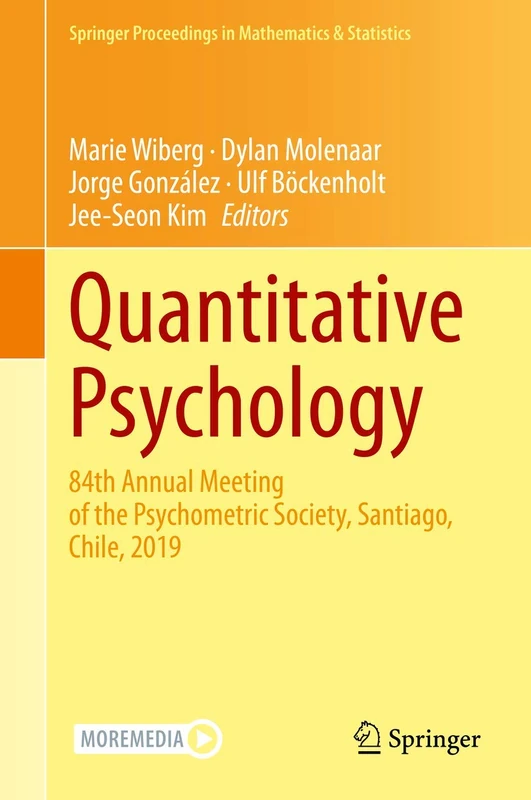
Quantitative Psychology: 84th Annual Meeting of the Psychometric Society, Santiago, Chile, 2019: 322 (Springer Proceedings in Mathematics & Statistics, 322)
Springer
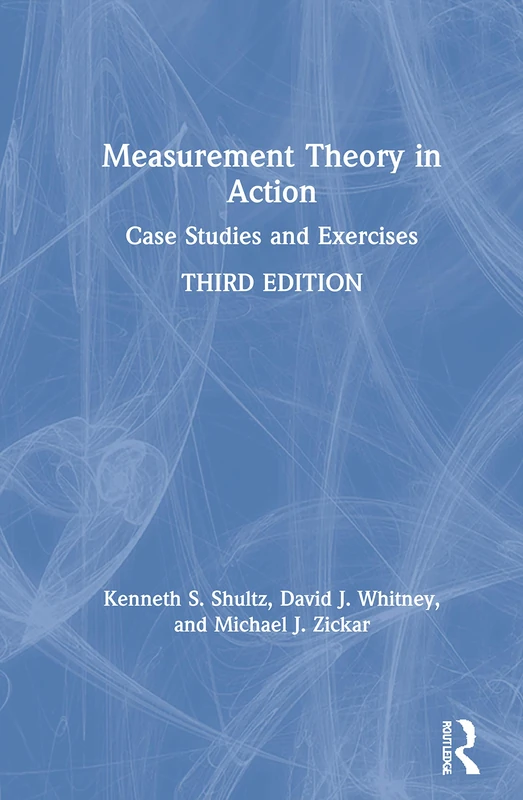
Measurement Theory in Action: Third Edition - Case Studies
Routledge
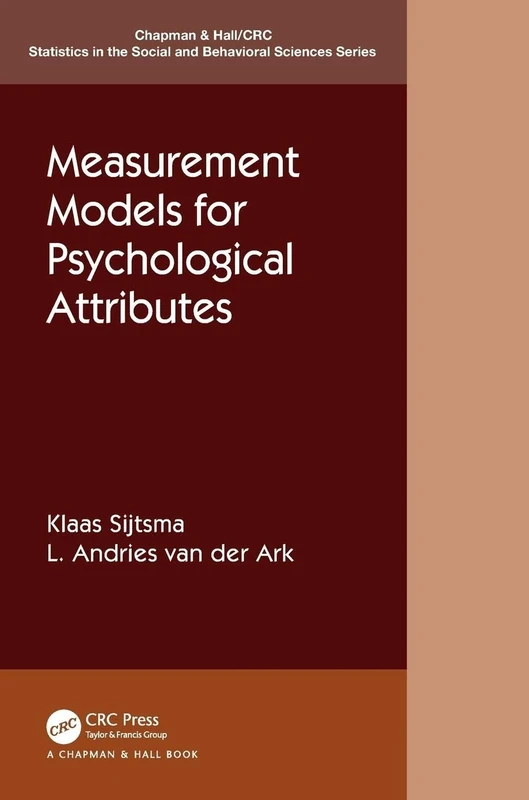
Measurement Models for Psychological Attributes: Classical Test Theory, Factor Analysis, Item Response Theory, and Latent Class Models (Chapman & ... in the Social and Behavioral Sciences)
CRC Press
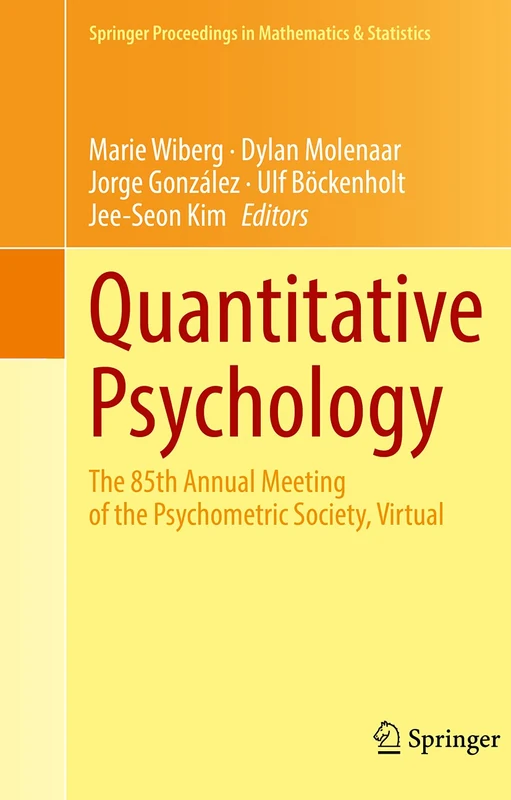
Quantitative Psychology: IMPS 85th Annual Meeting Proceedings
Springer

SAGE Handbook of Quantitative Methods in Psychology
Sage Publishing

Innovative Psychometric Modeling and Methods (The MARCES Book Series)
Information Age Publishing

Quantitative Psychology: The 82nd Annual Meeting of the Psychometric Society, Zurich, Switzerland, 2017: 233 (Springer Proceedings in Mathematics & Statistics, 233)
Springer
Constructing Measures: An Item Response Modeling Approach
Routledge
Modern Measurement: Theory, Principles, and Applications of Mental Appraisal
PEARSON EDUCATION

Statistical Approaches to Measurement Invariance
Routledge

Psicometría Aplicada Usando SPSS y AMOS
Information Age Publishing
Educational Research, Methodology and Measurement: An International Handbook: 7 (Resources in Education Series, 7)
Elsevier Science Ltd
Essays on Contemporary Psychometrics (Methodology of Educational Measurement and Assessment)
Springer
Psychological and Social Measurement: The Career and Contributions of Benjamin D. Wright (Springer Series in Measurement Science and Technology)
Springer

The History of Educational Measurement: Key Advancements in Theory, Policy, and Practice
Routledge
Measurement for the Social Sciences: The C-OAR-SE Method and Why It Must Replace Psychometrics
Springer
Educational and Psychological Measurement
Routledge
Computational Psychometrics: New Methodologies for a New Generation of Digital Learning and Assessment: With Examples in R and Python (Methodology of Educational Measurement and Assessment)
Springer
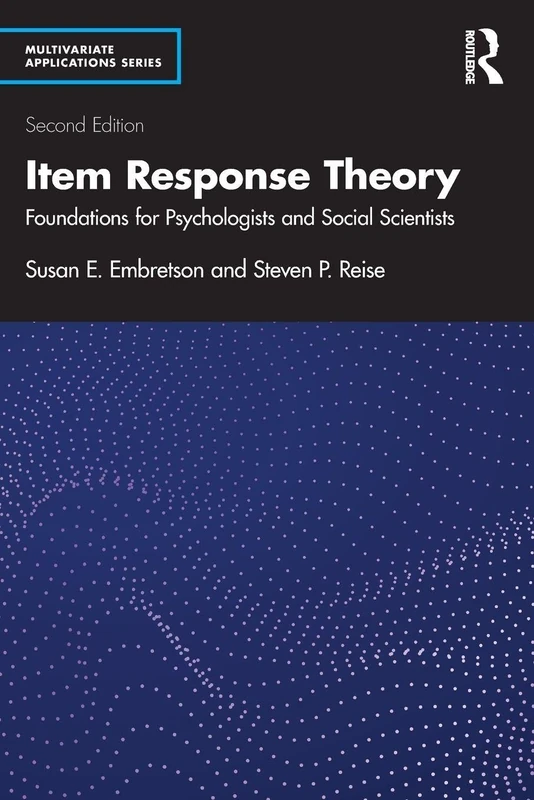
Item Response Theory: Foundations for Psychologists and Social Scientists (Multivariate Applications Series)
Routledge