We can't find the internet
Attempting to reconnect
Something went wrong
Hang in there while we get back on track
£83.01
It has never been this cheap. We have no record of a lower price.
£83 today · cheaper than every other day in the last 3 months
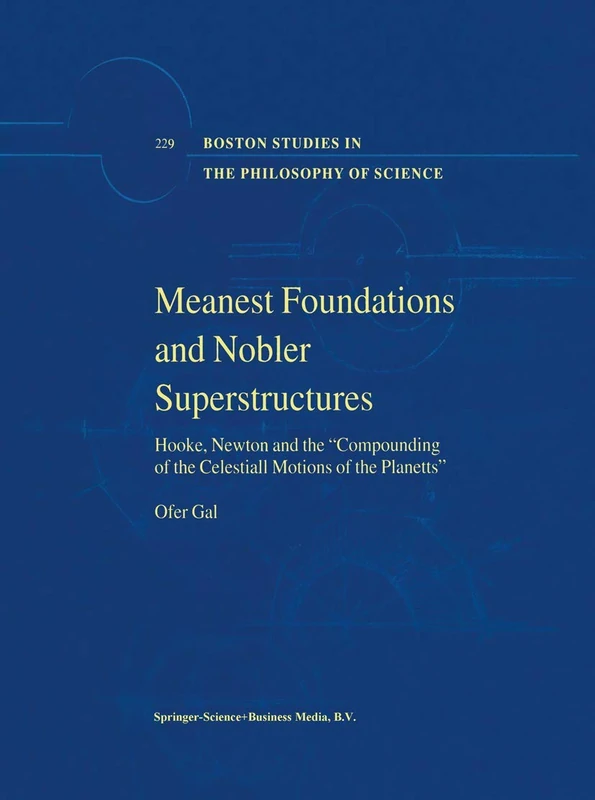
Springer Meanest Foundations and Nobler Superstructures: Hooke, Newton and the Compounding of the Celestiall Motions of the Planetts: 229 (Boston Studies in the Philosophy and History of Science, 229)
We'll watch every seller, every day. One email when your price arrives.
Price History & Forecast
Grey patches = out of stock. Cheaper = lower on the chart. Hover for exact prices.
Last 61 days · 61 data points (no recent data)
NEW HERE?
Amazon shows you one price. We show you all of them.
Tosheroon watches Amazon prices so you don't have to. Every product on Amazon has a price history — we make it visible. Set the price you'd actually pay, and we'll email you the second it gets there. No app, no account, one email.
WHAT'S ON THIS PAGE
when this has been cheap or pricey
where the price is heading next
all-time high & low, recent range
name your number, we'll email you
Price Distribution
Price distribution over 61 days • 3 price levels
Price Analysis
Most common price: £85 (45 days, 73.8%)
Price range: £83 - £86
Price levels: 3 different prices over 61 days
Description
Product Specifications
- Brand
- Springer
- Format
- hardcover
- ASIN
- 1402007329
- Domain
- Amazon UK
- Release Date
- 31 July 2002
- Listed Since
- 15 December 2006
Barcode
No barcode data available
Similar Products You Might Like
Meanest Foundations and Nobler Superstructures: Hooke, Newton and the Compounding of the Celestiall Motions of the Planetts: 229 (Boston Studies in the Philosophy and History of Science, 229)
Springer
Reading the Mind of God: Johannes Kepler and the Reform of Astronomy (Springer Praxis Books)
Springer

Kepler's Philosophy and the New Astronomy
Princeton University Press
The Composition of Kepler's Astronomia nova
Princeton University Press

Keplerian Ellipses: The Physics of the Gravitational Two-Body Problem (IOP Concise Physics)
Morgan & Claypool
Linear and Regular Celestial Mechanics: Perturbed Two-body Motion Numerical Methods Canonical Theory: 174 (Grundlehren der mathematischen Wissenschaften, 174)
Springer
Jacobi Dynamics: A Unified Theory with Applications to Geophysics, Celestial Mechanics, Astrophysics and Cosmology: 369 (Astrophysics and Space Science Library, 369)
Springer
Jacobi Dynamics: A Unified Theory with Applications to Geophysics, Celestial Mechanics, Astrophysics and Cosmology: 369 (Astrophysics and Space Science Library, 369)
Springer

Planetary Systems from the Ancient Greeks to Kepler
University of Washington Press
Leonhard Euler and the Foundations of Celestial Mechanics (History of Physics)
Springer
From Eudoxus to Einstein: A History of Mathematical Astronomy
Cambridge University Press
Cambridge University Press - History of Mathematical Astronomy
Cambridge University Press

Motions of Celestial Bodies (IOP Expanding Physics): Computer simulations
IOP Publishing
Constellations and Conjectures: 48 (Synthese Library)
Springer
Dynamics and Astrometry of Natural and Artificial Celestial Bodies: Proceedings of IAU Colloquium 165 Poznań, Poland July 1 – 5, 1996
Springer
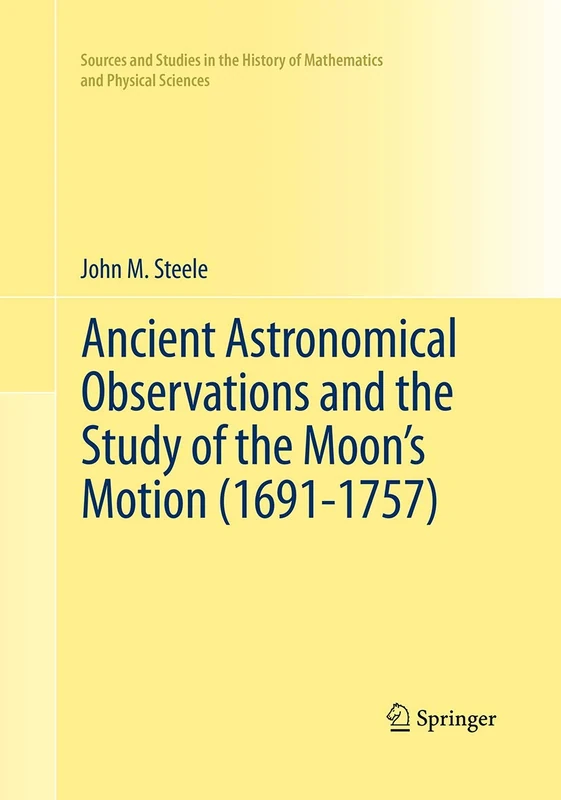
Ancient Astronomical Observations and the Study of the Moon’s Motion (1691-1757) (Sources and Studies in the History of Mathematics and Physical Sciences)
Springer
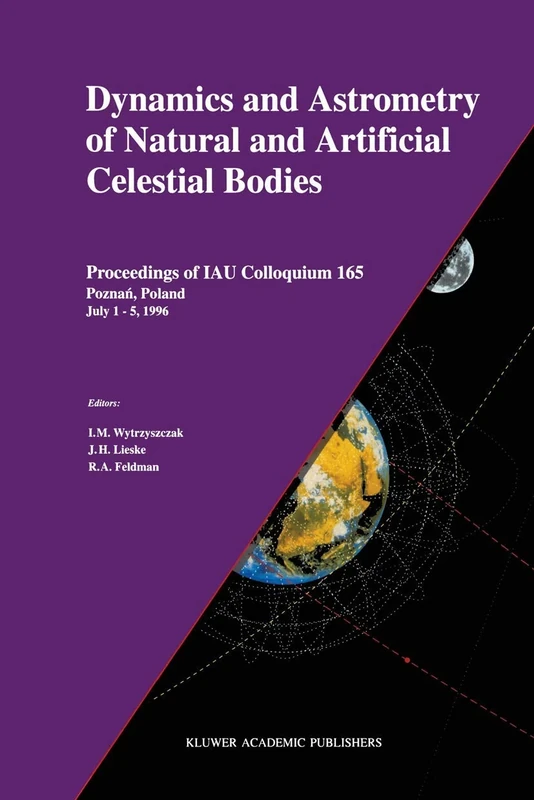
Dynamics and Astrometry of Natural and Artificial Celestial Bodies: Proceedings of IAU Colloquium 165 Poznań, Poland July 1 – 5, 1996
Springer

Introduction to Hamiltonian Dynamical Systems and the N-Body Problem: 90 (Applied Mathematical Sciences, 90)
Springer

The Life and Work of James Bradley: The New Foundations of 18th Century Astronomy
Oxford University Press
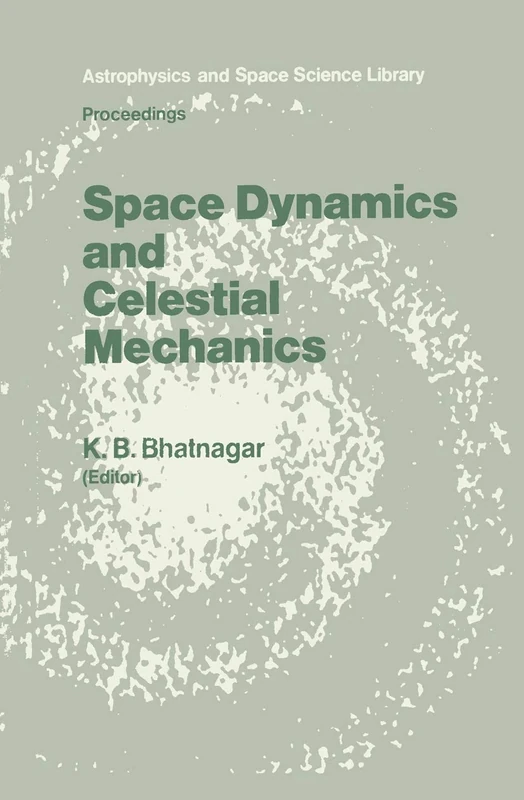
Space Dynamics and Celestial Mechanics: Proceedings of the International Workshop, Delhi, India, 14–16 November 1985: 127 (Astrophysics and Space Science Library)
Springer

de Revolutionibus Orbium Coelestium / Des Revolutions Des Orbes Celestes: Coffret 3 volumes reliés, édition bilingue: 11 (Science Et Humanisme)
BELLES LETTRES

Reports on Astronomy: Transactions of the International Astronomical Union Volume XVIIA ― Part 2
Springer
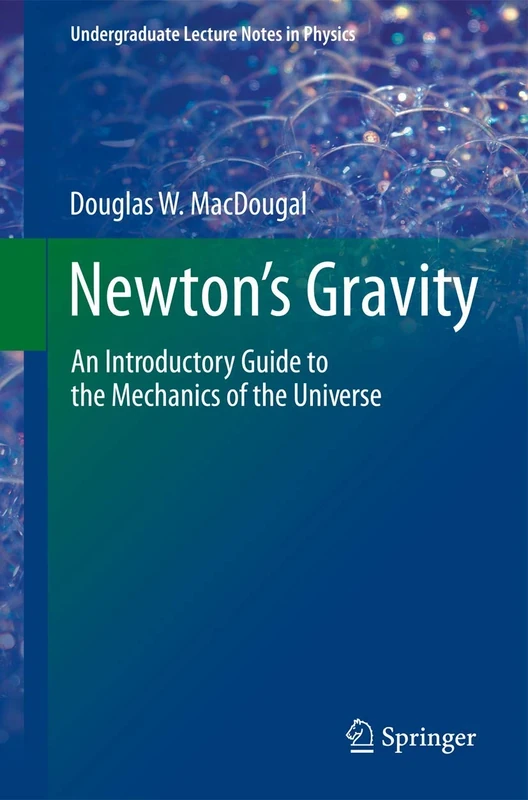
Springer Newton's Gravity - Physics Undergraduate Lecture Notes
Springer
The General History of Astronomy: Volume 2, Planetary Astronomy from the Renaissance to the Rise of Astrophysics
Cambridge University Press