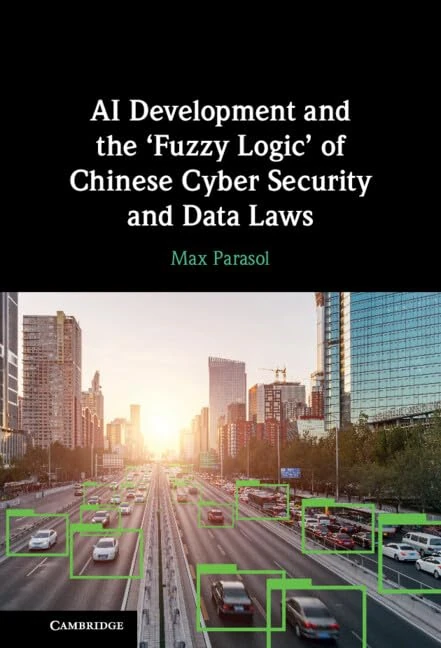
The book examines the extent to which Chinese cyber and network security laws and policies act as a constraint on the emergence of Chinese entrepreneurialism and innovation. Specifically, how the contradictions and tensions between data localisation laws (as part of Network Sovereignty policies) affect innovation in artificial intelligence (AI). The book surveys the globalised R&D networks, and how the increasing use of open-source platforms by leading Chinese AI firms during 2017–2020, exacerbated the apparent contradiction between Network Sovereignty and Chinese innovation. The drafting of the Cyber Security Law did not anticipate the changing nature of globalised AI innovation. It is argued that the deliberate deployment of what the book refers to as 'fuzzy logic' in drafting the Cyber Security Law allowed regulators to subsequently interpret key terms regarding data in that Law in a fluid and flexible fashion to benefit Chinese innovation. Review 'In examining 'fuzzy logic' in China's Cyber Security Law, this book provides invaluable insights into how China can be a powerful force in AI and tech innovation. It will have a significant impact on the way in which we conceive of technology regulation in China and elsewhere.' Andrew Godwin, Melbourne Law School, The University of Melbourne'As China navigates tensions between state control and the imperatives of innovation in internet technology, this book offers timely insights. It digs deeply into the 'fuzzy logic' of rules on data localisation, and frames a compelling argument that will help shape scholarly and policy debates in coming years.' Adam K Webb, Co-Director and Professor of Political Science, Hopkins-Nanjing Center'The Chinese tech scene presents us with a bewildering picture of deeply intertwined technological, political and commercial questions and interests. This complexity equally affects Chinese policymaking, particularly in fields related to data and artificial intelligence. This volume aims to enlighten the way by which China gropes its way forward carefully, but decisively.' Rogier Creemers, Assistant Professor, Leiden University'Parasol brings ground-up observations of how China's tech ecosystem really works, and skillfully integrates those with important insights from academia and beyond. He cuts right through the tired debates about whether China can innovate, and deftly illustrates how the 'fuzzy logic' of Chinese tech policy is enabling local experimentation that drives the ecosystem forward. Parasol's book provides excellent intellectual scaffolding for those of us trying to make sense of how Chinese tech got where it is today, and where it's going next.' Matt Sheehan, Fellow, The Paulson Institute Book Description Explains the rapid rise of China's innovation system and provides a roadmap for the prospects of China's AI development. About the Author Max Parasol is a Research Fellow at UNSW Sydney, researching FinTech. He is a qualified lawyer with extensive experience working in Private Equity. He completed a PhD from the University of Technology Sydney on the Chinese AI ecosystem. Previously he practised as a lawyer in Shanghai, Western Australia, and Victoria and completed a masters degree at Nanjing University/Johns Hopkins University in Chinese. As a Senior Fellow at Monash University, he created a unit about China's innovation ecosystem. He studied, researched and worked in China for more than five years and speaks, reads and writes Chinese.