£164.83

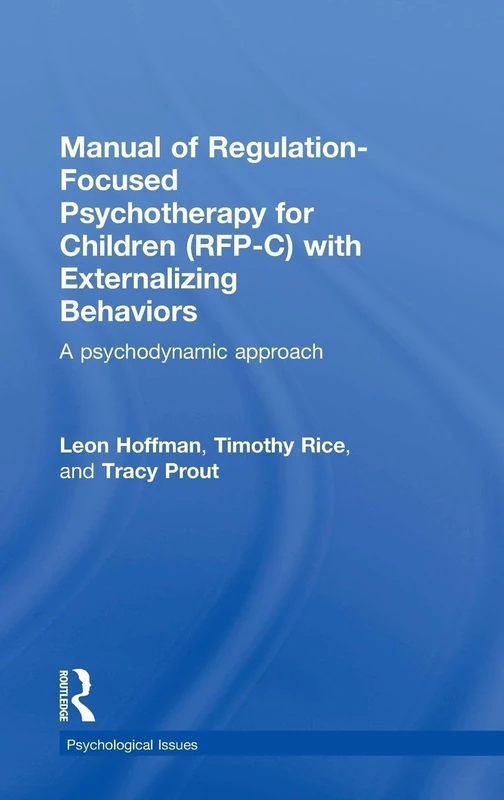
Routledge Manual of Regulation-Focused Psychotherapy for Children (RFP-C) with Externalizing Behaviors: A Psychodynamic Approach (Psychological Issues)

Price data last checked 12 day(s) ago - will refresh soon

View at Amazon

We'll watch every seller, every day. One email when your price arrives.

This is the most expensive it has ever been. Walk away.

£165 today · previous high £165 · all-time low £158

NEW HERE?

Amazon shows you one price. We show you all of them.

Tosheroon watches Amazon prices so you don't have to. Every product on Amazon has a price history — we make it visible. Set the price you'd actually pay, and we'll email you the second it gets there. No app, no account, one email.

WHAT'S ON THIS PAGE

↓ Price chart
when this has been cheap or pricey
↓ Forecast
where the price is heading next
↓ Statistics
all-time high & low, recent range
↑ Price alert
name your number, we'll email you

Price History & Forecast

Grey patches = out of stock. Cheaper = lower on the chart. Hover for exact prices.

Last 79 days · 79 data points (no recent data)

Historical
Generating forecast…
£164.83 £156.94 £158.66 £160.38 £162.11 £163.83 £165.55 26 April 2026 15 May 2026 04 June 2026 23 June 2026 13 July 2026

Price Distribution

Price distribution over 79 days • 2 price levels

Days at Price
Current Price
68 days 11 days · current 0 17 34 51 68 £158 £165 Days at Price

Price Analysis

Most common price: £158 (68 days, 86.1%)

Price range: £158 - £165

Price levels: 2 different prices over 79 days

Description

Manual of Regulation-Focused Psychotherapy for Children (RFP-C) with Externalizing Behaviors: A Psychodynamic Approach offers a new, short term psychotherapeutic approach to working dynamically with children who suffer from irritability, oppositional defiance and disruptiveness. RFP-C enables clinicians to help by addressing and detailing how the child’s externalizing behaviors have meaning which they can convey to the child. Using clinical examples throughout, Hoffman, Rice and Prout demonstrate that in many dysregulated children, RFP-C can: Achieve symptomatic improvement and developmental maturation as a result of gains in the ability to tolerate and metabolize painful emotions, by addressing the crucial underlying emotional component. Diminish the child’s use of aggression as the main coping device by allowing painful emotions to be mastered more effectively. Help to systematically address avoidance mechanisms, talking to the child about how their disruptive behavior helps them avoid painful emotions. Facilitate development of an awareness that painful emotions do not have to be so vigorously warded off, allowing the child to reach this implicit awareness within the relationship with the clinician, which can then be expanded to life situations at home and at school. This handbook is the first to provide a manualized, short-term dynamic approach to the externalizing behaviors of childhood, offering organizing framework and detailed descriptions of the processes involved in RFP-C. Supplying clinicians with a systematic individual psychotherapy as an alternative or complement to PMT, CBT and psychotropic medication, it also shifts focus away from simply helping parents manage their children’s misbehaviors. Significantly, the approach shows that clinical work with these children is compatible with understanding the children’s brain functioning, and posits that contemporary affect-oriented conceptualizations of defense mechanisms are theoretically similar to the neuroscience construct of implicit emotion regulation, promoting an interface between psychodynamics and contemporary academic psychiatry and psychology. Manual of Regulation-Focused Psychotherapy for Children (RFP-C) with Externalizing Behaviors: A Psychodynamic Approach is a comprehensive tool capable of application at all levels of professional training, offering a new approach for psychoanalysts, child and adolescent counselors, psychotherapists and mental health clinicians in fields including social work, psychology and psychiatry. Review This book gives readers a bird’s eye view into the organized and focused thought processes of the experienced psychodynamic clinician in handling children with disruptive behavior disorders. As such, this is a novel book and a must-read for clinicians who work with children, as it provides a systematic, operationalized, comprehensive treatment approach that is radically different from the ubiquitous cognitive behavioral approach. It is essential that these core treatment techniques, articulated so well in this Manual, not get lost amid ever- narrowing treatments that are regularly imparted to clinicians who work with children. - Barbara Milrod, MD, Professor of Psychiatry, Weill Cornell Medical College, An expert in clinical trials in anxiety disorders in adults and children. This book addresses one of the most important issues of our modern times – how do children and adolescents learn to regulate their emotions and behaviors. The intervention presented in this book has its basis in psychodynamic principles, especially defense mechanisms. It focuses on the emotional underpinnings of behavioral disruptions especially the avoidance of and reaction to painful emotions. There is meaning in the child’s behaviors, emotions, and communications. The clinician learns to understand this and communicates that understanding to the child and parents. This is done in a systematic, manualized manner

Product Specifications

Format
hardcover
Domain
Amazon UK
Release Date
27 October 2015
Listed Since
18 April 2015

Barcode

No barcode data available