£153.81

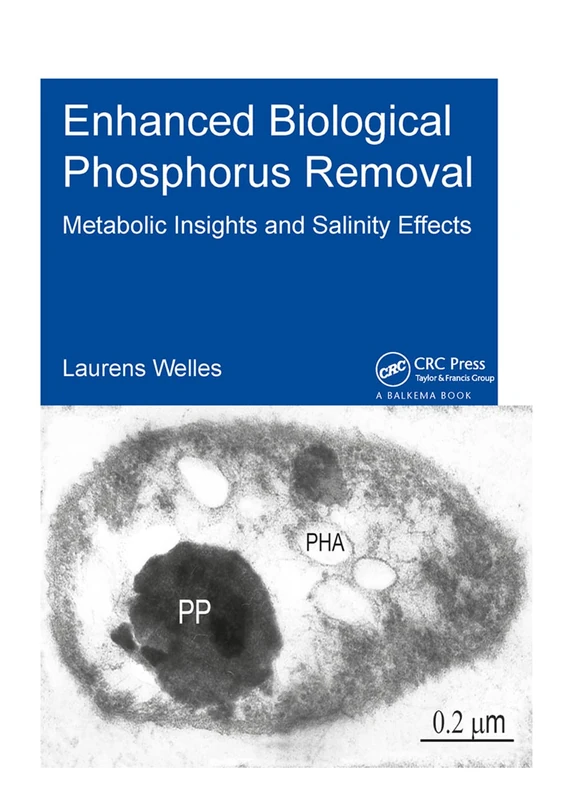
CRC Press Enhanced Biological Phosphorus Removal: Metabolic Insights and Salinity Effects (IHE Delft PhD Thesis Series)

Price data last checked 50 day(s) ago - refreshing...

View at Amazon

We'll watch every seller, every day. One email when your price arrives.

This is the most expensive it has ever been. Walk away.

£154 today · previous high £154 · all-time low £154

NEW HERE?

Amazon shows you one price. We show you all of them.

Tosheroon watches Amazon prices so you don't have to. Every product on Amazon has a price history — we make it visible. Set the price you'd actually pay, and we'll email you the second it gets there. No app, no account, one email.

WHAT'S ON THIS PAGE

↓ Price chart
when this has been cheap or pricey
↓ Forecast
where the price is heading next
↓ Statistics
all-time high & low, recent range
↑ Price alert
name your number, we'll email you

Price History & Forecast

Grey patches = out of stock. Cheaper = lower on the chart. Hover for exact prices.

Last 41 days · 41 data points (no recent data)

Historical
Generating forecast…
£153.81 £153.78 £153.78 £153.79 £153.80 £153.81 £153.81 01 June 2026 11 June 2026 21 June 2026 01 July 2026 11 July 2026

Price Distribution

Price distribution over 41 days • 1 price levels

Days at Price
41 days 0 10 21 31 41 £154 Days at Price

Price Analysis

Most common price: £154 (41 days, 100.0%)

Price range: £154 - £154

Price levels: 1 different prices over 41 days

Description

The Enhanced Biological Phosphorus Removal (EBPR) process is a biological process for efficient phosphate removal from wastewaters through intracellular storage of polyphosphate by Phosphate-Accumulating Organisms (PAO) and subsequent removal through wastage of excess sludge. Although many studies have demonstrated the existence of different PAO clades, the functional differences among these clades and potential implications for the process performance remained unclear. Furthermore, the salinity effects on the EBPR process had not been properly investigated, which is necessary to assess its applicability for the treatment of saline wastewaters. The first part of the thesis focuses on the functional diversity among PAO clades. It demonstrates significant functional differences in the main characteristics of the anaerobic metabolism of two different PAO clades and provides fundamental insight in the metabolic response of PAO to different influent P/C ratios. In addition, it shows how these functional differences provide competitive advantages to specific PAO clades in a selection study and discusses their potential implications on process performance, in particular for combined biological and chemical systems for nutrient removal and recovery. The second part of the thesis describes the salinity effects on the metabolism of PAO and their competitors that do not contribute to phosphorus removal; the so-called Glycogen-Accumulating Organisms (GAO). It shows how salinity affects the different metabolic processes (kinetics and stochiometry) of PAO and GAO and provides a model that describes the salinity effects on their kinetic rates. Finally, it discusses the potential implications of sudden saline shocks in wastewater treatment systems that are not regularly exposed to salinity. About the Author Laurens Welles was born in 1983 in The Hague, The Netherlands. In 2002 he started his BSc study Life Science and Technology at Delft University of Technology and Leiden University. He specialized in Cell Factory during his MSc study at Delft in 2006, and conducted his MSc research project on the Enhanced Biological Phosphorus Removal process at the University of Tokyo followed by an internship focused on bioremediation at Kurita Water Industries in Japan. In 2010, he was appointed as PhD fellow in the SALINE project at UNESCO-IHE and consortium partners KWR Watercycle Research Institute, Delft University of Technology, University of Cape Town, The Hong Kong University of Science and Technology, The Higher Polytechnic Institute "José Antonio Echeverría" and Birzeit University. The main objective of the project was to assess the feasibility of using saline water directly for non-potable purposes such as flushing toilets in urban areas to mitigate fresh water consumption. Within this project, the aim of his PhD research was to get a better understanding of the salinity effects on Enhanced Biological Phosphorus Removal in activated sludge systems to support the design and development of operational guidelines for WWTPs treating saline wastewater generated when saline water is used directly for non-potable purposes. Currently Laurens is working as a postdoctoral researcher for UNESCO-IHE and Delft University of Technology in The Netherlands. At UNESCO-IHE he assists in the management of a project, "Stimulating local innovation in sanitation for Sub-Saharan Africa and South East Asia." At the Delft University of Technology he conducts research on the anaerobic metabolism of Phosphate-Accumulating Organisms (PAO) and Glycogen-Accumulating Organisms (GAO), the diversity of this metabolism among different PAO and GAO clades and implications for nutrient removal and recovery systems.

Product Specifications

Format
hardcover
Domain
Amazon UK
Release Date
27 September 2018
Listed Since
10 March 2019

Barcode

No barcode data available